Episode 76
S2EP76-Janneke House-Mommy Mayor: How One Book is Sparking Civic Engagement in Kids!
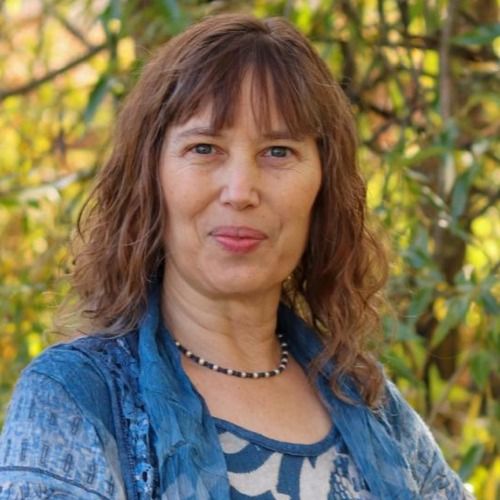
In this vibrant and engaging episode, we welcome Janneke House, who brings a wealth of political experience and a fresh perspective on community involvement through her delightful children's book, 'Mommy Mayer.' Janneke's journey in politics spans over two decades, where she has passionately advocated for her communities while also diving into the world of children's literature. Throughout our conversation, she shares her inspiring story of how interactions with kindergarteners at her office sparked her desire to write a book that encourages children to recognize their power to create change. We discuss the charming premise of 'Mommy Mayer,' where a young girl named Mary learns she can take matters into her own hands when her park is in disarray, rallying her community to fix it. Janneke beautifully articulates the message that kids can and should be active participants in their neighborhoods, challenging the notion that civic responsibility is solely an adult's job. This episode is rich with humor, heart, and practical tips for parents on how to raise socially aware children. So grab your headphones and get ready to be inspired to turn your child's voice into action!
A gift from our Guest: A free book to the audience member who finds this episode and comments "Mommy Mayor".
Janneke House has over twenty years’ experience in politics, working for some of the top political candidates in the country at every level of government: the President of the United States, the U.S. Senate, Congress, state legislature, governor, mayor, city council, and library trustee. Janneke has also pursued political office during her career, running for city council in both Salt Lake City, UT and Cambridge, MA. Janneke has a passion for helping the communities in which she lives by serving on various non-profit boards. She was the first graduate to receive a Master of Urban Planning degree from the University of Utah, where she had completed her undergraduate studies in Urban Planning. Janneke was born near Sundance, Utah, where she developed her love for the mountains. She now resides in New York City.
Bringing Education Home is an educational podcast brought to you by Kristina and Herb Heagh-Avritt.
If you enjoy the show, we'd love for you to leave a rating or review on your favorite podcast app!
Please let your friends know they can listen for free on Apple Podcasts, Spotify or their preferred podcast app or online at Bringing Education Home.
Sponsored by Vibrant Family Education - creating Happy, Healthy and Successful kids
Follow us on these socials:
Facebook Group - The Family Learning Circle
Facebook Business Page: Vibrant Family Education
Support Bringing Education Home
Copyright 2026 Kristina & Herb Heagh-Avritt
This podcast is hosted by Captivate, try it yourself for free.
Transcript
I now have the pleasure of introducing Janneke House. Janneke has over 20 years experience in politics, working for some of the top politician candidates in the country at every level of government.
The President of the United States, the U.S. senate, Congress, state legislature, governor, mayor, city council, and library trustees. Janneke has also pursued political office during her career, running for city council in both Salt Lake City, Utah, and Cambridge, Maryland.
Janneke has a passion for helping the communities in which she lives by serving on various nonprofit boards. Oops, I lost my place. Oh.
She was the first graduate to receive a Master's of Urban planning degree from the University of Utah, where she had completed her undergraduate studies in urban planning. Janneke was born near Sundance, Utah, where she developed her love of. Of the mountains. And she now resides in New York City. Welcome, Janneke.
It is a pleasure to have you here today. Thank you so much for joining us today.
Janneke House:Thank you, Christian. Herb, this is so exciting to be here. Thanks for having me.
Kristina:We are so glad you're coming with this experience and this wisdom. And it's interesting, though, because it's like, wait a minute.
Why is bringing education home, having somebody with these kinds of credentials on the show.
And the little secret there is, now that she's done all this amazing stuff and gotten all this amazing interest and experience, now she's turned it into a child, a children's book, and a book that wants to help educate children more around exactly what we were just talking about. So let's start there. What from your career made you want to start branching into children's book?
And then we'll actually get the name of your book out there, too.
Janneke House:Great. Thank you. So I've been working for a United States senator. And some. Some of my favorite meetings I had was actually with kindergarteners.
Kindergarteners would show up and they would write letters to their senator about the things that they wanted changed in their community. More crosswalks, more trees planted, more gardens, more books in the library. And those meetings were so inspiring to me.
And to see these kids speak up, talk about the things that make a difference in their communities, that's what really empowered me to then want to write a story about how kids voices are so important. They are actually. They're the experts in their communities, not us, not the politicians. The politicians aren't playing in the parks.
They know when the park is broken. We don't because we're not going down the slide.
And I think that's what was really inspiring is to hear them say those things like, my swing Set is broken. How would we know that?
And so to hear them say that and then to actually then see that get turned into action and get them to see that playground be fixed, so to watch them talk about it, and then it actually translates to action. That's what really inspired me to write this book.
Kristina:And that is exactly what we want. You know, we want that joyful exuberance of our children, that inspiration. Inspiration to keep us young.
Because, you know, I'm not exactly a spring chicken anymore. And so looking and watching children grow and be excited about something helps get you excited. Right?
And so, yeah, having that inspiration is amazing. So what is the name of your book?
Janneke House:So this is called Mommy Mayer. Okay.
Kristina:Tell us a little bit more about that book and what. What's kind of the teaching principle inside there behind it, and what might happen with the book as we move forward.
Janneke House:Absolutely. So we start out with Mary. She is the mayor's deputy playground assistant.
And during her daily inspection of the park, she finds that things are a little bit of a mess. The teeter won't totter, the swing is broken, and basically her park is out of order.
And so what does she do when something is wrong in your town, who do you go to? You go to the mayor. The town mayor happens to also be her mommy. And so she says to her mom, can you help me fix this park?
And her mom is also very busy. The mayor is busy with the librarian getting more books in the library. She's busy with the fire department, the police department.
And so Mary starts to kind of wonder, maybe his mom too busy to help the park and to help me. And then she. Then she remembers. She's like, wait a second. I'm the deputy mayor. I've got this power all along. I can help fix my playground.
And so she rallies her neighbors. She draws pictures over broken park. She puts the photos all over town, and people start showing up to fix the park.
And so it really shows that one person has that power to make a difference.
And it's empowering kids to speak up when something is broken, because, again, we wouldn't know that the park was broken because we're not playing in it every day. They are. They're the experts of their world, and they can have an impact and make a difference.
Herb:Perfect. That's a really lovely message. I like to see kids get involved in stuff like that. I was in boy Scouts, so we did community projects.
We went out and we did stuff to help. Where I grew up in, like, a little small town, we didn't really have a local government.
So we didn't get to necessarily interact with it that way, but we were, we were taking charge and, and doing things around town that, that needed to be done as well. So, so do we go into that?
Because again, it's great to get the government involved, but the kid, they're the, the girl, Mary, doing posters, reaching out, doing all of that to do it herself instead of saying, hey, can you do this for me? She got involved and brought that in like that. So I really like that aspect of your story. So how it was that intentional?
Because at first, like, oh, go to the, go to the mayor. But then she's like, no, do it yourself.
Janneke House:Yes, exactly. Because again, you know, cities are complicated. Cities are big. And cities unfortunately aren't run in a proactive way.
There's just too many people, there's too many moving parts. Right. Cities would, I know they would love to go out there and fix everything they possibly can. But again, they don't always know what's broken.
And so they really rely on us to then come to them and say, hey, look, this, this is broken. This needs fixing. But again, it's not overnight.
And it can take a really long time because, as you know, I mean, there's all these other projects that take precedent. And a child's park, unfortunately, is not going to be at the top of the priority list of a city, of a town. Right?
There might be some giant potholes from, you know, a crazy winter where, you know, they've just had to because there was so much snow and ice and now the roads are damaged. That's going to take priority over a broken park. And so again, I think it's. Sometimes you have to be empowered and remember, this is your community.
This is your city. You know, you're paying taxes. Your parents are paying taxes. Not the kids, the parents. And, you know, this is your home. This is their world.
Their parks are their world. And so sometimes, again, you just have to take that, you know, the bull by the horns. It's like, okay, well, you know what?
It's going to take six months to get this done, or a year to get this done. No, I can't wait that long. The park is my everyday home. I can't sit on a broken slide for six months.
And so again, it's empowering that one child or that group of children to then come forward. And again, it's letting everybody in the community know how important this is to them. And parks are important to a community as well.
And so, yeah, sometimes you have to take things into your own hands, and that's okay too. I remember there was this incredible mayor in Utah who.
He would drive around and he would actually cut weeds because the city was just too busy and to like, trim the weeds between, you know, the. The island there on the busy road. So he would just show up and do it himself.
This was the mayor, and there were pictures of him really just out there with some, you know, weed cutters and cutting all the weeds. And so even he took matters into his own hands because the city department couldn't get to the weeds until much, much later.
By then they would spread. It was a big thing. So again, he took matters into his own hands and this was the mayor. So I think that too was kind of a really cool example.
Herb:A lot of. A lot of respect for that. I remember one time driving past Christina's school where she was teaching, which was out in the country.
It was a weekend and something had happened in the garbage can and there was a lot of papers and garbage blowing around the parking lot. It's like we pulled over and we like picked that up and threw it all away. It's like, you can't. This is, this is our place.
It's like, you can't have that. So there's that civic mindedness, like, even though it does. Even though it wasn't ours, it belonged to us.
So question is, a lot of parents don't know how to do this. It's like, you start talking about. You talk, oh, take it to the mayor, oh, do this. They're gonna be like, oh, nope, hands off government.
Blah, blah, blah. Don't fight city hall. You have a child that is like, oh, hey, I want to do this. How do parents start getting involved?
How do they start getting their children involved? Because, you know, you don't talk about religion and government.
And so if you're not talking about religion or government, how do you get involved in the government? So how do we start?
Janneke House:Yes, exactly. And you bring up a really good point. All of this begins at home. We need parents to engage with their children.
Because you're right, kids don't necessarily know how to do this on their own. And so it's important to understand how government impacts you personally.
And home is exactly where we begin to see the community as our community, the park as your park, the local school as your school, the mayor as your mayor. And the more you know about your community, the more you become involved and the bigger your neighborhood becomes.
And so there's a couple of really cool activities that parents can do with their kids. You can even just start with find your. Find your neighborhood on a map, Something as simple as that.
Identify your school, your grocery store, your best friend's house. And then next, go a little bit bigger.
Find out where your favorite, you know, find out a little bit more about your city, then your state, then your country. Right? And there are some other really small things you can do to make a difference in your community. You can start collecting books for your library.
Right. You can start planting flowers in your neighborhood. You could start a recycling program if you want to.
You could even plan a neighborhood picnic, because a lot of times people don't even know who their neighbors are. Everybody can bring a dish to share, you know, and then we were talking a little bit even before the podcast.
You can participate in local politics by going to a local town meeting, passing out flyers. And then another simple thing you can do is you could just write a letter to your mayor. Right?
And I've got a great template on my website about how to do this. And you just start out and you have, you know, dear Mayor. And you can put in their name. Then you put in who you are, where you live, and then you.
You say, well, I'm writing today because of, you know, whatever it is. I. My, my park is broken. Or I, you know, we need a bigger park, or we don't even have a park. Right, right. Something like that.
Or you could even just write your mayor and say, I think you're doing a good job, because, trust me, politicians never hear when things are going well.
Kristina:I was going to say positive to say in there as well. Right. As we were taught in teacher training. Right.
Whenever you give feedback, you kind of, like, give a compliment, and then you kind of give the criticism or the critique, and then you try to give a compliment at the end so it doesn't feel like you're just, you know, ragging on them. It's like, no, no, no. There's some good stuff in here, too. But let's see if we can cooperate, work together, and fix this thing.
Herb:Yeah. So I'm gonna tell on myself a little bit.
Kristina:Are you now?
Herb:Yeah. This last week, I met my representative, and I had no idea who she was before she showed up.
And I actually still have no idea who she is because I can't remember her name anymore. So I've never been involved in the government. It's like that's.
That happens other places, and it doesn't really seem to involve me because no matter what happens, it's this slow Pace and. And I really don't seem to be able to affect it. So I checked out. Not necessarily the best place to be.
I'm also going to kind of blame the brain damage in that because there's a lot of stuff going on when I checked out. So again, how do we get started? It's easy to say, okay, write a letter, but it's like someone like me who's been like, just stay away.
Kristina:Disenfranchised.
Herb:Disenfranchised of the whole thing, and I shouldn't be. There's a lot of stuff that I find really, really hopeful that's happening right now.
And I see a lot of amazing things that are going on, but still, I have a habit and a history of not getting involved. And so I don't even know how anymore. So.
Janneke House:And to your point, it's easy to get discouraged, right? Especially with everything going on in the world. Sometimes it's like, where do you even start?
But I think that's what's so great about Mommy Mayer and about Mary is you start so small, right? I mean, she just started with a broken playground.
And if you can make a small difference in your community in that small part of the world, that's all that really matters right now. Because that's not going to change the course of the rest of the world.
But again, if you can make a difference, if you can fix one thing in your community that makes a big difference to you, then that's going to change your life. I was running for city council in Cambridge, Massachusetts. And Cambridge is home to mit.
It's home to Harvard, home to, you know, Nobel Peace Prize winners. We're talking about world famous professors.
And I would meet some of these incredible people and they would always say to me, oh, I never vote in local elections. I only vote in federal and national elections. They were like. And I would say, why? And they say, because nothing on the local level.
It doesn't mean anything. I'm not paying attention. I don't know what's going on.
And I would say to them, I would say, okay, so you run over the same pothole every day on your way to work. So now your car alignment is out of whack. You've now spent thousands of dollars fixing your car over the course of all these years.
And you keep running over that same pothole every day and you don't say anything. You just continue to take your car in and get it repaired.
But what if I, as a city councilor, can fix that pothole for you so that as you are rushing to work that day. You know that you don't have to worry about that pothole anymore. That's one less thing for you to worry about.
Let me worry about that as your local elected official so that you can go and worry about bigger things. That's why local elections are so important.
Or if I can get your garbage picked up on time, right, so that you have time to take your garbage can in before you leave for work so you don't get fined. It's those really small, life changing. We don't think about it as life changing.
But again, if I can make your life easier and simpler, that's how local government impacts you.
And that's another way that you can get involved where it's like, we don't always think about how government impacts us on those, you know, those micro, micro levels. But it is, it's those very small things that literally can be life changing.
Kristina:I love that example because then it also flips to if you do those little things in your community and in those elections and things like that, what kind of role model are you being for your children? So then they want to be involved.
And so yeah, they, we may impact the local, but maybe because of our example and because of our interest now they're going to go to the next level, they're going to take it to the state level when they grow up or they're going to go farther than they grow up. So it's like, yeah, these books, the book that you are writing, and hopefully a few more around government ideas and things like that.
And as well as just being that really good role model is something that we really love to push, especially here on the podcast.
It's like, parents, think about your actions, think about what you say, think about what you do as a role model in front of your kids every single day.
Janneke House:Exactly, exactly.
Herb:Another cool thing is we live in a really small town. And when I say we live in.
Kristina:A really small town, we're on the unique side now.
Herb:We live in a really small town. There's about 600 people, 600 to 700 people in town. It's like 30 miles to the closest grocery store.
It's an hour to Medford, to our closest government.
We don't, we don't have a city council, we don't have a mayor, but we do have a couple of local groups that like the Prospect Community Cubs that tries to organize lunches and stuff, the Prospect Provisions that tries to help educate around, educate and bring, bring more food into the community. So. And she Got very much involved in all of that. And so where we were not involved at all. She's. She.
And I told her, gave her my blessings, and I told her, pull me kicking and screaming into it, because that's.
Kristina:How he met the representative. I drag him to a meeting because.
Herb:I know I need to go to these, but if I make it, if I try and do it on my choice, it's like it's not going to happen. So she got involved and I'm telling her to drag me along kicking and screaming. And I go. And I go smiling, not kicking and screaming. But it's not.
They're not choices that I would make on my own. So, yes, getting involved makes a big difference. We've met a lot of people in the community. We are making a difference.
And people are starting to recognize how competent and amazing she is as well.
Janneke House:So I love, I love that.
Kristina:So I think the message there is get your spouse involved, get your partner involved. Like, take them with you. Don't try to do it on your own. But yeah, make it a family affair.
It's your kiddos can go to one of those meetings, even though they might be a little bit bored. And guess what? Take them at least for a little while, because then they can listen and figure out kind of how it works.
And then later, when they get interested, oh, I want to go talk to that mayor because the sidewalk doesn't work or whatever.
Janneke House:Right, Exactly. Exactly. And I think that's always the advice that I give anybody, is if you ever have the chance to run for office, do it.
Because that is how you learn the most about how your government works, how your community works, what's important to your community, what's not important to your community. And it's just a really cool process to go through.
Herb:I'd be afraid I'd win and then I'd have to do something.
Janneke House:You'd have to sit in all those meetings.
Kristina:Yeah, you have to make decisions.
Herb:So a lot of the stuff that we're talking about is civic oriented. It's doing the work, it's contributing to the community.
But it can go too far into activism where you're not actually trying to benefit a community, you're trying to. How do.
Because that's where I run into problems, because I start thinking that people aren't being genuinely genuine anymore in the debate or the argument. And I know that I don't handle that very well. So I.
Again with the brain damage and stuff, I keep myself isolated from that intentionally because that disingenuous, disingenuity affects me weirdly. I don't know. It might be a weird. If it's not, we. Disingenuous is disingenuity.
Kristina:Yeah.
Herb:So I lost my question in there. But it's like these are. These are, like, concerns that, like, I have and how.
And I see you smiling and getting in there, and it's like, how do you deal with people that don't seem real?
Kristina:Because you've probably seen a lot over the last of your career.
Herb:And it's like you talk to people. It's like you can't be real. You just can't be real.
Janneke House:Right. You know, you can always go overboard. Right. And I think you have to seek out those people that are doing it for the right reasons.
Some people are doing it because they have their own platform. They're trying to, you know, they have ulterior motives. But what I found in my career in politics is most people are doing it for the right reasons.
They're always bad apples in everything that we do. Right. And so I think it's ignoring that noise and remember to focus on what's important.
And I think that's something that parents, and you guys do a lot of this, too, with the families that you work with is you kind of help them figure out how to filter out that noise. And I think that's a really good lesson for kids to learn too. Right.
There's always going to be somebody out there trying to distract you from what's important. And I think as parents and as educators, we. What's most important for us is to teach kids how to filter that out and to remember what's important.
Herb:Yeah. Actually, the first thing we work with parents is, what are your family values? What. What do you. What do you say you value?
And then we take a step back like, okay, let's look what you're doing in your life and is your actions aligned with your values?
And sometimes people, like, actually do end up getting involved in civic stuff because they realize that, oh, I say this, but I'm not doing so then they get involved to do that.
So that that is something that happens and that does cut down the noise is to focus on your values and then do a serious review of are you living them?
Janneke House:Exactly. And I think that's to the point that you brought a few minutes ago, where it's like, where does all this start?
It all starts at home, and it all starts with the parents. Right. And probably the most important thing that a parent can do is is to remember to even read to their Kids, you know, as I'm out there talking.
Herb:About this, A book like Mommy Mayer.
Janneke House:A book like Mommy Mayor. Thank you. Thank you.
I think what's been most discouraging about being sort of a first time author and marketing this book is realizing how many parents don't read to their kids. And I think reading to your kids is one of the greatest gifts you can give to them. Because remember, I mean, you guys talk about this.
Knowledge is power, right? And it all starts with family values.
Herb:That my mom read to me. It's like I've looked for some of the books. I've like, oh, I know my mom read this story and I.
A doll with diamonds in it that was in a well and a ghost and a girl. And I remember the whole story in the rocking chair, rocking with all of it and I can't find the story.
But I remember my mom reading me these books as a little kid and,.
Janneke House:And that just spark your imagination and get you thinking about life and adventure and, you know, you probably wouldn't have the life that you have without that sort of that, you know, your mom reading you those stories, your mind.
Herb:Oh, yeah, yeah. And if you read to your kids, your kids are going to want to read.
I read more books by the time I got out of high school than most people will read in their lives. And I still keep going. It's just there's so much life out there and information and the more you learn, the more you realize you don't know anything.
And there's so much more to learn.
Janneke House:Exactly, exactly.
Kristina:And I think plug in here for older kids. You know, people think that, oh, once they get to five, six, first, second grade, I don't need to read to them anymore. It's like, yes, you do.
Keep reading to them all the way up into the teenage years and if nothing else, sit down in the living room with your teenagers and take turns reading around a book that everybody's interested in.
That was some of the best times that we had with our kids is like, I was reading and they were listening and they would ask questions and they were teenagers and yeah, it's okay to stop and actually read for a while.
Herb:We took a road trip, nine and a half weeks, 35 states. We drove around the United States and she read. Well, we had a lot of books on tape, but that wasn't as nearly as much fun as her reading.
And so every time it's like, no, let's read. And she. As long as she was reading, I could drive. As soon as she stopped reading I would get drowsy, we would have to pull over.
So she read to us for nine and a half weeks straight. It was the best summer ever. I. I could even name some of the titles. But. Wow.
Janneke House:And I bet your kids remember that, too. Yeah, like, you know, they're never going to remember what they got for Christmas that year, but they'll remember.
They'll remember you reading for nine and a half weeks straight.
Kristina:Exactly. So is Mary going to have any other adventures or is this a one and done?
Janneke House:You know, I would love Mary to have more adventures. I would love Mary to go to the Senate. I would love Mary to go to the legislature, the governor's office. I would love to turn this into a series.
Kristina:That would be awesome. All right.
Herb:And, you know, as a kid, it's like, I, I still remember Schoolhouse Rock and the fun stuff. And, you know, I'm a bill. I am only a bill, and I'm sitting here on Capitol.
Kristina:Now you're dating us.
Herb:So that stuff, it's like, I remember that I, that there was lots of civics in politics, less political politics when we were a kid, but we actually had those kind of civics discussions. And that's a lot of it has been taken out of our education system as well, which is, again, why we need to bring it home and let our children know.
Because there's a lot of stuff that's happening. Parents don't necessarily know, and they're just delegating that authority so well.
Janneke House:And to your point, I have met so many educated people with master's degrees, with doctorate degrees who are CEOs of Fortune 500 companies. And they have said to me, I don't know who my representatives are, and I wouldn't even know who to go to to fix the playground.
They don't even know that you would go to a mayor. Right. And so to your point, I think it's, you know, we've lost that in sort of our education and our curriculum.
And I'm hoping with a book like Mommy Mayer, we can bring that just simple back, like something is wrong. This is who you go to. This is how government works. And remember, it's our job to make government work for us.
Herb:Yes. Now we're getting into the out of the box. Why did they stop teaching the Constitution in school? Why aren't they teaching civics to our children?
Why aren't they teaching the political process so that they know how to, even if they're not necessarily going to get involved? And so we have kind of a ruling class and and there is this separation between the people and the government.
And I love that your book is starting to break that down. I love that we're going to reach back to the children and start giving them that information.
I wish you all of the success and even more, because, again, we do need more involvement. I still don't think the kids should vote until they're 25, but they should still be involved in learning and doing the groundwork. But. But.
So, yeah, that is so important for. For the continuation of our species to make sure that we have.
Kristina:Yeah. So it's time to ask, how do parents get this book? And how do they get a hold of you in case there's more books that come out of all of this?
Janneke House:Thank you. Yes. So you can get Mommy Mayer on Amazon, on Barnes and Noble. You can go to your local bookstore. You can order it from them.
You can also go to my website, janakeyhouse.com and leave me a message. Let me know what you like, what you didn't like.
Again, just like the mayor, let me know if there's something that needs to be fixed, and I'll fix it in the next book.
Kristina:Perfect. I love it. I love it. I love it. Awesome.
And, you know, sometimes there are free gifts available to our audience, so make sure you check the link down below, check the show notes, because guess what?
That's where you get a hold of these wonderful speakers who come to us to our podcast and get to know them more and let them help you help raise your children in a way that it matches your values and helps you support your community as well as your children as they grow up. Jenica, this has been so much fun talking with you about this. I really appreciate you being here today.
Janneke House:Oh, this has been wonderful. Thank you both. This has been fun.
Herb:Yeah, it's been a lot of fun. I did keep it a little down. I still want to go off on a lot of things, but why don't.
Kristina:You have your own podcast about that?
Janneke House:You know what? Next time, our next conversation, we'll dive in deeper.
Herb:Yeah. We'll go off the edge, into the wide world of weirdness. So.
Janneke House:Yes. Yes.
Kristina:Was there anything that we didn't get to today that you wanted to get to before we wrap up the show?
Janneke House:Oh, no. That was everything. Yes.
Just check out the website, buy the book, get the word out, and if you even want copies donated to your local library, let me know and I'll send copies to your library.
Herb:And I know that our. Our audience tends to be more conservative, and conservative people don't tend to quite get as involved in government as much.
And then the vocal minority seems to be everywhere. So it is important again to follow your values.
If stuff is happening and you see that that is not working for you, if your park is broken, if your government is broken, if your school board is broken, get involved. The only way it can be fixed is if people who see the problem fix it.
Because if you see it and you don't fix it, then other people think it's not a problem, are going to keep running down that road. So.
Janneke House:Exactly. That's a good reminder.
Kristina:And keep sharing with your kids because you are their role model and what you do and what you care about tends to help them know what to care about in the future as well.
Janneke House:And keep reading to them.
Kristina:Yes, keep reading. Thank you.
Janneke House:Yes.
Kristina:Read, read, read. All right. Anything else?
Herb:Thank you for being here today. It has been a pleasure. Your energy and your attitude and your smiliness after being in politics is unusual.
So thank you so much for continuing to be joyful and move forward and to actually bring this out to the children. So many people have gone out and fought their battles and then come back and just given up.
But you went out and you're sharing your story and you're helping bring it to the world. And that is the hero's journey. So thank you for coming on our show today as a hero who is trying to make the world a better place.
Janneke House:Thank you.
Kristina:All right, audience, you know what time it is. It is time to go and visit Jenica's website.
Visit our website, vibrantfamilyeducation.com Figure out how to help you and your family up level to the next level. Whatever your child is struggling with, whatever you are struggling with, it doesn't mean you're failing.
It means that you might just need to ask for a little bit of help. And that's why bringing education home is here.
Full of tons of experts who are here to help you and your family, support you and your family and take it to the next level. Until next time, thanks for being here and make sure you like and share. Talk to you later. Bye for now.