Episode 21
S3EP21-Jen Lumanlan-What Research Says About Homeschooling, Curriculum, and Triggers
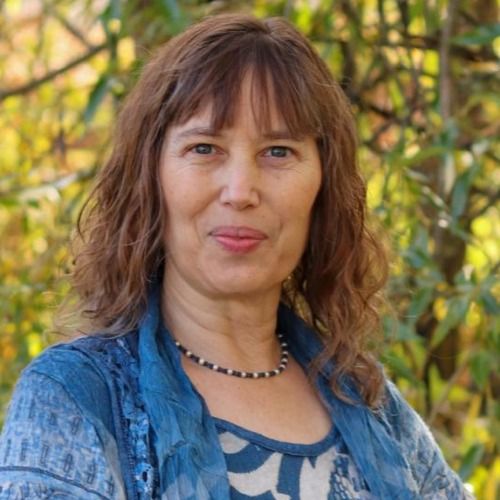
Every single thing our kids do is their best attempt to meet a need. Jen Lumanlan, host of the Your Parenting Mojo podcast and author of Parenting Beyond Power, joins us to unpack what that idea means for families, especially when learning turns into a power struggle. Jen is a homeschooling parent with master’s degrees in psychology and education. She shares how research shaped her decision to homeschool and why, in her view, curriculum often serves the adults’ accountability more than the child’s learning. That doesn’t mean curriculum never has a place. When her daughter was diagnosed with dyslexia, a targeted reading program became the right tool until it was no longer needed. We also walk through the biggest worries parents have about homeschooling: whether they know enough to teach, and whether their kids will be socialized. Jen explains why not knowing a subject can make you a better co-learner, and why friendships across ages can be richer than a classroom of same-age peers. When kids push back and parents get triggered, Jen offers two practical steps. First, own your stuff, since our reactions usually come from our own past. Second, look for the real needs at play, such as autonomy or movement, so you can find a way to meet both yours and your child’s.
A gift from our guest: This quiz to help parents figure out what is their child's most important need (needs not being met is often a source of resistance in kids...). https://www.yourparentingmojo.com/quiz
Jen Lumanlan is the parent of a 12-year-old who holds a master's in Psychology focused on Child Development and another in Education. Jen hosts the Your Parenting Mojo podcast, which translates academic research on parenting and child development into tools parents can use to raise their kids. The show was named Best Research-Based Parenting Podcast by Lifehacker. She is also the author of Parenting Beyond Power: How to Use Connection and Collaboration to Transform Your Family - and the World, published by Sasquatch and Penguin Random House in 2023
@yourparentingmojo on Instagram
Bringing Education Home is an educational podcast brought to you by Kristina and Herb Heagh-Avritt.
If you enjoy the show, we'd love for you to leave a rating or review on your favorite podcast app!
Please let your friends know they can listen for free on Apple Podcasts, Spotify or their preferred podcast app or online at Bringing Education Home.
Sponsored by Vibrant Family Education - creating Happy, Healthy and Successful kids
Follow us on these socials:
Facebook Group - The Family Learning Circle
Facebook Business Page: Vibrant Family Education
Support Bringing Education Home
Copyright 2026 Kristina & Herb Heagh-Avritt
This podcast is hosted by Captivate, try it yourself for free.
Transcript
I now have the pleasure of introducing Jen Lumanlan.
Jen is a homeschooling parent of a 12 year old and she holds a master's in psychology focused on child development and another in education.
Jen hosts the your Parenting Moho podcast, Moho Mojo Podcast, which translates academic research and parenting and child development into tools parents can use to raise their kids.
The show is named the best research based parenting podcast by Lifehacker.
h and Penguin Random House in:Welcome Jen.
It is a pleasure to have you here today.
Thank you so much for joining us.
I'm looking forward to this conversation.
Jen Lumanlan:Thanks for having me.
It's great to be here.
Kristina:You are very welcome.
Yeah, we, when we were chatting, right, it's like, what an amazing place to be.
Someone who actually homeschools and also does the research behind it.
And we had a conversation with someone in the past that were kind of similar and it's amazing because it validates lots of times what we talk about because you have the research behind it.
We know it's true anecdotally and through what we've experienced and how we've helped families.
But then just sometimes having a, a space where it's like, here's the research.
This is what's been seen over and over.
That is an amazing place to come from.
So thank you again for being here.
So talk about your passion though.
How did you get into this parenting space and the research?
How did you start your parenting Mojo?
Tell us about that passion, that pivot point of when you really decided to get it out there.
Jen Lumanlan:Yeah, well, you mentioned the 12 year old in the introduction.
It basically started there.
And I realized pretty soon after she was born that I had absolutely no idea what I was doing and that my parenting role models were not really what I wanted to aim for as a parent myself.
And, and I realized, well, I don't have any instinct, but I'm really good at research and so I can use my research skills to fill the gap in the instinct.
And so I started doing a lot of reading and learning and decided that I would get a master's degree in psychology focused on child development to make sure I wasn't missing anything.
I later learned that's what autistic people do.
We get master's degrees, things that we're interested in.
Didn't know that at the time.
Found found out that I'm autistic through a podcast Episode actually a conversation with a researcher who is.
And so I finished the master's in psychology and I was like, okay, great.
I think I'm good on that front for now.
And then I started looking at education and well, I got a master's there as well.
And the thesis that I wrote for that degree was on how children learn in the absence of a curriculum.
And so I, I'm based in Berkeley.
I, I graduated with a bachelor's from Berkeley, so I have access to the library.
So I went down to the library and I got basically the entire shelf of textbooks on what?
You know, motivation in learning.
And of course it's Berkeley.
So they're basically.
They were published in the:I'm reading these textbooks and they're talking about how well we know children don't really learn very well with the curriculum.
And so we've known this for a really long time.
But here are some tricks that you can use to get them to try and go along with the curriculum.
I'm like, okay, if we knew this in the 80s based on research from the 60s and the 70s, and we're still using curriculum in schools today, why are we doing this?
Why are we doing this?
And so there was a sort of parallel path with, with supporting parents, you know, being triggered by their kids behavior with, I don't understand my kids behavior, what's going on here?
And then at the same time, how can I be with my kid and learning in a way that's actually authentic and, and follows their interests and, and so that's sort of the, the dual path that I've been on ever since.
Herb:Yeah, so I'm very much the out of the box thinker.
So what my question is, why do they push curriculum when they know it's not going to work?
And now the conspiracy theory starts coming in with the dumbing down of Americ need workers instead of individual thinkers.
So we're not necessarily going to go there, but what did you find?
Why, why are we pushing the curriculum when we know that that's not the most effective way to teach our children?
Jen Lumanlan:Yeah, I think it's a super, super complex issue that doesn't have a single simple explanation.
I do think that there is some element of the fact that schools are really designed to, to, to get people to override their, their own needs.
Right.
To, to stop thinking about themselves as a human being.
If you think about, well, I'm tired today, or I stayed up really late last night and I don't have any energy or I got vaccinations yesterday or whatever it is, Right.
It doesn't matter.
It doesn't matter what's going on in your life.
You still have to show up whether you feel like it or not.
And you're going to follow this set program which we've determined is best for everybody, even, you know, even though it's not actually best for anyone.
It's sort of designed on the average student and nobody is the average student.
And I mean, frankly, it's, it's relatively easier to have one position, one person in charge of the classroom of people who are all supposed to be working on the same stuff.
Stuff than it is to actually support kids in following their own interests when different kids might be interested in different things.
And when we devalue something like education, when we make it a low paid profession that mostly women do.
Right.
More than, I think it's about 83% of teachers are women.
And that means that the, the role itself is devalued.
And so when we're, we're seeing it from that perspective, it's like, how do we get these people, you know, as many kids through as cheaply as possible?
And I think it's, you know, it's, it's the easiest way we can see to do that.
And the consequences, I think are really profound.
And it's profound in a not very good way for our kids.
Kristina:Absolutely.
And coming from that teaching standpoint for being in the classroom.
Right.
I know that it was easiest when I was able to follow a curriculum because I knew what I was supposed to do each day.
But the part where it got really bad for me was that when the school district came down and said, no, you have to be on this page on this day, on this chapter, because that otherwise you won't get done throughout the school year.
And I was like, that doesn't work.
My kids aren't that page on this day.
We need to review this or that.
And so that was one of the final breaking points for me that took me out of the classroom.
It's like I'm doing my best to help these kids learn and be educated and be amazing.
And when you're telling me I have to be on a certain page on a certain day and I'm not doing, able to do as well best for the children and their learning, that was like, yeah, I'm done.
Jen Lumanlan:I mean, it's ridiculous.
It's ridiculous.
It's, it's like, you know, everybody in the state has to be on page 29 today.
Yeah, well, what if it's Raining outside.
And we want to see what the slugs are doing because that last week they were doing something different.
Herb:And.
Jen Lumanlan:Right.
There's no place for spontaneity and interest.
It's, you know, everybody has to perform to the same standard, and if you can't do that, you are failing.
And that also massively fails our kids too.
Herb:So is that why you chose to homeschool your children?
And so the second kind of question happened that is like, Finland is now.
I think it's.
Finland is now leading the world in their education of their children.
And their children start.
Don't start going to school until they're seven or eight.
So they leave the last couple of years of that, of that creativity, brain growth in place.
And how did that influence your decision to actually be the person homeschooling your children?
Jen Lumanlan:Yeah, so I started thinking about homeschooling back when it was not cool.
And I actually created a course to help parents decide if homeschooling was right for them.
I interviewed a whole bunch of experts and homeschooling people, and I put it on an entirely separate place from the podcast because I'm like, I don't want people to fit to know that I'm doing this really weird thing.
And so my interest in homeschooling really came from the.
More the parenting psychology aspect.
I. I really kind developed my.
My values and my ideas about what, what it means to help kids thrive and that it means to truly respect them as individuals.
And so I was practicing that in my parenting, in.
In understanding what my needs are, understanding what my kids needs are, and really trying to meet both of our needs most of the time.
And then, you know, finished.
Finished the master's in psychology and turned to education.
And I'm like, okay, if I believe this about parenting and this is how I want to be in relationship with my child, how can I put her in that environment where there isn't that same respect for individuals?
Right.
I just couldn't.
There's a round thing here and a square thing here, and it just wouldn't fit.
So, of course, I went through the same process that almost everybody does.
Right.
Do I have to know everything she needs to know before I even start?
I'm like, can I even remember trigonometry?
Herb:Yeah.
That's one of our big three things, is, am I smart enough to be the one teaching my children?
You have to be the smartest one teaching your children.
Jen Lumanlan:Yeah.
And what I learned from doing a master's in education is you do not have to be.
I Mean, actually, the thing I find when I coach parents on this topic is when parents don't know about the topic that their kid is interested in is actually better because if you know, you automatically get into that teacher role.
You stand up on your platform and you start telling them about it and their, their interest leaves the room.
Whereas when you don't know, you're co learners together.
And that is a really.
You're more like the guide on the side than the sage on the stage.
I can't remember who said that.
It might have been John Gatto or someone along those lines that we're really supporting our kids learning rather than pouring the knowledge into the waiting and open mind.
Kristina:I absolutely love that.
And that's something that we do speak with parents about when we're helping them as well, is like, you know, you don't have to know everything because that curiosity, that leading and then the child gets to be on the stage and says like, oh, mom, yeah, look at this, I found out this.
You want to find out more with me, right?
Yeah.
Or being that guide and just really supporting that love of learning so they don't lose it.
And unfortunately that's what we do a lot in public school schools.
We end up losing that love learning because they aren't able to follow their passions as much.
Jen Lumanlan:Yeah, yeah.
There was actually a beautiful research paper that I, I refer to all the time by Susan Engel.
I think it was done in the, I want to say the 80s where she was trying to trace kids interest in learning and how it changed over time.
And I mean, it drops off dramatically.
Kids in, in preschool years are asking so many questions about so many things and by first or second grade they're basically asking, do I have to do this and how do I do it?
And she reported on a classroom where the kids were broken into groups and they had to do some sort of task related to moving blocks for the pyramids.
How would you do this?
There's a worksheet.
They have to work through and follow the instructions.
And there's one group who aren't even looking at the worksheet and they're doing their own thing.
They're actually doing science.
And the teacher calls across the classroom, okay, kids, enough messing about.
We're doing science now.
Right?
Because they weren't following the steps on the worksheet in the predetermined order to get to the predetermined outcome.
So yeah, so, so I just kind of, you know, looked at that and I'm like, okay, can I change the School system, probably not.
And so if I want to do things differently, I'm going to have to figure out how to do this myself.
Kristina:Wow.
Yes.
So we know that as parents and as teachers, there are times,.
Jen Lumanlan:But there.
Kristina:Are times that we just like, we're trying to help our kiddos, we're trying to teach them, we're trying to work with them, and suddenly we get super anxious and frustrated.
It's like, why can't you learn this?
I'm.
I'm telling you how to do this.
I've shown you a million times.
Right, let's dive into that a little bit about how sometimes this learning situation, the way we teach, the what we're trying to understand, really kind of triggers us as the adult instead, because that is part of the dynamics of homeschool and helping our children learn.
Jen Lumanlan:Yeah, for sure.
And I mean, if we contrast it with being in a school situation, right.
We've got a teacher who's clearly in charge of the classroom.
They're sort of at the top of the power structure.
And there's the grades, right, that you get at the end for, for the work.
There's all the other kids.
When you're looking on the room, everybody else is doing what they're told.
There's the clip chart with the behavior management system where you clip up and down based on your behavior.
You've got all of those things around you that are basically sort of corralling you into doing what you're told to do by the teacher.
And when you're homeschooling, none of that is there.
And so if you are following a curricula at home, you're basically trying to replace all of that mechan that's around your child, and it's all going to come from you.
And that's one of the reasons why curriculum is hard.
Because when our kids push back on it, then we have to be the one who tries to get them through it.
And I think this can be really hard for us because when we were in school, the vast majority of us were in school.
I went to school, right?
I did well in school because I knew how to read a syllabus and how to deliver what the teacher wanted.
And so there was no option for us to push back.
There was no way to say, no, I'm not doing this, because of all those things that would be in place, right, in detentions, if you do say no punishments.
And so when our kid is pushing back, it can almost be like this.
These ideas fighting in our head of, yeah, I'm homeschooling because I have this value of wanting to support their love of learning.
But I would have been punished for saying that to my parent or to my teacher.
And so these ideas are really kind of dueling in our minds.
And it's not so much about what our kid is doing.
It's more about the stories, the ideas, the pain that we carry from not having been seen, from not having been supported in the way that we now want to support our kids.
That can come out in these really difficult moments with our kids.
Kristina:One of the things that.
Around that is that I dive into learning styles quite a bit, and when we have a different learning style, then lots of times that also causes the pushback.
Right.
The child wants to learn with the.
The hands on the cool videos, the whatever, whatever.
And the parent is more comfortable with the curriculum, with the worksheets, with the let's sit down and do it this way.
Right, exactly.
Herb:And is the curriculum.
Is.
Is putting your child on a curriculum the most effective way?
Because we talked about the school system and the curriculums and how they were just.
So if you're homeschooling your children, is finding that perfect curriculum or curriculum that work, or is it better to let your children lead the way and find out what they're interested in?
And then when it's like, oh, like, here's a book that's about what you want, and then they want to learn to read, or, you know, here's some numbers that are associated with your want, and then get into the math.
So is it more important to put them on a curriculum and put them through their paces, or is it more important to find what they like and let them pull the learning in?
Jen Lumanlan:Yeah.
So, I mean, I think the thing that we have to be honest about when we're thinking about curriculum is that curriculum is not really for the kids.
Curriculum is for the grownups.
Kristina:And.
Jen Lumanlan:Right.
Christina, this is reflected in your experience as a teacher when it's the administrative people who come in and say, why aren't you on the right page?
Right.
This is about your accountability to them in your performance.
This has nothing to do with the kids learning.
And so that's why you talk about herb thinking about finding the perfect curriculum, because it's not designed, by and large, to actually be.
It can't factor in every individual child's interest.
Right.
By definition, it cannot do that.
And so that's why we find parents and all the homeschooling boards are lit up at the beginning of every school year of.
Yeah, I bought this curriculum, my kids refusing to do it.
If I could just find the perfect curriculum, then they would do it, when actually they're probably not.
There's no perfect curriculum.
And so what I don't want to do is say, okay, so let's never do curriculum, because I don't think that's the answer either.
What I think is appropriate is that we use our kids interest to guide their learning, to guide what we spend our time on, and then we may find some subjects that we're like, you know what?
I don't know anything about this, and I don't really have any interest in learning about it.
And we don't know anyone who knows anything about it.
Do you want to get a curriculum so that you can learn this?
Right.
Another way is when curriculum is really the most effective way of learning.
So, for example, when we found out that my daughter is dyslexic, we got the logic of English curriculum.
We'd never, ever done any kind of curriculum before.
She's not like she's.
Her neurodivergence means she would push back on it.
But because she realized she wanted to read, she was invested in doing Logic of English.
And we just did enough so that she got comfortable with it.
And then something flipped.
A switch flipped.
She's off to the races.
She's reading.
And we stopped with the curriculum so it served us rather than us serving the curriculum.
Herb:Right.
Jen Lumanlan:We didn't make it to the end.
Herb:That was a beautiful answer.
Kristina:I love that answer.
And just for those people who couldn't see Jen's face when Herb asked that question, she started kind of chuckling a little bit, and her face lit up with a smile like, yeah, I'm gonna have a good answer for this question.
Herb:Having a master's in psychology and a master's in education almost.
They, like, butt heads with each other in.
In some.
Jen Lumanlan:In a way, yes.
Kristina:Yeah.
Herb:All right.
So another one of the big three concerns that all homeschooling parents have is if I keep my kids at home, they are going to be weird and they're not going to fit into society.
Is it more important that your kids hang out with a whole bunch of kids their own age who have no.
Who have no training in communication, and they're all trying to learn it together at the same point so that they're all stunted.
Exact.
I'm sorry.
I'm putting my bias in there.
So how important hanging out with your own kids with it, or is it.
Is it more important to spread that out?
And how does that affect children's education because this is, this is number number two in our big three.
Jen Lumanlan:Oh yeah, for sure.
Yeah, yeah.
Do I have to know everything that my kid needs to know?
How will my kids get socialized?
And I'm gonna go out on a limb and say, and I have, we haven't pre prepared this, but I'm going to say, will my child get into college?
Is that, is that the third.
Kristina:No, the third one is usually around.
Herb:Time is I don't have enough time to teach my kids.
But then we go into like, how much time do you have to spend in conferences and dropping them off at school and picking them up?
Kristina:Question number two first.
Herb:Yeah, well, the third one's not necessarily psychologically based.
Kristina:Right?
Jen Lumanlan:Yeah, yeah.
So question to you on, Sorry, I.
Herb:Lost the thread on my kid's gonna be weird if they're homeschooling.
Jen Lumanlan:Oh, yes, yes, yes.
Well, okay, so socialization question.
Right?
And, and you're absolutely right.
The way you started answering the question that when, when you're putting a whole bunch of kids who are the same age in the same environment and you're expecting them to teach each other social skills, it's like, how, how do we think that's going to happen?
And what they actually end up doing is they end up learning from the older kids in the school environment, which is why you, you see ideas that maybe don't fit with your values coming up in the way that your younger kids are playing, particularly once you get into the older grades, middle school, high school, where you've got kids who are three or four years older and exposed to very different ideas.
And those percolate down very quickly through siblings and then into, into the, into your kid.
And so is your kid going to be weird?
Well, if you lock them in a closet and don't let them see anyone else, yes, they probably will be.
They're not going to get socialized.
We, for a couple of years, every Sunday morning, every once a month, the first Sunday of the month, we would go to an animal tracking club actually not far from where you used to live down in Pescadero, because you can see the tracks really easily and the wet sand on the beach.
And my kid made a friend there who's in his mid-50s and she absolutely adored him.
And he ended up moving away.
He moved up to Oregon and we're going to Oregon in two weeks to go and see this friend who's in his 50s who just adores spending time with kids and it's.
Right.
And, and could she learn more from that friend than she could from a kid her own age.
Right.
It's very different.
But in when, when we allow kids to have friendships with so many different people, like our neighbors, who is a couple with a three year old and she gets, she loves hanging out with a three year old and also chatting with the, with the adults, right.
She'll go and hang out with them.
And so she just has this really broad span of friends that she can hang out with and interact with.
And, and so, yeah, she's neurodivergent.
Neurodivergent kids often end up homeschooling because it's.
Because they won't fit in.
They will not be told to fit in.
And so it's not going to fix that, but it will help them to because.
Because there's nothing to fix, but it will help them to find their people.
They're going to gravitate toward the, actually accept them for who they are.
And to me, that's, that's the most profound kind of socialization and relationship we can have.
Herb:One of the ways I kind of explain that is if your child likes music and they're in school right now, they maybe get a half an hour twice a week in a music class.
And the kids, half of the kids, three quarters of the kids aren't going to want to be there.
They're going to be poking, playing and it's like, I want to learn this.
And they're.
But if they're homeschooled and they like music, you're going to take them to a music class somewhere.
And in that music class, it's not just going to be the kids of that same age or dance or any kind of thing.
So there's going to be a whole group of kids that are working and sometimes adults that are working in cooperation.
So instead of the competition having to try and compete for the teacher's attention to get what they need, they're working in cooperation.
And the older children will help the younger children and the younger children will help the even younger children.
And they can talk cross generationally even to the parents and the teachers running the thing to get the help they need.
So psychologically that's kind of, that's anecdotally what we talk about.
What's the psychological significance of that?
Jen Lumanlan:I mean, there's not a ton of research on it that I'm aware of.
Just because most school based research, right.
Is on kids of the same age.
Because, because mixed age environments are so rare in schools.
There is a good, there is a body of research on intergenerational relationships, particularly with much older people and young people.
There are actually like care homes now that incorporate preschools into the care home.
Recognizing that each generation has their skills, has things that they can bring to this relations relationship.
And I wish that we could recognize the value of more of these kinds of relationships instead of just this one sort of pancake everybody at the same age and stage that we have now.
Kristina:I absolutely love that.
And we've actually thought about that.
When we were building our perfect school in our brains, it was exactly that.
Having the elders and the youngers together and having them play and interact because it brings the liveliness to the elders who might be feel a little down because they don't have as much activity.
And then when little ones are running around, they get sparked up.
Herb:But I also wanted to bring in like veterans and stuff to work with the rowdy kids and the kids that need to move because in a classroom they that the movement that roughhouse the play, that is a valuable learning experience too, but it also needs to be managed.
And so if you, if you.
So we were going to bring in all of the forgotten people and the people left behind to.
Because they are still incredibly valuable.
They have so much information.
And those rough and tumble kids could come up against the soldiers and get discipline in their play as well.
So that was kind of our, our initial dream when we kind of started all of this.
Jen Lumanlan:A school where everyone has value.
Kristina:Exactly.
And different roles to play.
Jen Lumanlan:Right?
Kristina:Yeah.
So basically a big campus that has like, you know, the, the farming, the outdoors, that people like to be out there and have good, you know, management strategy out there.
That's where those kids go who need to be out there.
The ones who want to be inside doing this.
They have the elders to help, you know, nurture and everything.
Herb:Because there are some incredibly smart people that can do things that I can't do, that are very bad at math and are very bad at reading.
And they.
It's like if you try and put them in front of a book or teach them something, it's just not there, but what they can do with their hands, what they can do with an engine, how they can move through.
It's like it's just an absolute genius that has nothing to do with the reading, the writing and the arithmetic, which most people think you have to have to be smart.
Jen Lumanlan:Right?
Kristina:Yeah.
Jen Lumanlan:And it really devalues.
It has already devalued those folks whose genius wasn't recognized.
And it is still devaluing our kids today who don't have a natural ability in those topics and who find it hard to learn those topics because they don't get to explore the things that, that sparks their genius.
Kristina:I realized I kind of skipped a question.
I want to go back to that point where we were talking about curriculum and the parent being triggered.
Right.
Jen Lumanlan:Yeah.
Kristina:I want to get really practical here because we talked a lot of, you know, psychology and ideas and, and I think absolute great value.
But let's get practical.
So what can a parent do?
Maybe they're homeschooling, maybe they're working with homework with their child, whatever.
They realize that they're the ones who are getting triggered.
Can you give us two things practically they can do to either de.
Escalate the situation or change the situation.
Herb:Not be so frustrated trying to teach their kids.
So that things.
Yeah.
That the house can come.
Jen Lumanlan:Okay.
So I think that, I mean fairly neatly.
I, I think it falls into two sort of things that, that you can do.
The first is to own your stuff.
Right.
To recognize that when you're triggered, it's not really about your kid's behavior.
It never is.
It's actually about something that happened to you in your past.
Usually you were punished for doing the thing that your kid is doing right now.
And whether that was in school and you were punished for speaking up or at home.
Right.
By a parent, by a caregiver.
And so that is, that is not your kid's thing to own.
And getting your kid to change their behavior is never the answer because they're going to do something else that triggers you just as much.
This doesn't actually get to the root of the issue.
So really understanding where does this stuff come from for me, can I, can I find this through line from things that happened to me when I was a kid to why I'm now having a hard time teaching my kid.
And so, so, so that's kind of the first thing and working to heal that.
And, and I run a workshop, a 10 week workshop called Taming your triggers, which is focused exactly on that, not just related to learning, but, you know, all the things our kids do that trigger us.
And finding that through line beginning to that pain that we're carrying with us.
And then also kind of moving into the second piece that I think we can do, which is to try to understand what needs are at play here.
And, and I think we get.
The English language allows us to be a little bit lazy with the word need.
Right.
We can say I need you to do this worksheet.
I need you to put your shoes on.
I need you to whatever.
That's not actually a need.
Our need is for competence and parenting.
Our need is for our child's safety.
Our need might be for rest and ease and harmony.
Can this please just be easier?
And our kid as a person is a human being with needs, too.
And so our kid might have a strong need for autonomy.
And a worksheet doesn't have much space for autonomy unless the kid has decided that this is how I want to learn.
The kid might have a need for movement, and they might be very willing to do what it is you're asking them to do.
If they can move around while they're doing it, if they can swing in a hammock or bounce in a ball or jump on a trampoline, they could shout the answers out to you.
Right.
Those kinds of things.
So when we see that we are each people with needs, very often we can find strategies to meet both of our needs.
And when we're in that place where we're sort of in a fundamentally different relationship with our kid than we are when we're in this sort of power over, I know what's best.
You're going to do it the way I say it's.
We're going to figure this out together.
Kristina:And that is something.
Yeah, I, I with that space of curiosity, Right.
Coming to something with curiosity of how can we change it?
How can we do it differently so it meets both of our needs and or it gets you invested again because it is sparking you again.
One of the things that I did when I right before I left, I was coaching parents online as well as teaching, and they would come to me and like, I can't get my child to do this worksheet and I can't get them to do this writing.
It's like, well, why, why do they have to sit down to do that?
Could they take the dry erase markers and do it on the sliding glass door in big, huge letters?
Because that's the way they want to write today.
Could they go out and do their math equations with the sidewalk chalk in the middle of the sidewalk?
Right.
And then you take a picture of it and you send it to me.
It's okay.
I don't have to see the worksheet as long as I see that they're learning and can get it done.
And the parents were like, oh, my gosh, that just changed everything because of a different situation.
All of a sudden the kid was invested and they were ready to do that thing again that they needed to get done to turn into the teacher.
Jen Lumanlan:Yep, yep, exactly.
And.
And that really comes from seeing, oh, my kid has a need for movement.
Right.
My kid has a need for autonomy to be able to decide something that's meaningful.
And so I haven't quiz to help parents figure out what their kids most important need is.
Very often there's, there's one to three in, in my book, I call it in the cherry on top of the cupcake.
Right.
It's the same needs coming up over and over again.
And then the frosting is the next three to five.
And the actual cake itself is all of the other needs that exist that come up every once in a while.
And so if parents are listening and are like, I don't know what my kids need is.
Right.
I have a quiz to help you figure that out@yourparentingmojo.com quiz and that will help you to see.
Okay, yeah, this is the need my kid is trying to meet over and over again.
When I'm seeing resistance is probably about that.
How can I bring in.
Right.
How can I actually give them real autonomy in this situation?
Not just a choice, you choose this or that, but actually they get to make the decision.
How can I bring movement into this if that's really big for them?
So yeah, so that's a resource to help there.
If parents are not sure what their kids need is.
Herb:Yeah, that, that's a recurring theme that comes up on a lot of our shows.
And it's the airplane thing is like you need to put your mask on yourself.
So if your kids are resisting, there's something in you that needs to change.
And that is such a weird way to go about that is like, oh, I need my child's behavior to change.
It's like, okay, so what do I need to do inside of me to be okay with how they are?
And then, and then they don't need to change.
And that creates the change, which is such a mind confusing thing.
It's like the less you need them to change, the more they will change how you need.
And, and psychologically that's.
That's true.
What you resists, persists.
And as you, as you surrender, which is such a hard word as you surrender, the need to have it, it shows up.
So you were about to say something.
No, I.
You lost me now.
Jen Lumanlan:I'm sorry.
Kristina:I actually want to flip this though, right.
Because we've been talking a lot about meeting the child's needs and doing things to get them invested in learning things like that.
Are you saying there should never be a point where you say, I really want you to sit down and do this worksheet.
I mean, there still has to be parameters and guidelines.
There's still things that they need to do.
And we just talked about that word need, but, you know, understand that we don't always get to choose everything we want kind of thing.
Help us.
Herb:Yeah, sometimes.
Sometimes it doesn't matter how you feel.
You need to do something that needs to be done.
And so.
So there's so much that we're talking about, about feelings, but especially, it's like there's times I didn't want to go to work, but as a guy, as the head of the household, I needed to go to work and make the message.
So.
So feelings can't be always what you base your decisions on.
How do you.
How do you then when this needs to be done, it needs to be done.
Jen Lumanlan:Yeah, well, yeah, that word need.
Kristina:Right.
Jen Lumanlan:It's doing a lot of work here.
Kristina:Right.
Jen Lumanlan:And.
And so I think the thing to recognize is that the vast majority of the time, these are choices that we make.
Right.
Herb, you're talking about your position as head of household and.
And needing to go to work.
Well, yes, you need to go to work.
Work if you have set up your lives in a certain way that requires that income to be able to sustain it.
And that is a choice that you and your family made, and there's nothing wrong with that choice.
And also, you could make very different choices that would allow you to.
To exist on a lot less money, which would require a lot less work, and then, quote, unquote, the need to go to work then disappears.
So.
So.
Or not disappears, but changes substantially.
Right.
Changes substantially.
And so I. I think that it's.
It's easiest for us to fall into this framework of you need to do this because it's almost habit, because it's how we were raised.
Our parents did it to us, our teachers did it to us.
And when we think about it, there are actually not that many things that we have to do that have zero element of choice in them.
Right.
Even if.
Even.
Even if taxes have to get done, I don't have to be the one who.
So, right.
I can pay for support.
I can ask a neighbor to, if they will be willing to help me with that, if I help them with something else.
Kristina:Right.
Jen Lumanlan:There's so many different ways that I could meet that need for responsibility and to avoid the punishment of the taxes not getting filed.
Kristina:So.
Jen Lumanlan:So life presents a few of these things that have to happen, but I think we create more of them, and I think we worry that, oh, well, if I don't create some of these artificially, my kid won't learn how to do.
So I'm going to make sure that they do this worksheet so they know how to do hard stuff.
And frankly, this is the entire basis for the research on psychology.
Sorry.
On the benefits of homework in the elementary years, a guy whose name I always forget out of, I think Duke University did this huge meta analysis on whether homework is beneficial.
His ultimate conclusion, there is precisely zero benefit to doing homework in the elementary years, but kids should do it anyway.
Kids should do five minutes per year of their grade anyway, with the basic argument being if we don't train them to do it now, they will never do it when it gets older.
So we have to hurt them today.
We have to make our relationship miserable by dragging them through this thing they hate doing for what, three, four, five years just so that they will go with the program later on.
Right.
I mean, how messed up is that?
So, so when we, when we do these things because we're afraid that our kids won't learn how to do hard things, to me, that's, it's sort of like, you know, it's missing the point of being in relationship with our kids.
Our kids learn to do hard things when.
Hard things when, when they want to do hard things, when it's meaningful to them, when.
When it's aligned with their values.
Kristina:I totally get that.
That was a constant debate as a teacher.
It's like, do they have homework?
Do they not have homework?
Jen Lumanlan:Right.
Kristina:Yeah.
And so.
And finally, near the end of the career, it's like, no, there's no homework.
And that doesn't mean that you shouldn't be reading to your children at night.
That doesn't mean you should be, should not be involving them in the kitchen and the chores and the different things that help, you know, so they can have those life experiences and can learn and discuss and, and be connected with you.
So as a teacher is one of those things like, yeah, I'm not sending home a whole packet of homework.
And please be responsible and read with your children and discuss and have family time so that they can have these experiences.
Jen Lumanlan:Yeah, if you can.
Herb:Right.
Jen Lumanlan:If that's available to you.
It's not available to every family, but I just, I'm, I'm.
I want to give an example of a kid doing hard things.
Kristina:Right.
Jen Lumanlan:My kid has a pet sitting business.
She's had it since she was 10.
She's 12 now, and she wanted to be able to say on her website, she's trained in pet first aid.
So we found this pet first aid course run by the Red Cross.
That course is truly horrific.
And she's dyslexic, so she can't read the text on the screen.
So she's copying and pasting into a screen reader for everything.
And it's.
It's messing up all of the apostrophes.
It can't say a word with an apostrophe in it.
There's not even a video for how to learn cpr.
It's done with a written description.
My kid is rolling on the floor, like, in mental agony because this is so miserable.
It's a.
Such.
Such an awful experience.
And she did it.
She got through it because she wanted to be able to say that she could do pet first aid.
And I taught her how to do cpr.
Anyway, so she has that.
But.
But she.
She did this utterly miserable thing because she.
She wanted the thing at the end.
Right.
And that's what we mostly do as adults, where we do things that are hard because we want the thing at the end.
Herb went to work because you wanted.
Right.
The things that.
That bought for you.
Kristina:And.
Jen Lumanlan:And when we see that, oh, yeah, my kids can do that too, then I think a lot of the worry that they will never learn how to do hard things goes away.
Herb:Yeah.
Some of the.
Thinking back, some of the hard things that I did as a kid are some of my favorite memories.
We had a creek running through our property, and I would go and rearrange the rocks because there was this one place that flooded every year, and the mosquitoes that came out of that were awful.
And I was like, I want this mosquito.
So I redirected our creek and filled that in so that it wouldn't fill up.
And way less mosquitoes.
I remember that.
And I was probably, like 12 or 13 and big rocks and moving.
Jen Lumanlan:You remember anything you learned in school that year?
Herb:Not a.
Not in it.
Not even a little bit.
I was.
I. I was the kind of kid that sat in the back of the.
Of the school and read books while they were teaching.
And then they would say, hurt.
You're reading a book, you're not paying attention.
They would ask me a question, and I would answer it in the next three questions that they were going to ask.
And then.
So I scared the heck out of my teachers, so they left me alone, and I would sit in the back of the class and read.
So I was, like, really, really smart.
And I scared the people because they didn't know what to do with me.
So I'm a bad kind of a example.
An example for that.
Kristina:Yeah.
So, Jen, this has been such an awesome conversation.
Thank you so much for your insights and your sharing your homeschooling journey with your.
Your daughter, as well as the research and things that you've been doing.
Is there anything that we haven't touched on that you have written over on the side?
Oh, I want to make sure I talk about this.
And of course, we also want you to give out your information.
How can parents get a hold of you?
Because I'm sure a lot of them are like, oh, this really resonated with me.
I need to find out more.
So help us with those two things.
Jen Lumanlan:Yeah, And I think it's, it's tied together.
I mean, the main, the main principle that guides everything I do in my family life, in my learning life, which of course we think of as being separate when we went to school, but actually they're not.
They are very much intertwined is that every single thing I do, every single thing my kid does is always our best attempt to meet our needs.
And when we see it from that perspective, we realize, oh, actually most of the time there is a way that both of our needs can, can be met.
If I can understand what my, what my need is.
Right.
Why am I asking my kid to do this?
I have a deep need for competence.
And so.
Okay, so.
And the way the strategy I've been using to meet that need for competence is to get the worksheet done.
Is there a way that I can feel competent as a parent that maybe doesn't require a worksheet that.
Yeah.
Involves chalk and sidewalks or writing on the windows or something else?
Kristina:Right.
Jen Lumanlan:There could be many other strategies for me to know that I am a comfort competent parent and supporting my child in, in her learning.
So when we.
Again, and I think this comes back to what Herb said about so often the work is within us and that is not always a popular idea.
Right.
It seems as though it should be easier for our kid to just change, but actually, if you've ever tried to change a kid's behavior, it's not really that easy.
And as hard as it is to change our own behavior, it's easier changing somebody else's.
So that is very much our, our sort of fastest, most efficient path to meeting everybody's needs.
And yeah, so.
So all of my work through.
Flows through your parenting.
Mojo.com There's a couple hundred podcast episodes doing deep Dives into a whole, you know, I, I interviewed experts in, in their fields across many, many topics and if you, if you want to learn more about what your kids needs are then you can your parentingmojo.com quiz and that will help you to uncover that and see, you know, why are things hard right now and then give you some ideas for how can, how can we make things easier by meeting both of our needs more of the time.
Kristina:Excellent.
Thank you so very, very much.
And of course all those links and everything are down the show notes as well.
Don't forget to go down there, find the gift that's there, read the bio, find the website.
Everything is right there in the show notes so you can get a hold of Jen.
Thank you Jen.
Herb:Yeah.
And I would like to thank you for being here today.
So many people are parents and they just complain about their kids and they don't do the work.
Not only are you out there doing the work and fixing it, but you brought it back and you're sharing it with the people and that is the hero's journey.
You went out, you fought the dragon, you got the gold, you bring it back and you share it instead of just holding it on for yourself.
So thank you for what you do.
Thank you for sharing all this amazing stuff that you're learning.
Thank you for being a hero that's willing to get out there and, and be out front and share what you know.
That that is amazing.
So thank you for what you do.
Jen Lumanlan:Yeah, thanks to both of you.
It was a lot of fun.
Kristina:Perfect audience.
It is time to make sure you like, review, share all the different things that we need to help get this podcast out into the world.
Jen's message is amazing and beautiful and can really help somebody.
So if you know a family who is having some of those anxiety issues over learning and education, if you know a family who maybe is having so many issues that it's actually pulling their family apart, we want them connected and staying close together.
Instead, help by sharing the podcast, bringing education home and all the wonderful people who are here to support and up level families.
Herb:All right.
And if you are going to share it, make sure you comment because that helps the algorithm get it out to more people.
It increases the engagement as well.
So if you are going to share it at the person you want to share it to and that'll help get it out to more strangers who are looking for content like this.
Kristina:Awesome audience, thank you so much for being here.
We appreciate you and your time.
Thank you again Jen.
And until next time, bye for now.