Episode 20
S3EP20-Margie Hamner-Raising Kids Who Trust Their Inner Voice
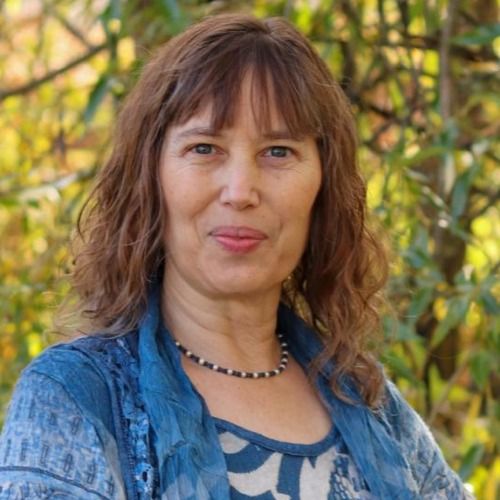
Every child is born with an inner light, an inner voice that guides them toward who they’re meant to be. But teachers, coaches, siblings, and even well-meaning parents can dim that light without realizing it. Margie Hamner joins us to share how families can protect it and support it in growing brighter. After decades as an HR leadership instructor and executive coach, Margie had an unexpected vision of herself in a field, sharing a ball of light with a circle of children. That vision became her Magic Ball of Light book series, set at a summer camp in the Blue Ridge Mountains where kids learn real life skills. She shares how one of her characters learns to trust her intuition, from the moment she ignores the thought to pack her raincoat to the knot in her stomach that gives her the courage to say no to a prank on a friend. Margie compares intuition to a muscle that grows stronger with practice. We talk about how parents can model this by narrating their own decisions out loud, so kids can see what listening to that inner voice looks like. Margie also shares the “bubble” she teaches teens to picture around themselves as protection from social media and other invisible influences, and Herb offers a rose meditation he uses for the same purpose. We also explore the special role of grandparents. Margie calls it “grand power”: the unhurried attention, play, storytelling, and family traditions that let children feel unconditional love and be fully who they are, even when grandparents live far away.
Guest Bio - Margie Hamner is a visionary author, speaker, and children’s empowerment advocate on a mission to help children embrace their inner light and believe in themselves and their dreams. Through her stories, workshops, and literacy initiatives, she equips children with the confidence, self-esteem, gratitude, intuition, positive mindset, and emotional intelligence they need to navigate an ever-changing world.
She is the best-selling author of Magic Ball of Light: Summer Camp, Magic Ball of Light: Winter Holiday, and a contributing author to Brave Kids: Short Stories to Inspire Our Future World-Changers, Volume 3. Her storytelling blends imagination with practical life lessons, inspiring children to trust their inner guidance and step into their potential with courage.
Before stepping fully into her calling as an author, Margie enjoyed a distinguished career as an HR leadership instructor and executive coach. After decades of developing today’s leaders, she felt a deeper calling to help develop tomorrow’s leaders — our children and grandchildren. That unexpected vision reshaped her path and became the foundation for her LIGHT Framework, a holistic approach to navigating setbacks and discovering new directions.
Margie holds a bachelor’s degree from American University and professional credentials, including Associate Certified Coach (ACC) through the International Coaching Federation and Certified Professional in Talent Development (CPTD) through the Association for Talent Development. She now speaks at schools, community events, and leadership gatherings, bridging her expertise in human development with her passion for children’s empowerment.
A proud grandmother of six, Margie draws daily inspiration from the wonder, imagination, and wisdom of her grandchildren. She and her husband enjoy lake life at their home in Virginia. In her free time, she loves cruising, swimming, fishing, biking, photography, holistic living, and real estate investing.
Bringing Education Home is an educational podcast brought to you by Kristina and Herb Heagh-Avritt.
If you enjoy the show, we'd love for you to leave a rating or review on your favorite podcast app!
Please let your friends know they can listen for free on Apple Podcasts, Spotify or their preferred podcast app or online at Bringing Education Home.
Sponsored by Vibrant Family Education - creating Happy, Healthy and Successful kids
Follow us on these socials:
Facebook Group - The Family Learning Circle
Facebook Business Page: Vibrant Family Education
Support Bringing Education Home
Copyright 2026 Kristina & Herb Heagh-Avritt
This podcast is hosted by Captivate, try it yourself for free.
Transcript
I now have the pleasure of introducing Margie Hamner.
Margie is a visionary author, speaker and children's empower advocate on a mission to help children embrace their inner light and believe in themselves and their dreams.
Through her stories, workshops and literacy initiatives, she equips children with the confidence, self esteem, gratitude, intuition, positive mindset and emotional intelligence they need to navigate an ever changing world.
She is the best selling author of the Magic Ball of Light Summer Camp and Magic Ball of Light Winter Holiday and a contributing author to Brave Short Stories to Inspire Our Future World Changers, Volume 3.
Her storytelling blends imagination with practical life lessons, inspiring children to trust their inner guidance and step into their potential with courage before stepping fully into her calling as an authority.
Margie enjoyed a distinguished career as an HR leadership instructor and executive coach.
And after decades of developing today's leaders, she felt a deeper calling to develop tomorrow's leaders, our children and grandchildren.
That unexpected vision reshaped her path and became the foundation for her Light Framework, a holistic approach to navigating setbacks and discovering new directions.
Welcome Margie.
It is a pleasure to have you here today.
So very much looking forward to this conversation.
Margie Hamner:Thank you so much, Christina and Herb.
I'm just so honored to be on your show today.
Kristina:Thank you for being here.
Yes, we love, we love whenever we have people come on because we always talk about education and the fact that we want to do body, mind and spirit.
There is different pieces that need to interweave to really help our future leaders.
As you were saying in your bio, future leaders learn, grow and develop.
So thank you so very much.
And so Margie, start with that passion.
What was it when you turned that corner away from corporate, away from all those other things and you started looking?
Was there a specific moment or a specific instance that was like, you know what, I need to bring this light and this other framework into the world for our kiddos.
Margie Hamner:Yeah, I can start a little bit with that story.
And I, in fact I wrote about that story story, which I'm going to give you a short version in the Journal of a Visionary, which is also a Brave Healer production book that came out last year.
And basically I was on a zoom call similar to this and I had an unexpected vision during that zoom call and I saw myself standing in a field holding a ball of light surrounded by children.
And it was a little bit weird, I have to say, a lot weird because.
And I saw myself not wearing my professional attire.
I was wearing more bohemian and gypsy type of attire and I was holding this ball of Light.
And I shared it with the child to my left who put it in his heart.
And then he shared it to the little girl on her his left.
And she put it in his heart, in her heart.
And it went all the way around the circle.
And then everyone walked away and they were shining.
They.
They're like, kind of like Care Bears.
If you remember that TV show.
Kristina:I love my Care Bears.
Herb:No idea what you're talking about.
Margie Hamner:It's more of a girl thing, I think, probably, but it was, it was a thing back, you know, probably 30 years ago.
But basically I.
This kind of, you know, threw me kind of for a curveball and I wasn't quite sure what it was.
And after a lot of time of, you know, contemplation and prayer and, and journaling, I realized that I wanted to write children's book.
And I started writing the first one again based on the vision I saw, which is this lady holding a ball of light.
I said, well, you know, maybe I need to write about that.
But then when I was writing about it, I was like, what is the ball of light?
You know, I mean, I didn't want it to be anything like, you know, woo woo, or like Harry Potter or, you know, anything like that.
I wanted it to be something practical.
So the kids, basically, when they put this ball of light in their heart, it sparks their own inner light that they're born with.
So they're every.
I believe that all children are born with their own inner light, which is their inner compass, which is their inner voice.
It's also, you know, their purpose for, for being here.
And many times children, based on things that happen in their life, that that light gets dims.
And maybe not to their fault, but teachers, coaches, siblings, parents, people dim their light and say, you can't do this.
You, you know, you shouldn't follow that dream.
You won't make a lot of money or whatever.
So they choose not to listen to that inner light.
And that's really what I really want to do, is help kids shine their light.
Kristina:So beautiful.
I was very, very fortunate because my inner light lined up with a lot of what other people saw in me as well, and that was being a teacher.
And so I got to do for so many years, and I get to do it in all sorts of different ways now with adults and kids and parents and all sorts of things.
Herb:And I'm still wondering what I'm going to be when I grow up.
Margie Hamner:Well, hey, I didn't figure mine out until the year I turned 60, so I'm guessing I'm a little older than you, so you still have time.
Herb:I got four years.
Kristina:Oh, my gosh.
So what's one of those things that we can do?
Let's just jump in and be practical.
What are one of those things that we can do?
So we either a don't dim that light or be supportive.
Growing that light.
What's something that you love talking to the kids and the parents about?
Margie Hamner:Yeah, and I wrote about that in Brave Kids, as you said, the Brave Kids.
This is volume three.
I wrote a chapter called listen to your inner light.
And basically, that's what our inner voice.
And I really.
I go through a story.
So all of my stories are set in this.
In the Blue Ridge Mountains, in.
At a camp, you know, surrounded by mountains and pine trees and a lake.
And primarily because I always wanted to go to summer camp when I was a little girl.
And I never really got to go.
Cause there were seven of us.
But my dad's family's from Charlottesville, Virginia, in that area.
So anyway, so I write about this.
All the setting is that kids go to this summer camp.
They get a ball of light and they learn life skills.
And so in Brave Kids, Charlie goes away to camp.
Her name is Charlie.
And she's there with three other girls.
Herb:And.
Margie Hamner:And she needs to learn how to listen to her inner voice.
And that's what the purpose of one of the lessons is at this camp.
You know, for example, it's a sunny day.
They're all going to go out and go hiking.
And she has this thought, hmm, I should bring my raincoat.
But she dismisses it.
And then they get out on in the trail, and then it starts raining.
And everybody pulls out their raincoats out of their backpack, but she doesn't have hers.
So she's like.
So she's learning from Mimi, the camp leader, how to listen to her intuition.
You know, there's another time where they want.
Her friends want to play a trick on one of the other kids with a spider.
And she doesn't want to do that.
And she kind of goes off by herself and learns to be by herself, to listen to how she feels in her body.
And she has this knot in the pit of her stomach, which is saying, I really don't want to play a trick on Jasmine with this spider.
And she has the courage to come back and take a stand with her friends saying, look, I don't want to be part of this.
So she listens.
So she.
So in the.
In that story, they're helping kids to learn to listen, you know, not just with their ears, but with their body.
You know what, you know what, what is what?
Your intuition.
And just imagine if every child learned that at a young age.
I mean, they wouldn't hang out with the wrong kids.
They wouldn't do things that are probably going to be, you know, like they have that.
They have that little inkling, you know, a little sense that something's not right.
So that's just one of the lessons that I have that I think that would be helpful if all kids would learn.
Herb:So I didn't trust that inner voice of mine.
I was an empath.
I saw all the good in people, and then I watched them not be what they were inside.
And so I very much stopped trusting that voice.
So how do you get kids to trust that voice?
That.
That might be the.
The hypersensitive kid or the empath or that it's like, wow, I see all this amazing stuff, but then these kids aren't being what they could be.
Margie Hamner:Yeah, I mean, I think it's.
I think it's a journey, but I.
The analogy I use, it's like building a mus, you know, so you have to practice.
Just like anything that you want to cultivate and get good at is first just being aware and noticing, you know, keeping track of what, you know, when I have this thought in my head, you know, we have a jillion thoughts that go through your mind a day.
Right.
So how do you discern which one is that, that voice, you know, that part that's really part of you?
And, and what, what, what, what.
What it's saying to you?
And so I think if, you know, if I learned that younger, it would be more reliable.
But I think.
I'm not sure.
I'm not.
I'm not sure I'm answering your question specifically, though.
But tell me a little bit more about your question, what you're really asking.
Herb:Oh, well, I was a different kind of a kid.
Again, a highly sensitive empath, even as a young kid.
And so even though I was one of the bigger kids in class, even the smaller kids picked on me because I wouldn't fight back, because fighting back hurt me more than it hurt the kids.
So it's like, So I, I again, I would see.
I. I would see these greatness in these little beings like me, and then they wouldn't act that way.
And so I couldn't trust that voice because it's like.
Because I. I saw basically, I saw God in everybody, and then they didn't act like it.
Margie Hamner:Yeah.
So it's not like they just.
They made it.
Disappointed you.
Herb:Yes.
Kristina:No.
Margie Hamner:Yeah, I got.
I gotcha.
Yeah.
Yeah.
And so, you know, these are.
There's a.
It's complicated.
It's not.
If it was easy and it was, you know, cut and dry to listen to your intuition, I think we'd all be doing it.
You know, it.
It takes a while.
It takes a lot of time and trust of yourself and Pratt, you know, trial and error.
Herb:Yeah.
And where I grew up in a little tiny town out in the middle of nowhere that is like a summer camp all year long.
Yeah.
That wasn't safe for me, so it wasn't safe for me to necessarily explore that.
So how do we.
How can we help children who don't feel safe in expressing that?
Margie Hamner:Yeah.
I mean, I think it's just a matter of confidence.
Right.
And confidence is.
Is just really being able to trust yourself in.
No matter what happens to you in life.
Right.
So to be able to be in that situation where, you know.
You know, where you have to.
You have this sense that you should do something, and sometimes it's going to work out, and sometimes it's not.
It's just to keep trying it and.
And cultivating and sharpening the saw.
Kristina:I think one of the things that really will help as well, and you've been doing it, is writing the stories, Right.
Because if a kiddo can read a story and see an example of it.
Right.
And see how it turns out and what goes next, that's really going to help them.
And I think also the modeling of the parents, because parents have kind of cultivated that, hopefully, and they're using it.
But if they only keep it inside of themselves and never explore or share that with their kiddos, then the kiddos don't know.
So if a parent can, like I like to call it, narrate out loud.
Oh, I was thinking about doing this, and then I felt something or I heard something that kind of pushed me in a different direction.
And, boy, am I glad I listened to that, because.
Right.
If we can give those kinds of examples and share with our kiddos as they're developing, hopefully that will help us.
Herb:And there's a much.
There's a lot more information out there and a much better vocabulary to deal with people like me when I was a kid that they didn't have the tools back then.
So.
So, yeah, definitely.
Margie Hamner:And I love what you said about narrating out loud.
You know, whether it's a teacher or whether it's a parent, a grandparent, you know, to Be able to say, you know, yeah, this is what, you know, kind of walk them through how you came to that decision or how.
Why you made that choice or, you know, because, you know, that would be ideal.
And again, I have no.
We all have to pick our lane.
And so I know your lane is a lot with parents.
You know, mine is for kids and grandparents.
And so, you know, for you, you can help the parents because I can't help them all.
So I just got to pick the group that I want to focus on, which is the kids.
And, you know, as you said, a book is one way, but not all kids read.
So I'm exploring, you know, pursuing.
You know, I've contacted some folks in.
In the Hollywood area about possibly creating a.
A miniseries or TV series.
You know, we'll see.
It's a long shot or.
And I'm not a video game fan, but kids are playing video games.
So if can imagine a video game where they're in a camp Inner Light.
It's called Camp Inner Light, by the way.
Camp Camp Inner Light.
They're in this world where they get points for practicing gratitude.
They get points for positive affirmations.
They get points for helping the kid that falls off his bike, you know, and goes and helps him rather than riding by, like, say, imagine it's a race and you fall off your bike, and I stopped to help you.
And so I would, in a way get more.
And the way I see the points is not points like money, but their light goes.
Shines brighter.
So like, so as I'm in the game, my.
And I'm winning points or gaining points, my, My.
My ball of light in my chest, it's.
It's getting brighter.
So anyway, that's sort of like what I love to do, too.
Kristina:Yeah, no, that sounds amazing.
And it, you know, those are the kinds of things that our kids nowadays are into and would connect with.
Right.
But I think also just spending that time with grandparents and seeing their inner light shine and their wisdom that they've gathered over all of these years.
Talk about that a little bit.
How do you work with the grandparents?
What do you try to do to help make those connections strong?
Margie Hamner:Well, it's funny you should ask that because I literally just started.
I had my very first grandparent workshop last week because it was Grandparents Week.
It was in middle of September, is always Grandparents Day.
So I had a retirement community in my area that they hired me to do a.
An experience.
So it was a 90 minutes.
And so we all talked about it was connect, remember and guide so how to connect with your grandkids.
Okay.
Different ages, different places, you know, how do you do that?
Is it like social media, texting, facetime, email, you know, some are still writing letters, believe it or not.
Herb:All those cool things that the old people and homes know how to do just right off the bat.
Kristina:Yeah, yeah.
Margie Hamner:So then, then guiding, you know, how to guide, guiding them or.
No, remember, so it's more.
I didn't want it to be a one way.
So the grandparents telling them all about them or themselves because kids are going to fall asleep, you know, they're like, oh, when I was your age, you know, this is what I did.
The kids are like, you know, just like out.
So make it a two way dialogue, two way conversation, you know, tell me a little bit about you and tell.
When I was at your age, I did this.
So kind of make it about, you know, how things were, are same or different, you know, because we all had maybe a girlfriend or a boyfriend or a friend that doesn't want to play with us anymore.
And you know, you know, whether you're 70 or whether you're 7, that's going to happen.
That happened to you.
And then just, you know, guiding them, guiding them to create that connection, curate that, those, those memories and connection with them so they can help them shine their light.
Kristina:Yeah, yeah.
Herb:I love when my mom starts to tell those stories of being in Iowa as a kid in school and playing jacks in the coat room when the weather got bad outside.
And what is jax?
It's like a little 6.6 spiky things and you throw a ball up in the air and then you grab a certain of them and then you catch the ball and.
And so it's like kids nowadays have no concept of that.
And so these stories, my kids used to love to sit around and listen to those stories of the way things were.
Margie Hamner:I think they do.
When I see my grandkids, it's like they can all be doing something and any type, my husband or I say, you guys want to hear a story about when I was little?
They completely stop whatever they're doing and they just give us their attention.
I think everybody likes stories, especially if it was stories about us, you know, or sometimes I tell them stories about their mom, you know.
Kristina:Yeah,.
Margie Hamner:When your mom was 13.
Herb:And I love those video clips online of kids nowadays looking at stuff that we had growing up, like a rotary telephone and not knowing how to dial the phone or you ask them what the yellow pages were and it's like, oh, is that a Band.
They have absolutely no clue.
And so the world is changing so fast right now that.
Yeah.
Even.
Even back in the:God, it makes me feel old.
Kristina:Oh, my gosh.
One of the keys there, though, was you ask, you know, would you like to hear?
Right.
So instead of just saying it or just like, kind of assuming.
Right.
Whenever you ask or invite in, that brings a different level to the story and what's being heard as well.
Yeah.
Margie Hamner:And another thing we did, too, in this grandparent workshop was to think about ways to pass on a legacy or family traditions.
What's a family tradition that.
That maybe I grew up with and then I did with my daughter, and now we're doing with the grandkids, for, for example, it would be like making Christmas cookies or something that we always would do.
And that continues on, you know, keeping that tradition, you know, whether it's watching the football game together, you know, on a Thanksgiving afternoon.
So, you know, each family can identify what those are.
Kristina:And those times are so special, especially whenever they start understanding the history behind it.
You know, one of the things I absolutely love doing with the boys, of course, was decorating the Christmas tree, because I had a special box of the older ornaments that came from somebody else or from a time when we did something special, and then being able to relive those and share those times and those memories were always amazing.
Herb:Yeah.
Like our first puppy with the boys, we have a little ornament of the first that looked like the first puppy that we had.
Whenever that came out, it's like, oh, yeah, I remember this puppy.
And.
Yeah, those.
Those kind of things.
Kristina:Yeah, that's great.
Margie Hamner:They may continue doing that, you know, saving all those ornaments for them when they're older.
Herb:Part of the reason that we got started in this is.
Is we had originally wanted to start something where we actually brought the children and the older people together, because having lots of children, especially in, like, a retirement home, it energizes the older people, and they see all the life, and they smile, and it gives them something to do.
Kristina:And.
Herb:And then the younger kids get this wealth of knowledge and just being around that generation through osmosis, they.
There's this sense of grace and continuation and manners.
And manners.
And then.
And then when the stories start, you see their eyes just light up.
And so that's what you.
That's what you are bringing.
Margie Hamner:Yeah, yeah.
A lot of them bringing.
Bringing that.
Helping, you know, create that experience or, you know, create that discussion with the residents.
Residents in these retirement communities where they can, where they can do that with their grandkids, so, you know, to help them really.
And I think there's something unique about being a grandparent.
I mean, I was a parent, obviously, to be a grandparent.
When you're a parent, you're busy and, and you're, you know, you're trying to get.
Go to work and you come home and you make dinner and you're, you got to do homework and do bath time and get ready for bed and you don't always have that time and attention to really listen, you know, really, really be completely present.
You know, grandparents, we do that more.
I think at least what I observe in that we don't have an, we don't have an agenda like, you know, we want you to get.
Of course we want them to get an A or, you know, we want them to get good grades, but that's not so important.
We really just want them to be happy.
We really just want them to be who they are.
And sometimes some parents may have an agenda to what we want you to be a, you know, a scientist or we want you to be a football player or we want you to, you know, they have their own kind of agenda that the child sort of adopts and that's not really their light, is it?
You know, and so, you know, just helping, you know, the grandparents can help spark that in kids can.
They can really feel that unconditional love.
Herb:Yeah.
We used to be in a very multi generational families area area and it's like multiple generations and, and actually with inside of the same household.
That's why they say it takes a village to raise a child because the parents would go off to work and the grandparents and aunties and aunties and uncles would be around doing a lot of the raising while the parents were out.
Then our generation came around and it's like both parents had to go to work and, and they moved out and they got their own, their own places as they became more urbanized.
And so we stepped away from a lot of that.
And so we've lost a lot of our traditions and our family values because our children are being raised by the school system.
So bringing that back, how do the grandparents get involved again?
How do.
Because it's like we don't get to see our grandchildren because we were deemed disrespectful by our kids by talking to our grandchildren.
So how do we start bridging that.
Margie Hamner:Gap is bridging the gap, you know, in, in.
In today's world is what you're saying.
So, so in the situation where the grandparents aren't living at home, like the, like the TV show the Waltons, I thought about that the other day.
You know, the grandparents were right there in the same house with the whole family, you know.
So what you're saying is like, you know, with the.
Your question is all really about the grand.
The grandparents may be working, too, or the grandparents might be in a different city.
Mom and dad are still working and doing all the things, you know, like we were just saying, making dinner and homework and bath time.
But grandparents can still stay connected, you know, and that's where you got to be creative.
And that's what we talk about in the course, you know, is just, you know, maybe FaceTime, maybe it's letters, maybe it's, you know, playing a game together online, you know, together.
Some type of chess, for example, or checkers, or maybe something that the grandparent knows how to do with the child just to keep that connection there.
Herb:Yeah.
Kristina:And.
And then, you know, it's amazing because the kids start looking.
It's like, wait, Grandma and grandpa can use that kind of phone or that kind of computer or, you know.
Yeah.
And sometimes, you know, there's that hurdle, though, especially for people who don't feel very tech savvy and stuff, so finding something that you can do confidently and share with the youngers.
Yeah.
Thinking about, you know, have you ever worked with grandparents who maybe have had that little bit of a.
A riff or a disconnect with the kiddos?
And so it's harder to talk to the grandkids, talk about that if you've dealt with a client.
Kind of like.
Herb:Yeah, because right now, a lot of my friends, they're like, no, you're wrong.
We're not going to listen to you.
We didn't like the way you raised us, so we're going to be.
Raise our kids differently.
And so I.
There's a lot of my friends who don't see their kids or their grandkids anymore.
How do we.
Margie Hamner:I see.
I see what you're saying.
I see what you're saying.
You know, and.
And I've, I've.
I've seen that too.
It just seems like there's such a rise of that, and it's very, very sad that there seemed to.
I don't know if it's what the.
What I've heard people call it.
It's just kind of like a.
Almost like the cancel culture.
I'm just gonna cancel those people out of my life.
I'm just gonna, like, they're just gone like they never were here.
And I don't understand that, you know, but I can, I can see how people might do that, you know, where for whatever reason they, they choose to dis their whole family or their parents.
And so their grand.
Their children don't get to the experience of being with their grandparents.
Herb:It actually happened to us.
Our youngest son does.
Hasn't talked to me in about 10 years and we don't get to see our granddaughter anymore, so.
Margie Hamner:Oh, wow.
Yeah, that, that, yeah, that, that.
That's hard.
That's hard because I think it's one of those things where.
Yeah, my sister had the same situation that she is at.
Not she doesn't see her grandson either.
Based on the, the rift between your.
Their.
Your own child.
Yes, I understand what you're saying, you know, and then.
But you really can't step out beyond that boundary to, to contact the child if.
Because you can't really.
Anyway, so you just hope and pray that they'll, they'll see, they'll come back, you know, to you in some way.
You know, that's where we're at.
Kristina:Yeah.
Margie Hamner:Yeah.
I mean, there's a, there's an Oprah episode where I, I don't remember where, where she had people on the show where people.
It's like a thing now.
People just can just erase people.
And I don't understand that.
Herb:So.
Margie Hamner:Yeah, so I feel for you.
Kristina:Yeah.
Yeah.
It's one of those things that, you know, you want to think about most generally.
Right.
I mean, yes, we have unfortunately have some bad parents and things like that, but most generally they're doing the best that they can with what they know and how that.
With the circumstances at the time and then to give a little bit of grace, to give a little bit of compassion that, you know, things don't always turn out the way we want them to sometimes.
But yeah, having those talks, that communication is really, really important.
That inner light.
How do we bring.
Continue to bring that out?
How did the grandparents help the grandchildren bring out that inner light a little bit more?
Talk to us about that.
Margie Hamner:Yeah, I think, I think I call that like grand power.
You know, we might have like a grand power to bring that light out.
And again, it's.
Because, I don't know, maybe I'm talking for myself too, but I just feel like I can be a kid again, you know, again, I can just.
Although when my daughter was little, I would get on the floor and play Barbies with her and make believe and dress up and, you know, I did all that with her.
And I'm doing that with my grandkids too.
So it's like a chance to be like a kid again.
And it's fun and, you know, to.
I just love to watch them, you know, like if you have a Play doh, for example, and you just put it all out there, like what they create with Play DOH or Lego is another one, and not try to, like, be the one guiding, like, what they're going to build.
Just watch what they build.
It's fat.
I find it fascinating, you know, just to see what they think is what they build and then just to give them that positive reinforcement, that encouragement.
Herb:Wow.
Margie Hamner:What is that?
Tell me about it.
What is it?
And like, oh, it's a spaceship.
And you're like, okay, don't look like a spaceship to me.
But it does to them.
So you don't shut them down, you know, you encourage them, you know, that.
Herb:That's.
Margie Hamner:That's a spaceship, you know, and.
And it's a cool one, you know, so just really just being present and valuing them.
I. I have one grandson who has adhd and he.
And I don't know if I mentioned to you, but a lot of the book, A lot of the characters in the book are my grandkids are in them.
And so we were talking about it in the car.
I love car conversations because I think they tell you a lot because you're driving, they're in the back, and they just tell you everything.
So.
So my one grandson says, so what.
What are you going to write about in the next book?
You know, for what, what is going to be my chapter?
I said, well, what do you want your chapter to be?
And he says, well, could you write about that?
I have adhd.
I'm like, sure.
Well, what should I say?
You know?
He's like, well.
And then he went on to tell me how he thinks in his head.
I'm like, oh, my God, I wish I was.
I wish I could pull over and write it down, you know, when you want it.
I should have done that, but I wasn't fast enough, you know, but.
But I should have recorded.
But just it was fascinating about, you know, how his mind works and what he sees and how he is creative and every minute he's got all these ideas in his head.
And I'm like, that is so cool, buddy.
Wow.
I said, I would love to write about that for you, with you in that book, you know, and so, so really just being.
Accepting them for really who they are, you know, and, and Try.
I really am trying to understand because, you know, understand how he sees the world through his brain.
So.
And I guess I'll figure that out when we do the chapter.
Kristina:Right?
Yeah.
So I guess that's the next question.
Do you have another book in the works?
Because you had the two already and then you have, you know, several other conglomerates.
Not the right word.
Sorry.
Whenever you have multiple authors in the same book.
Margie Hamner:Yeah, like, yes.
So the one like Brave Kids was a.
Like, what do you call anthology?
Kristina:There we go.
Anthology.
And so know that word.
Margie Hamner:And then.
So, Jen, Brave is coming out in a couple weeks in October, and that one's going to be for teenagers.
So these are author.
Each 24 authors each wrote a chapter about how to be brave as a teenager.
And so on.
That one I wrote about, that one's called Bubble up, and that one's really about kids putting an imaginary bubble around themselves, which is more of a metaphor for all the invisible influences that affect these kids today, such as having a phone.
And, you know, you're on.
You post something on Instagram and you're like, oh, my gosh, did nobody like it?
You know?
You know, or, or, or like you're.
You go down a rabbit hole on YouTube, you're like, one minute you're watching a soccer video and on these cool soccer moves, and next thing you're in a rabbit hole two hours later.
I mean, you don't realize what influences you.
These are invisible things that are influencing us as well as, you know, other people's feelings and emotions.
So I have one example where a little girl, her parents were fighting, and you know how you come in a room, you can feel that.
You can feel the.
The negativity or the vibe that's invisible.
But it can affect you.
It can affect the way, you know, or else you can bubble it up.
You can put a bubble around and you're like a bubble boy.
Like, it's bounces right off of you.
So, so anyway, so.
So, so that one's coming out next.
And then.
But the question you asked is, I am going to write another one.
For the series of the Magic Ball of Light, we've got the winter holiday and the summer camp.
So the.
The next one will be summer spring break, but I'll probably do that one next year.
Just because I've got a lot this year coming out on your plate already.
Kristina:Yeah, yeah, exactly.
Yeah.
I love when you talk about that invisible.
That bubble.
Right.
That kind of helps either shield you from some of those negative energies or something like that.
Or it just kind of gives you a little bit of a boundary.
But the other thing you were saying is that I like to call the Spidey sense.
You know, you think of Spider man, it's like also, oh, there's something there.
I know there's something there.
It could be the positive things, right?
Parents around Christmas time, the kids are like, okay, there's something there.
I know something special is going to happen, but then also the negative things that happen.
So yeah, being able to put that shield, that bubble around you, just being.
Margie Hamner:Aware that these things are out there and the bubble is sort of just a, kind of a.
Because it's for ya.
So it's like for, you know, 12, 13, 14 years old, they're still kind of in that middle school age.
They might still like the analogy of a bubble.
You know, just imagine something like a barrier, like a shield in a way.
So, so you're protecting yourself because you're aware that these things are happening.
Kristina:And then you don't always have to let it in.
Herb:It.
Kristina:It, you know, it's when you're feeling other people's energies and emotions, you don't always have to let it in.
You can hopefully discern and look inside and say, that's not mine.
I don't have to deal with that.
Right.
I mean, sure, you want to be kind and caring and, and take care of those people around you if possible, but it's not always have to be taken in and, and dealt with.
Herb:Yeah, I have, I have a lot of like woo exercises for that, like rose meditations.
And, and like when you're talking with somebody, you put a rose between the two of you and you talk through the rose and then you decide what comes through the rose.
And everything on this side of the rose is me.
And everything on that side of the rose is Shakespeare's theater.
It's.
It's all outside of you.
And so you're responsible for what's, what's on this side.
You're not responsible for what's on that side.
And so that's the same way with, with the bubble.
It's like the bubble is where you are.
This is, this is my energy, this is me.
This is the outside stuff.
That's, that's the play.
That's the stage that I get to interact with, but I'm only responsible for what's on this side of the bubble.
Margie Hamner:I love that.
Kristina:I love that.
Margie Hamner:I should have talked to you before I wrote that.
I could have done the rose instead of the bubble.
Kristina:Okay.
Oh my God.
Margie, this has been a great conversation.
Did you have anything written over on the side on your nose, like I want to make sure I talk about this or I want to make sure that I bring up this topic as we're discussing today?
Margie Hamner:I don't think so.
I think we've covered everything.
I think we're all on the same page.
We all just want to help kids to be their best selves, you know, to shine their lights.
And you know, parents, grandparents, teachers, you know, families can all help to make that happen.
So, so, you know, I just feel very thankful for you to invite me to, to speak with your, with you and, and your audience.
Herb:And if somebody does want to work with you or get more information from you or get your books, how can they get a hold of you?
How can they find your books?
It's like, oh, I really want more information on this.
I would like to work with her.
How do they get a hold of you?
Margie Hamner:Yeah, the simplest thing is just to go to magicballoflight.com then.
So even though that's where those books are, might you can get in touch with me on email.
But then they can also get the brave kid books as well.
And then the Jen brave books will also be linked, you know, there'll be links there as well.
So I think I'm going to eventually change that to shine your light.
But for now it's under the magic ball of light dot com.
Kristina:Beautiful.
So go there, check out the books, get a hold of Margie and tell her what an awesome job she's doing as well as if you have a question, I bet she'll probably answer that for you.
Awesome.
Thank you Margie so much for being here and audience, you know, we bring on experts, we bring on people that we find that has useful information for you and your family.
You might be going through a low point, maybe they can bring you up a little bit.
You might be going at a high point and want to go higher.
Whatever is happening with your family right now, think about you, your family, your values and bring and hold those people who are dear to you close by.
Herb:And I would also like to thank you for being here today.
Again.
There are so many people who just complain about the things that going on.
They, they, they aren't doing anything.
But you actually are writing books.
You're out there helping people.
You went out and you, and you found your information.
You, you fought your dragon, you got your gold and you're bringing it back and you're sharing it with the people around you and that is the hero's Journey.
People, you know, when you put yourself out there, people throw stuff at you to bring you down, but you're out here happily sharing and trying to make the world actually making the world a better place.
So thank you for doing what you're doing.
Thank you for helping people.
Thank you for what you do.
Margie Hamner:Thank you very much.
I love that.
I've never been told I was doing the Hero's Journey, but thank you.
Kristina:Beautiful audience.
As we're wrapping up, please do us a favor, right?
The more shows like this get out there, the more kindness, the more gratitude, the more positive ideas and affirmations we have out in the world.
So help share this show.
Bringing education home so that other families can also up level and raise happy, healthy and successful kids.
Herb:And make sure you leave a comment and if you share it, do an at the person because that increases our engagement and that makes it so that the algorithm will put it on to out to more people who are watching this kind of stuff.
And if they're watching this kind of stuff that they're trying to get information, so help them get the information by share, like subscribe and and comment.
Comments are amazingly powerful.
Kristina:So there we go.
All right, until next time.
Remember, we are now dropping two shows a week, one on Tuesday, one on Friday.
So go find the newest show out.
Thank you so much for being here and until next time, bye for now.
Margie Hamner:Bye.