Episode 13
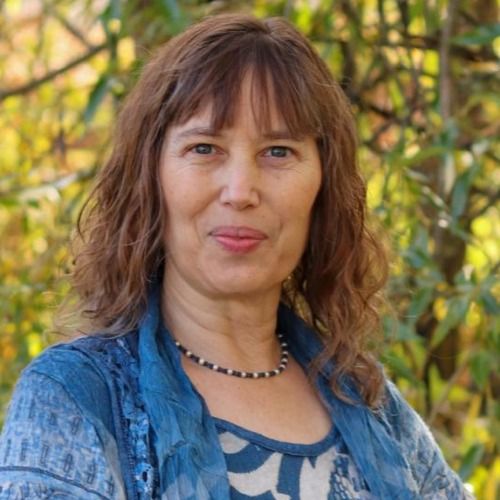
S3EP13-Jennifer Ternay-Parenting Off Autopilot: How We Teach Teens to Toss Their Head Trash (Spoiler: Curiosity Wins)
ities pile on and suddenly you forget what you wanted; the cure is deliberate curiosity and courage. Who do you want to be? What matters? Living richly isn’t a bank balance metric — it’s health, wealth (aka time & options), love, abundance, and joy — and balancing those is how you live beyond your head trash. We also chew on the parenting mirror: children absorb what they see — the grumbling about work, the exhausted hustling, and the social-media scoreboard of "success." That gets internalized as head trash in them. So the parenting ask is simple but radical: model curiosity, let them tinker, give them emotional language, and resist turning their childhoods into 60-hour workweeks disguised as enrichment. We riff, laugh, and promise no guilt trips — only messy progress.
A gift from our guest: A quiz that will help you discover your Head Trash type. Knowing your type can help you understand the strengths and challenges that come with it, recognize how your Head Trash tends to show up and see where it may be getting in your way.
Visit: www.jenniferternay.com to do your quiz now
Jennifer Ternay helps successful professionals, executives, entrepreneurs and business owners who know something needs to change but can't seem to move. They overthink, second-guess, and convince themselves to stay where they are, often because money, responsibility or the fear of getting it wrong keeps them stuck. Jennifer helps them untangle the rational-sounding thoughts that disguise themselves as logic, responsibility or "it's not the right time." She calls it Head Trash. A former CEO and CFO, executive advisor and entrepreneur, Jennifer has spent decades helping organizations navigate complex decisions, improve financial performance, and lead through change. Today, she combines that executive experience with coaching to help people cut through the noise, make better decisions and live more intentionally.
Bringing Education Home is an educational podcast brought to you by Kristina and Herb Heagh-Avritt.
If you enjoy the show, we'd love for you to leave a rating or review on your favorite podcast app!
Please let your friends know they can listen for free on Apple Podcasts, Spotify or their preferred podcast app or online at Bringing Education Home.
Sponsored by Vibrant Family Education - creating Happy, Healthy and Successful kids
Follow us on these socials:
Facebook Group - The Family Learning Circle
Facebook Business Page: Vibrant Family Education
Support Bringing Education Home
Copyright 2026 Kristina & Herb Heagh-Avritt
This podcast is hosted by Captivate, try it yourself for free.
Transcript
I now have the pleasure of introducing Jennifer Ternay.
Jennifer helps successful professionals, executives, entrepreneurs and business owners who who know something needs to change but can't seem to move.
They overthink, second guess and convince themselves to stay where they are, often because money, responsibility, or the fear of getting it wrong keeps them stuck.
Jennifer helps them untangle the rational sounding thoughts that disguise themselves as logic, responsibility, or it's not the right time.
She calls it head trash.
As a former CEO and cfo, executive advisor and entrepreneur, Jennifer has spent decades helping organizations navigate complex decisions, improve financial performance and lead through change.
Today, she combines that executive experience with coaching to help people cut through the noise and make better decisions and live more intentionally.
Welcome Jennifer.
It's a pleasure to have you here today.
Thank you so much for joining us.
Jennifer Ternay:Thank you for having me.
I'm excited to be here.
Kristina:We are so excited to have you here because even though your bio is more around corporations and things like that, when we got together and talked, you're like, you know what?
This message is also really relevant for parents and teenagers and how they like communicate with each other or how they kind of stop each other.
So I'm looking forward to diving into this as well and this thing called the head trash.
But before we go there, why this passion?
What is it in your life, in your career that kind of pivoted toward, you know, doing what you used to do to what more of what you're kind of doing now.
Give us a little bit about that passion.
Jennifer Ternay:Yeah.
So a lot of it actually came from being a single mom raising two girls and really wanting to deep dive into what was going on with me because I was having relationship issues with my kids and when they were in high school it was Covid.
So you had all the stress of being at home and we were all in the same space.
And in that process, I really started to look much more at who I was and shift it the way that I think.
And it really meshed up really well with a lot of my experiences in the corporate space because I did a lot of consulting and people would focus on process and systems, but they forget the human element.
Like people have to go along with it.
So a lot of that became a huge shift.
And then I wish I had known it earlier, but I didn't.
That I just started trying to help my kids understand it more.
So of explaining that process and the transformation that I went through and trying to help them see things differently.
Kristina:And that's, you know, the core is one of the reasons, because at first Jennifer Was like, I'm not sure if I can really help your family.
It's like, no, right there.
What exactly.
You said talking to those teens and helping the teens process what's going on.
Because, you know, we all or most of us probably have a running dialogue in our head.
And sometimes we think we're odd because we have it there.
And then other people like, oh, wait, we ours is talking differently than somebody else's.
So when you can kind of poke holes at it and say, you know, what about this?
And what about this?
So, yeah, this thing called head trash, let's get that kind of labeled and definitionized.
That's not really a word, but yeah, let's go there really quick.
And then.
Yeah, defined there we.
And then we'll go into kind of like some of the processes, some of the things that we can kind of help our families with.
Jennifer Ternay:Yeah, sure.
So head trash came about because I didn't realize all the noise that was going on there.
Like, I really didn't.
And how much it was like this little voice that kept saying, you aren't doing enough, you aren't doing this.
You could be doing more.
Or is that exactly right?
And just instead of it being helpful.
And that's what the interesting part about head trash is.
It actually starts as something that can be a strength, but when it goes too far, that's when it becomes head trash.
And some of happens when we're kids.
And so like, there's this whole parent thing around.
There's certain amount of guilt that I guess maybe I carry and have tried to address of things that I may have said to my kids that I didn't mean it to be interpreted that way.
And yet there's a certain amount of.
It doesn't matter what you say.
Someone's going to interpret it however they want.
And so learning to see that filter of how you internalize and interpret things is what may cause you to either succeed or it can become the head trash and the thing that stops you from moving forward.
So it's this weird sort of duality of strength, but then goes too far.
It can become a weakness.
And the other piece of it is something that helps you get so far, won't ultimately get you where you want to go.
Like, you have to keep evolving.
So then it's recognizing that and being able to shift direction is really the whole space.
And what it is for me about is it helping or is it head trash?
And if it's head trash, let's see, spot it, figure out what to do with it.
And approach it differently.
Herb:Yeah.
One of the things that we try and do is help parents recognize this and teach these skills to their children earlier.
But the thing is, is the children don't have.
A lot of times the head trash actually is one of the last brain development stages that happens between 25 and 30.
That's when that ability to look back.
And so before that, your head trash is very encouraging.
And it's probably not trash, but after that, you start to learn regret, and you start to be able to look back at your life and go, oh, that was kind of dumb.
And that changes it.
So the one of the issues with teaching this stuff with two kids was they don't have the background and the experience to understand it.
So when I try and tell kids, I like, lay it out, but I know that I'm planting a seed.
So just giving them this information earlier won't make sense, but then they'll have it in their foundation that they can pull out later.
And so when.
So I try and do that, because sometimes it's like, oh, man, why are you not doing this?
And it's like, I have to remember that their brains aren't quite there to be even.
Even able to understand some of these things yet.
Jennifer Ternay:Yeah.
And they haven't had the experiences yet that would cause them to question things.
And one of my favorite things, and I'm sorry, I'm gonna throw my mom under the bus.
So I have a younger sister who was a professional dancer for a little while.
And when we were growing up, she was this the creative one and I was the smart one.
And it led me to wanting to explore creativity in a way that I went way over the top, you know, like, made my own curtains, recovered furniture, stenciled painted walls, wallpapering, you know, any kind of craft you could smack on me, I was all over it, baking everything.
And then my mom doesn't even remember the comment.
And yet I took it as, why don't you see me as creative?
Like, I know I'm smart, so I'm just going to ignore that.
And, man, I'm going to prove to you that I am creative in a different way.
But, you know, it's that kind of stuff of, you have no idea.
You have no idea.
So as a parent is like, you know, you're going to make mistakes, and it's not even a mistake.
It's more of what your child may or may not take.
And you can't.
You can't necessarily make that something to beat yourself up about, but also for the Kids to understand that sometimes they may be internalizing something that was completely not intended.
So, yeah, yeah.
Kristina:And this is never our show is never the blame game or the guilt game.
It's like, let's just bring awareness to see if we can make a little change and see if we can do something a little bit better, a little bit different next time with our kiddos.
But yeah, I mean, that's one thing we can't do is I, I, I would consider that head trash all the parent.
Oh, I didn't did this wrong.
I did that wrong.
I'm guilty about this.
Or whatever.
Whatever.
Is that kind of also what we're talking about?
Jennifer Ternay:Oh, yeah.
Because there's so much as a parent of, like, once, once you become aware of the impact of some of the things you may have said or done, then it's easy to get into a space of second guessing, could I have done it differently?
And that's where I think the regret part comes in.
But one of my mom's lines that I absolutely have stolen is, I did the best that I could with what I knew at the time of.
I was like, you know, that is so true.
Based on what I know now, I probably would have done things differently.
But at the time, you do what you can, and there has to be grace for being less than perfect and compassion for yourself to be okay with that, you know?
Herb:Yeah.
I use that when I'm dealing with other people so not just myself.
It's like, I don't know what that person's going through.
What I did should not have elicited this kind of response from that person.
So instead of fighting back or getting angry, it's like, wow, there's something really going on with this person.
There's something going on in their head that I don't understand.
And so I'll extricate myself from that situation or try and calm it down because it's like, it's not about me.
Having that understanding of somebody else is having a bad day might take it out on you.
It's not about you.
And that's, that's a hard one.
That one's not.
That one's not so easy to get children's head wrapped around that.
Oh, he was mad.
He was being mean to me.
Is like, are you sure he wasn't just in a lot of pain?
Because when you're in pain, you say stuff that you don't mean.
Jennifer Ternay:Yeah, yeah.
And I think kids, and I'm not up on all the science, but there's a space where that everything's very black or white, it's either right or wrong.
And they have to grow through that, that space during those years because then you get a little bit more space and you can have, I think, more compassion, more understanding.
Where it takes a while to get there.
Kristina:It does.
And it's one of those things that kind of like Herb said earlier, is that, you know, just planting those seeds with the kids, they might not understand what you're saying to them about walking in somebody else's shoes or looking from their different perspective.
But if you plant that seed at that little age later, when their brain can connect and can understand, then it makes sense and they can apply it a little bit quicker because it's not the first time that they've heard it.
Yeah.
Jennifer Ternay:And I think a lot of that comes.
Some of what I have found with dealing with head trash is to get much more curious and ask questions.
So as a child, I'm sure you can't do that, but as a parent, you could ask questions in order to give a different perspective of like, you can do it for yourself, but you can also ask your child questions where they can look at things differently than maybe realizing that there's more than one interpretation of whatever the event is that occurred.
Herb:I was at the gym once and there were some younger adults in the sauna, kids, probably young teenagers.
And something was being said and it was a conversation around.
And then I kind of.
I'm kind of a guru, sage kind of a person when I get rolling.
And so I said a bunch of really cool stuff and then I paid attention.
I was like, you know what?
You're not going to understand any of this, but in 10 or 15 years, the fact that you heard this right now is going to be really beneficial.
And their, their dad was in there dwelling and he's like, yes, that.
So it wasn't.
It was like.
Because it's like, this is something that.
It's like it doesn't make sense now.
It's affecting you now, but it doesn't make sense now.
But when you look back at it later, remember what this guy said.
So those kind of things, they can be good or they can be destructive.
Again, like the.
Oh, you're the smart one.
And it's like, what?
I'm not creative?
That.
That was never said.
Jennifer Ternay:No, but that's how I interpret it.
Right, right.
And then that's the story you carry forward.
And it can, you know, my house looked great and kids had a lot of homemade from scratch things, which was great.
But sometimes Growing up, my exhaustion.
Herb:Yeah.
Growing up, I hated the word potential because everybody used that about me.
He's got so much potential, but he doesn't do anything.
It's like, nobody could push me, nobody could stretch me, nobody could challenge me.
So it's like I would just do the.
Whatever they said to do.
And they.
But he could do so much more, but they couldn't challenge me to do it.
So, yeah, that sense of not living up to my potential has followed me for quite a few years.
Jennifer Ternay:That's a tough one.
Yeah.
Herb:Because they were trying to encourage me.
Instead, it went the other way.
Jennifer Ternay:Right, right.
Sometimes it can motivate you, and sometimes it can just cause you to stop.
Kristina:Yeah, exactly.
So I think one thing there is awareness with parents is that if you have, you know, maybe inadvertently said something to your kiddos and their behavior changes or the way they approach something changes, check in with them.
It's like, hey, when I made that comment the other day, did you take it like this, or did you take it like this?
Because I've noticed a little bit of a change.
It's like, what could you do to check in with your child and say, you know, did something.
I say, change something for you?
Jennifer Ternay:Yeah.
And I think one of the things that I wish I'd had a handle on better was around being able to speak to emotions and identifying them.
Because at the time that all of this kind of hit hard for me, I realized that I did not have the emotional bandwidth to handle everything that I was dealing with as a single mom and didn't have the words, like, I. I think I was emotionally numb before all of this stuff started breaking down of like.
I joke, I don't know how many midlife crises I had, but it seemed like way more than necessary and had to do with the fact that, like, I could only identify, like, happy, sad, angry, and it was.
But there was nothing in between.
So that being able to speak to it and letting you see the interpretation that a comment may have been made because that feelings turns into thoughts, and then the reactions, they all tie together.
Herb:And when we grew up, Gen X, 70s and 80s, it's like your feelings don't matter, your actions matter.
So I don't care how you feel, make sure you do a good job, or it doesn't matter how you feel.
So it's like, what are feelings?
And so growing up and with our kids, it's like, you know, your feelings aren't as relevant as your actions.
And so that.
That has a way of seeping in and I'm still unpacking that with my coaches and my, my.
I wouldn't say therapist, but the people that I deal with to try and work my way through some of, of that and get my emotional back.
My emotions back because they're still distant at times.
So.
And again, that's why getting this information to children earlier is so much helpful and why emotional intelligence is one of the big buzzwords lately.
Jennifer Ternay:Yeah.
And a lot of this is tuning into the feelings that you have to help identify when things are flaring up.
And that, that voice inside of you is kind of saying different things that are making you act maybe not in your best interest or doing things that you're taking too far.
Like, again, the success becoming the thing that drives you over the edge of always think back to.
In college, I used to think procrastination was something that just really helped me because then I could settle down and focus.
And was recently reading something about the adrenaline surge that you get from when you're feeling that way and how much people can kind of get hooked on that as a way of propelling themselves forward and.
Yeah.
And that, that stress of, oh, my gosh, I, you know, don't want to be caught out for not getting the work done.
So now I'm going to knuckle down and get it done.
Herb:That's also, that's also in personality profiles in the Meyer Briggs.
I'm an INFJ, and INFJs are known for that of last minute pulling out miracles and amazing work that was there the whole time.
We just wait till the last minute to do it for some reason.
And so that, that's a personality trait that, that I have.
I still, I still do it.
If I work early, then, then I spend.
I turn into a perfectionist and I nitpick it until it all falls apart and then I have to do it all at the last minute again.
Kristina:Anyway, I was laughing because whenever you were saying that, I pointed out myself for those who aren't on video with us, because it's one.
Yeah.
Like you said, it's kind of, kind of a personality trait, but kind of like what you were saying is something you can kind of get addicted to that adrenaline rush.
And I see that in myself.
Right.
It's like I procrastinate.
I don't do the project until it really needs to get done and then it turns out fine or better than fine according to other people.
But at the same time, it's like, wow, why did I put myself through so much stress?
Jennifer Ternay:Yeah.
Yeah.
So then It's a matter of noticing that that's how you tend to act.
And once you've got the awareness of do I really want to be that way or is there something that I can change that would allow me not to have that stress?
And I think some of that maybe comes with age of the realization that it does take a physical toll.
There are, you know, I've got all kinds of horror stories from things that happened because I was so stressed out all the time and not taking care of myself.
The priority was everything but me.
And yeah, and it does, it catches up with you.
But when you're younger, you don't believe it and you discount it and it's like, yeah, yeah, yeah, yeah, whatever.
Herb:Yeah, my 10% work was better than most of my classes, 100% effort, so why try?
So now how do we, what are some practical steps?
How do we start.
Start with this, because we're talking about, if we start talking about youngers is like how, what is the process of starting to work with this?
It's like for me the first part is, is in noticing, but it is yes.
Jennifer Ternay:So one of the things that I've done is my take on head trash is to really start identifying the characteristics and how it shows up.
So I have sort of a fun little quiz that goes through and if you answer the questions, it'll give you what one of five types you are.
So these are built around the same idea of what I learned during my coaching program, where it's the strength, but it's also the weakness.
So I played around with these and just had some fun with them.
And the five are the prepared doubter.
So the person that has to prepare so much because they're afraid of dealing with uncertainty and they want to make sure that they've measured everything.
But then they often get to the point where they can't decide or they don't move forward because they're not comfortable yet.
The nonstop slacker who feels like they're slacking if they're not constantly on the go, but if anybody looks at them from the outside, they're going, I can't believe that they've done all these things.
And somehow for that person, it's like it's never good enough.
And then the next one is what I call the put together hot mess.
They look super organized, but on the inside it's a little bit like, oh my gosh, if I don't have control over this, if there's any kind of disorganization or lack of control, it makes Me so uncomfortable.
So I'm going to clamp down and figure it all out.
The compassionate contortionist, who is the person that wants to take care of everybody else and forgets to put themselves on the list of what they need to do.
Yeah, and it's funny because we'll have a little bit of all of them.
And then the last one is the grounded worst case warrior.
So this is the person that is very realistic, likes to make sure that they've managed things focused on safety, but boy, they can spin out and worry about everything to suddenly it's gone from a small to this huge worry that the world is going to fall.
So a little bit of chicken little going in on there, but once you can start to see those patterns and then looking at how they show up.
So each person within those sort of types can have certain characteristics.
Like you talked about perfectionism.
So if I'm a person that wants to be prepared, I'm going to keep researching and figuring out what is the right choice.
But then if I'm sort of the compassionate person, my concern is that my perfectionism will keep me trying to make sure that everybody else is happy, that everyone else is taken care of.
And so once you understand kind of what your type is, then you can start seeing how those behaviors show up.
And a lot of it is, like you mentioned, it's the noticing.
And the part that we get into is that autopilot of like, it just becomes the assumption that this is the way it's supposed to be until it breaks.
So if you get to the point of noticing it, then you can take some time to say, well, is this really what I want to do?
Or is this something that somebody told me how I should be?
Because it's often about the shoulds.
It's the what I call who is shoulding on me.
And that is shoulding, because you have to have a proper pronunciation on that one so it doesn't come out the wrong way.
But a lot of it's the stories or things that we were told as kids of this is how it's supposed to be.
And at some point you have to come up and decide whether that's true for you.
Like, does it matter?
What are your values?
Kristina:What.
Jennifer Ternay:What makes a difference to you?
Who do you want to be as a person?
And those are some pretty heavy big questions that you often aren't prepared for until you're a little bit older.
Herb:I actually kind of want to take your test because normally when people like list out those alternatives, like she was like number four is like, oh yeah, that's me.
I didn't necessarily identify as like, oh yeah, that one's me with any of those five.
So maybe I'm like a six category.
Because I would like just slack until it became and I would do just enough.
And then when just enough wasn' enough, I would like look around like, what do I need to do to make it just enough again?
Jennifer Ternay:And I'll show you.
You have percentages, so nobody ever comes out as just one.
But it'll give you an idea of you've got, you know, 10% prepared doubter or you're 50% hot mess.
But yes.
So it gives you a blend because I, I highly doubt I have not met one person yet or worked with anybody that falls 100% into one category.
Herb:Yeah.
And I think I'm considered a polymath because it's like, I'll find an interest and I'll take it to where I get to like 80% is like, I'm good at it.
And then I get kind of bored and it's like, I'm good at this and I'm good at this.
So I'm like a jack of all trades, master of none kind of a thing.
Oftentimes better than a master of one the whole series.
But so, yeah, I, I, that just irritated the heck out of people because they would see that, oh, wow, you're really good at this.
You should do that as like it's not interesting anymore.
Jennifer Ternay:Yeah, yeah.
Oh, yeah.
There's a whole piece on that of.
And I am one of those.
I finally realized that instead of talking about how I didn't stick with anything, that I was just going to call myself a dabbler because I like to dabble in different things, particularly around hobbies.
And I can't say that I've mastered all of them, but I do it long enough to figure out if I like it or don't like it and maybe have basic skills.
Some might be a little bit more, but yeah.
And I again, like, you think back to the things that happened earlier.
I can really remember so clearly going through an interview in college where I was talking about how I tried out a bunch of different things in college and you could see the interviewer was going, can this person stick with a job?
Or are they going to be kind of flaky all over the place?
And so I started backpedaling because, you know, I wanted to make sure that it came across well in the interview.
But I can pinpoint that exact moment where it felt like it was wrong to want to experiment and try different things.
Herb:But my personality thrives on.
On novelty.
So.
Jennifer Ternay:Yeah, yeah, me too.
Kristina:I wanted to go back to.
Is that that word should that you were talking about?
Right.
And it's one of those things that so many parents get into that mode of shoulding on themselves.
Right.
Oh, my parents parented like this, so I should do it like that.
Oh, my child, you know, thrives in this area, but I'm not very good at that, so I should do more of that.
Is all of those things that we put on ourselves, like you were saying.
But at the same time, it's like you have to have that openness and awareness of doing things differently when it really is a right fit, when it really is aligned with values, aligned with learning styles, aligned with things that help you improve and grow and help your children approve and.
Jennifer Ternay:Yeah, yeah.
So a lot of, for me, is the going through so that you can see.
So the awareness of spotting, spotlighting it and looking at what has shaped your past and what are those stories that you're carrying forward.
It's being able to see that clearly and diving into all of those pieces of it.
A lot of it is looking at who you were as a child and things that you valued as a child versus things that maybe you got disconnected from.
Because I know a lot of people talk about reinvention.
I'm not really keen on reinvention.
I really think it's about reconnecting to who you are before everybody put all those shoulds on you.
And so I kind of work through a process of can you see what's happening clearly?
Like, can you objectively look at it?
And then being in a space of wanting to choose courageously of what it is that you want to stand for, that's really getting into your values, deciding what matters, showing up in a way that you want to live.
And then the last part is living richly, which is not about money.
It's really about being who you want to be in alignment with that.
And maybe that means financial, maybe it means time, maybe it means autonomy.
It's about really living the life that you want to live.
And I know sometimes that sounds a little corny or overused or whatever you want to describe it as, but it really comes down to, this is the life you get to live.
And if it's not the one you want to live, then what are you doing?
There's some realities you have to deal with, but, you know.
Yeah.
Kristina:And what are you showing your.
Your kiddos?
Right.
Especially those who are old enough and aware enough.
You're teenagers.
If you're.
You're just, like, putting up with or living only to this space and you want so much more, what model are you giving them and what are you letting kind of plant in their head to shape their future?
It's something we don't really want to do.
It's.
Again, you're basically putting head trash in there that we don't want them dealing with.
We want to keep that.
Herb:Yeah.
Jennifer Ternay:And the things that we grumble about as parents, the kids pick up on.
Oh, yeah, they completely pick up on where you're.
You know, how you talk about things at work or you talk about things within relationships.
They hear that, and that ends up shaping their sense of what's normal.
Herb:Yeah.
They're also more likely to act out on it and speak out on it.
So.
Oregon, and we moved here in:So that's the way all their parents talked.
And my parents were actually very well received when we moved here.
But all the kids.
To all the kids, I was one of those darn Californians.
So I was.
So all of that stuff that they said was acted out by their children at me, and that's a whole different relationship.
And, you know, there's.
There's biblical what you're doing.
There's biblical responses to what you're talking about, like capturing your thoughts, noticing, filtering, and then getting rid of the ones that you don't want to.
And another thing that I heard you say reminded me of memento mori.
Remember that you're going to die.
So, yeah.
That is so important, even for children, is like, you know, you've only got so much time here.
You've got.
So why are you putting all of this garbage on yourself?
It's like, live the life that is going to be fulfilling and beneficial for society and let the garbage go.
Because it's like, you're not going to be here forever.
It's not a permanent.
We're not here in a permanent situation.
So let the garbage go and hold on to the good stuff.
Jennifer Ternay:Yeah.
And that doesn't mean just do what you want without concern for other people.
But I think what I've seen the most is that you get to the space and the midlife crisis, which I don't know that anybody's calling it, but at some point, it becomes about permission.
Are you allowed to want what you want?
Do you even Know what you want because that's the other thing that ends up happening later is that you've pursued a path that somebody else laid out for you and you made choices.
But then you get into this space of you're just in the day to day life of working, raising kids, doing whatever your case, but all these responsibilities start coming on top of you that lots of times you can lose track of.
What did I even want?
Am I allowed to want, you know, that, of that whole sense of not having the value set of what matters to me most and what do I want to experience out of this life?
Who do I want to show up as as a person?
For me that was, that was a huge part of it is really it comes down to who do I want to be?
Herb:And, and, and yeah, that, that memento mori that, that we're only here live your life that definitely is not just about you.
Because the best way to live your life is to live in your community and in relationship with other people and being honest and being truthful because that brings you more rewards.
Because if it's like me, me, me, me, me, then pretty soon everybody's like pushing you away and then it's just you, you, you, you, you.
And that's not a pleasant place to be either.
So in that whole kind of theory, it isn't just about you, it's about you, but how you are in all of life.
So yeah, again it's about making yourself so that people want to be around you.
Jennifer Ternay:Yep.
Yeah.
So a lot of this for is really trying to identify how it shows up as head trash.
And another big part that for me is the curiosity play, experiment and what I call those are little adventures.
So one of the things as part of the quiz, you get a little adventure to try that will challenge what has become your head trash.
Kristina:I like that.
Yeah.
Because one of the things we talk about with our parents as well with their education and the kids like lead with curiosity.
What happens if we try it this way?
What happens if we leave this book at the door and try to learn in a different direction?
Or what if we follow the kids passion and see if we can learn through their passions and things like that.
So basically you're saying, hey adults, let's, let's start doing it the same way.
Let's follow curiosity.
Herb:And as we get older it's a little bit more difficult.
And again, one of the, we talk about the kids and we talk, but really we talk about that so the parents get the idea and they start doing it too.
And Then send that to the kids.
So for our parents out there, what are, what are some steps that we can give for our parents?
What's a good way to do once.
How do you start identifying the head trash?
What do you, how do you start.
So after they take the quiz, what are some of the first steps that they can start to take to help.
To help identify?
Jennifer Ternay:Yeah, so it'll actually describe it for you of how it shows up, how it's strong, and then sort of the cost that it's taking its toll on you.
And once you start being able to notice that it's happening and a lot of it goes into, oh, it's that light bulb moment of I didn't realize that this was part of the head trash driving me to this, that I keep saying yes to everything instead of pushing back and maybe saying, oh, I can't.
And some of that goes into wanting to be seen a certain way or just normally accepting everything.
So there's different ways of, you know, over committing is something that shows up for everybody and it's how it shows up within that type, that archetype.
It isn't just even that it's restricted to one person, but once you start noticing it and you get into that space of realizing the cost of if you're exhausted, you start peeling back the layers of, okay, so what am I taking on?
Or what is driving the exhaustion of Am I saying yes to too much?
Am I what.
What is driving it?
Is it I'm not sleeping?
Is it worry?
Is it, you know, like go through and trying to figure out why it is that you can't rest, why can't you get the recovery time?
So that's always a big one.
You know, parents always seem to be exhausted because they're running around trying to juggle everything.
So if you're trying to juggle everything, what makes you feel like you have to and start asking those questions.
But you have to first identify that being exhausted is not a normal state of being.
It doesn't, doesn't mean that that's the way you have to be as a parent.
Maybe you see other people are.
So it's the comparison piece.
It's the.
Is that what your parents did or is that not what your parents did?
So you wanted to do the opposite.
Like really starting to get in and start looking at my parents did this.
Herb:I hated it.
So I'm going to be like this.
Now we have a bunch of rotten kids running around.
Jennifer Ternay:Yeah, I'm going to be the rebel.
So it's, it's noticing the things that you want to change and sort of diving into what it is that's driving that.
And a lot of it gets to being listening to the quiet voice inside of you.
And sometimes it's really even trying to figure out who that voice is.
Like, sometimes it's your mom, sometimes it's your dad.
It may have been a teacher, could have been a coach from whatever.
But if you spend some time just saying and questioning, well, who's telling me that that's true?
And that question, when you start getting it, then you're like, oh, well, just because they think that, then I need to decide, is that something I believe to be true or not true?
I'm going to make a conscious decision as opposed to just accepting it that that's the way it is or that's the way it needs to be.
So that's the, the part of getting into there, getting into the pulling in out from the autopilot, unconscious drivers to seeing it and then saying, do I want to, do I want to carry this or do I want to let it go?
Kristina:And I want to, you know, also kind of point to society, right?
So many times we're in this Facebook society, this LinkedIn society of this person is successful.
They're doing this and this and this.
It's like, are they really, first of all, and second of all, do you have to be the same way?
Right?
Is, is our society, quote unquote norms always lining up with our values and what we care about?
Is it really helping us be a really good person that develops our family and develops ourselves, or is it leading down a road of being too exhausted, etc.
So I really want, you know, parents and families to think about that.
One of the statistics we were told, gosh, on one of the shows is that as parents, we're actually allowing our kids to have like 60 hour work weeks.
If we look at how many activities they are in, plus school, plus sports, plus dance, plus whatever, that we're basically pushing a 60 hour work week on our kiddos and we as an adult, you know, start throwing up our heels and start kicking and screaming like, I can't do that much work.
So we have to really look at, are we pushing that on our kids as well just to try to make ourselves feel better.
Oh, I'm a great parent.
Because they're involved in so many.
Herb:Yeah, my kid's sitting still.
Oop, there's another hour I have to fill.
Kristina:Yeah, right.
Can they be bored?
Yes, they can be bored.
And it's okay.
Yeah.
Jennifer Ternay:Yes.
Yeah.
Allowing that space.
Yeah.
I think the other part for me was really coming into the realization that health wasn't a priority and that you need to look at what are you doing around your health and that being your mental health, your physical health, sort of your spiritual health, what are you doing around your relationships, which ones matter, where are you prioritizing?
And it's not just relationship with others, but it's also relationship with yourself.
And the other component is usually around financial or work and how you're managing those pieces.
So for me, it's really become a mantra of its health.
Wealth, love, abundance, and joy are the five things that I want to keep balanced.
And wealth, being around time, it's around money, it's around experiences, it's a broader definition of wealth.
And the abundance of being grateful for what I have and always seeing that there's more and sharing and.
And joy really being.
I want to have a joyful life.
Like, if all that's in place, then you're living in a way that is joyful.
So if you can get to what I call life beyond head trash, it's defining what those things are that matter for you and living in a way that's in alignment with those.
And not that you'll ever be a hundred percent perfect, because then we're back to that thing again.
It's doing the best that you can at whatever phase in life you are.
Kristina:Absolutely love it.
Jennifer, this has been a great conversation.
If any of these nuggets have fallen on ears that are, like, more curious, how do they get a hold of you?
How do people like, I need to talk to Jennifer about my head trash and try to get out of some of this.
Give us.
Give us your contact information.
And of course, everything is down in the show notes.
Jennifer Ternay:Yeah.
My website's jennifertourney.com so last names T, E, R, N, A, Y.
My email is Jennifer, JenniferTourney.com I keep it simple.
And I'm on LinkedIn.
I'm a little bit on Instagram.
Not out there too much, but you can reach me through all those.
And I have a Facebook page as well, so.
Herb:And we're coaching.
We have coaches, and you're a coach, and I'm sure you have coaches and, you know, the best athletes in the world have coaches.
The best golfer in the world has 11 coaches.
And so the idea of reaching out for help should not be something that stops you, because so if this isn't making sense and you're having these issues, it's perfectly okay to reach Out a coach you could get.
If it's worse or different, you could go with counselors.
There's so many different ways to start identifying your head trash.
And usually one of the hardest is trying to do it all by yourself.
So.
Jennifer Ternay:Yeah.
Herb:So again, the coaches have coaches every.
You know, so don't be afraid to reach out.
Don't be afraid to reach out to Jennifer because, yeah, they see things that you don't.
Jennifer Ternay:You can't see your blind spots.
That's why they're blind spots.
And blind spots aren't always negatives.
Sometimes blind spots are.
You don't see your strengths and what you bring to the table and being able to show that.
And I love one of the best things is that a coach has no skin in the game to the extent of they're not a family member.
It doesn't impact them personally.
They want the best for you, and they will do what they can to let you see that and grow in a way that's aligned with what you want.
Herb:Yeah.
Insureds turn into, hey, would you like to try this?
Is this possible?
Would this work?
And it's not a you should do this.
It's like, hey, let's find something that helps work for you.
Jennifer Ternay:Yeah.
Yeah.
They will ask all kinds of questions.
Kristina:Beautiful.
Jennifer, is there anything that we haven't talked about today?
They had it written over on your little side notes, like, oh, I want to make sure I talk about this or that.
Is there something else or just some last words for our audience before we wrap up?
Jennifer Ternay:Yeah.
I think the other thing that I would say is what works for one person doesn't always work for.
For you.
And you need to recognize that that comparison piece doesn't work.
And following somebody else's blueprint also doesn't always work.
You have to find what makes sense for you and draws on your natural strengths and abilities.
Herb:Oh, yeah, that's the whole.
If I can do it, anyone can do it.
It's like, that is so not true.
If I can do it, anyone that's just like me can do it.
So all of those things work.
Everything works, but they don't work for everybody.
Jennifer Ternay:Yeah.
Herb:So that's.
That's something to keep in mind.
So you do need to keep looking for what works for you.
Jennifer Ternay:Yes.
Kristina:Beautiful.
I love it.
Thank you, Jennifer, so much for being here.
I love this conversation.
I love my new term that I get to use, like head trash.
Is this really something I want to keep in my head, or do I want to take it out and put it someplace else that I don't need it anymore.
So thank you very, very much.
Herb:Yes, thank you for being here.
There are so many people that just talk about the problems and they throw the shoulds around and there's like, oh, wow, yeah, you should.
And they don't take it on in themselves.
And you're here saying, like, look, I can help, but it's you, and you.
You've went out, you've done the work, and instead of sitting and complaining about it and throwing shoulds around, you're actually helping people.
You're actually making a difference, and that makes all the difference.
That makes you a hero, because, you know, they go out, you fought, you fought the battle.
You found the treasure, and the treasure, you bringing it back to the community to share.
And that's the hero's journey.
So thank you for being here today.
Jennifer Ternay:Thanks for having me.
Kristina:You're very, very welcome.
All right, audience, it is your turn.
Time to, like, subscribe, share.
Take this information that you have learned, what you've just listened to, and don't just put it in your back pocket, but take it out and use it.
Put something in place in your family.
Put something in place in your own life.
If you find something that is wonderful that you think could help somebody else, gently share it.
Of course, we don't want to push anything on anybody, but just giving them the opportunity to listen to a show like this that might impact their life is something that you can do that can help other people.
So please, like, review, share, let them know about bringing education home and all the ways we try to help create happy, healthy, and successfully successful families.
Herb:And if you do share, make it a comment.
Do an at the person that you want to share it to as well as sharing it to your.
Your page or whatever that helps increase our.
Our activities and it makes it more so more people can see it.
So if you do that, do it both ways, and that helps other people share it farther.
So thank you.
Kristina:All right, audience, until next time.
Herb:Bye for now.