Episode 10
S3EP10-Dr. Stephen Jones-We Stole College Hacks: Summer Camps, Math & Scholarship Tips Dr. Jones Swears By
I sat down with Dr. Stephen Jones and we tore open the mystery of studying like we were peeling a banana—simple, nutritious, and a bit slippery if you don't know what you're doing. I tell you, Dr. Jones had that classic first-gen college arc: stellar high school, confused freshman year, then a whole-life pivot into helping students and parents not repeat the same faceplant. He walks us through the basics that actually matter: reading for comprehension (not just volume-of-words flexing), asking open-ended questions at the dinner table, and turning passive absorption into active application. We geek out over how experiential learning—plays, museums, STEM kits—makes concepts stick, and why finding your child's learning style (visual, tactile, or memorizer-extraordinaire) is a game-changer.
We also get real about logistics: time management, procrastination spirals, and the absolute power of routines (bag-by-the-door, clothes-out-the-night-before—tiny rituals, massive ROI). Dr. Jones peppers the chat with concrete tools—Pinterest boards full of activities, Stemfinity for hands-on experiments, and the magic of summer college programs that let kids try on campus life without committing to the whole adulting package. Parents take center stage here: we learn that being involved, curious, and humble about asking for help models the exact behavior we want our kids to internalize. Bottom line: studying isn't a mythical, soporific ritual—it’s a set of practical habits, exposures, and conversations that parents can scaffold from day one.
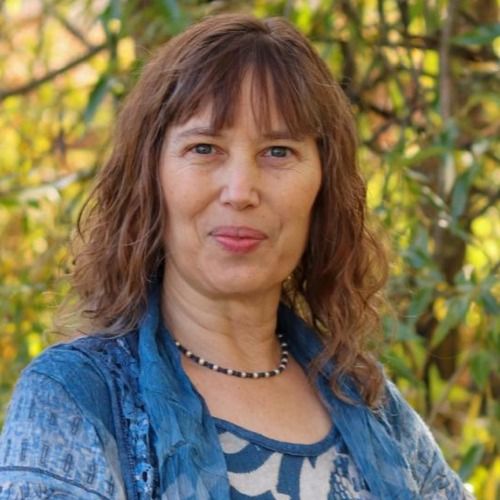
Dr. Jones is an Associate Dean in the College of Engineering at Villanova University and owner of SAJ Publishing and education services. For thirty-seven years, Dr. Jones is a teacher and eduprenuer who has helped students, parents, and professionals to reach their dreams. He has delivered presentations on numerous topics including how to study, finding scholarships, leadership, effective communication, organization, time management and innovative management practices. He is the author of five workbooks titled “Seven Secrets of How to Study” the “Parent’s Ultimate Education Guide” the “Ultimate Scholarship Guide” “Seven Secrets of How to Study.” These books provide an easy understanding of the essential skills a student and parent needs to succeed as k12 students and in college.
Bringing Education Home is an educational podcast brought to you by Kristina and Herb Heagh-Avritt.
If you enjoy the show, we'd love for you to leave a rating or review on your favorite podcast app!
Please let your friends know they can listen for free on Apple Podcasts, Spotify or their preferred podcast app or online at Bringing Education Home.
Sponsored by Vibrant Family Education - creating Happy, Healthy and Successful kids
Follow us on these socials:
Facebook Group - The Family Learning Circle
Facebook Business Page: Vibrant Family Education
Support Bringing Education Home
Copyright 2026 Kristina & Herb Heagh-Avritt
This podcast is hosted by Captivate, try it yourself for free.
Transcript
I now have the pleasure of introducing Dr. Stephen Jones.
Dr. Jones is an Associate Dean in the College of Engineering at Villanova University and owner of SAJ Publishing and Education Services for 37 years.
Dr. Jones is a teacher and entrepreneur who has helped students, parents and professionals to reach their dreams.
He has delivered presentations on numerous topics including how to study, finding scholarships, leadership, effective communication, organization, time management, and innovative management practices.
He is the author of many books, some of which are titled 7 Secrets of how to Study, the Parents Ultimate Education Guide, the Ultimate Scholarship Guide, and seven Secrets of How to Study.
These books provide an easy understanding of the essential skills a student and parents need to succeed as a K through 12 student and into college.
Welcome, Dr. Jones.
It is a pleasure to have you here today.
Thank you so much for joining us.
As someone who is never good at studying and still is not very good at it, I'm actually kind of interested in this because there are things that I feel.
Sometimes feel like I need to study,.
Dr. Stephen Jones:But I've never figured out how.
Herb:So let's.
Let's get started.
Dr. Stephen Jones:Awesome.
Kristina:So why the passion?
What is it about study skills, getting kids ready for the upper high school years and then into college?
What is it about those ages and those years that made you think, you know what, it's time to write some books and get some things out there?
What did you see?
Dr. Stephen Jones:Yeah, so I was the first person in my family to go to college.
And I think that that whole experience of not knowing so much about what it was going to take to be successful, and I had parents that pushed me in that direction.
They encouraged me.
But to actually know what was going to happen when I got to college, that was a big challenge.
So my first semester in college, I had below a C average because there were things I didn't know.
And I think that that gave me a passion later on to want to write these books because.
Because apparently I didn't have the study habits that I thought I had, you know, that I needed.
Even though I, you know, I attended a good school, I had good grades coming from high school, the requirements for study in college were totally different.
And what I really learned was that in high school, middle school, we learn a lot of memorization, but we don't learn a lot of application of knowledge.
And when you get to college, it's the application of knowledge that professors want you to be able to do.
So I think just wanting to make sure that more young people were better prepared as they go in and they could have greater success really pushed me in that direction.
Kristina:That totally makes sense.
And.
And for those of us, you know, for me, school was easy.
Right.
So there wasn't a lot of studying that I needed to get done.
And like you said, once you jump that bridge and you're in college, all of a sudden there's a different set of skills that you kind of need or need to put into place.
And, you know, I made college.
College was fine, but was I continuing the straight A's that I got in high school?
No, they dipped down a bit because like you said, you know, I was the first one to go to college, first one to look at that experience.
And, yeah, I wasn't always taught the study skills that probably would have helped me get better grades in college.
Herb:Yeah, same here.
I was one of the smart kids.
I never had to study.
The teachers stopped calling on me because I always knew the answers.
And I would just sit in the back of this class and read because what they were doing was boring.
And they would ask me a question, I'd pop up and I'd answer the question so I didn't have to study.
And so, yeah, when I got to college, I had no idea what they were looking for.
You know, I was on the dean's list the first.
The first year.
But I came off of it because my grades didn't keep up.
So even though I was smart and these teachers were like, I didn't know how to put forward the work.
Kristina:So let's give the parents a strategy right now.
It's one thing that they can really help their kiddos get ingrained into their learning process, their studying process that will help them later, whatever route they go.
Dr. Stephen Jones:Yeah, now, this is going to sound too simplistic, but young people need to read.
Even though we're still going electronic, in many cases with books, there's still a lot of reading and comprehension, not only just reading, but comprehending what you read is so important.
So I say to the parent, ask your child what they learned from what they read.
Ask them, what's the moral of the story?
Like, what is the writer trying to get you to understand?
And the good thing about that is that you can have a conversation with your child.
Like, a lot of times we let them sit on their.
Their iPads and their tv, but we don't have those conversations.
So when they actually are reading.
And I found this out with my son, so my son was reading, you know, books and volumes and chapters.
So I asked him, what did you learn?
He said to me, what do you mean, what did.
I did.
I learned and it let me know that he really was just reading for volume as opposed to understanding in application of that knowledge, which, you know, when colleges look at students, they want them to graduate with an ability to be critical thinkers, problem solving solvers, and good decision makers.
And one of the ways that you do that is, you know, the way that you read, understanding what you're getting from what you read.
Herb:You know, there is part to that, but I read a lot, a lot as a kid, partly because I grew up out in the middle of nowhere and there wasn't a whole lot else to do.
And there, there.
What if people had asked me, oh, what are you learning?
It's like, well, I learned that this was a really fun story and I could repeat the story, but it wasn't until years later that it's like, wow, you know what?
This set of stories, this really helped develop my political viewpoints.
Wow.
You know, this series of books really helped me understand the ethical structure.
And again, I was reading science fiction and fantasy because that's escapism and.
And there is more truth and humanity in those kind of works as they're seeking the hero and they're seeking the villain.
So it's like.
So there was so much that, that it's like, again, I didn't feel like I needed to study because it's like all of this rich, amazing stuff was happening.
But then when I had to get information out, when I had to like delve for something particular, that's where things started to not be quite so easy.
Dr. Stephen Jones:And to carry it forward.
Herb:So where.
How do you.
Again, yes, reading.
But also, I mean, I read a.
Kristina:Lot the kinds of questions.
Herb:Yeah, but how do you get the reading also into studying instead of just absorbing the information?
Because I was a sponge, I just absorbed.
But the studying aspect of it still, still at 56, kind of creeps me out.
Dr. Stephen Jones:Yeah.
And so I think also it is going out and having experiences that apply to the knowledge that you're learning.
So you can learn that on.
In a environment that's outside of the city, you can learn that environment inside the city.
You can go to different types of science museums and different types of cultural events and have those exposures.
One of the things that really that worked for me was I read a book and then I went to go see a play about the book.
I went to, you know, see a production about the book.
So it gave me more.
It became more relevant alive to me because I actually saw it and there are different learning styles and that's what's something that's important for a parent to understand.
How does your child learn?
Are they a visual learner?
You know, they.
Are they a tactile.
They need to put it in their hands and, and shape it.
Some, some students, they just memorize things easily, but the other students.
So you had to have those different types of experiences.
We were trying to learn anatomy and you looked in a book.
But some student might need to actually see the skeleton of it to really get it versus what's not 3D in terms of its presentation.
So I think parents being really creative around how they can find information opportunities for their children to be exposed to.
And one of the good websites that has a lot of that creativity in it is Pinterest has a lot of different types of activities, games, experiences that you can get into, things that you can apply within the learning environment.
And I always encourage people to join Pinterest.
That's what a lot of teachers are using as well, is Pinterest.
Kristina:That's cool, because I don't, you know, I don't think of Pinterest usually as a learning tool, but I know it's developed so much more than what it used to be.
Just kind of like boards of like, pictures and things like that.
So that's really, really awesome.
And I wanted to highlight something you said.
There is like, the child's learning style, right.
Especially when we talk with our homeschool parents, it's like, you know, you, you teach from the way that you're comfortable, but that might not be your child's learning style.
And so it might not be comfortable for them to receive the information.
So when you really dig deep and find out what, what's your style, what's their style, bridge it in the middle or do a little bit of both, then it helps the teacher and the learner both experience and get the information that they truly need.
Dr. Stephen Jones:Yeah, I have a kind of funny story about that.
More relate to marriage.
There's a marriage test that you can take to determine what.
What's your love language?
And my love language might be giving a gift, but the other person's love language might be time.
And so I'm giving my, my wife all these gifts, thinking that she'll love it, but she really just wants time.
But I have to take time to understand that.
So the same thing with your children.
You know, you may.
They may just want your time.
You know, that could be the most important thing that you give them other than, you know, these gifts and so forth.
So because that's.
Because a lot of times we're giving them here, we'll give you this, we'll give you that.
But they really need.
Is my investment in them.
Kristina:Yeah, exactly.
So as we're, as our children are growing up, so let's start at the very basic.
We're start talking about those learning styles and things at a young like end of elementary school level and then kind of middle school level and then that high school and that college.
Can you kind of describe a little bit how we could work with our parents or work with our kids in each of those levels?
Herb:Yeah.
You said reading is really important to learning how to study, but learning how to read is.
Where does the study then start?
How do we, let's say we have homeschool parents who haven't started, who aren't going to send their children to school.
How do we learn how to study after we start learning how to read?
Okay.
Dr. Stephen Jones:So I think what's really important is it all starts with the kinds of questioning that we're having with our children.
Sometimes we ask a lot of the questions that are just closed ended questions rather than open ended question.
A closed ended question would be how was your day?
And they would say fine, but open ended question being what did you do today?
What did you enjoy today?
So more that you actually have a discussion.
And I think that that's part of the growth of a child as well, that we're having different types of discussions with them as a elementary student versus a middle school student versus a high school.
I mean the level of conversation becomes more sophisticated as you go along and that the parent has to see that or develop in themselves that growth area so they can present that knowledge to them.
One of the things that doesn't happen, I guess when you're at home it's different, but time management, just like managing your time and managing what the child is going to do throughout the day, having a plan, what that is, whether it's you're going to introduce something that's visual to them, whether you're going to introduce something that's you're actually a writing time.
You're going to actually have them build something or create something.
So that's all a part of the time.
And of course that gets more sophisticated as they go along, what they're going to build and what they're going to create.
I remember for me I created a whole model train village.
It was about 15, well, at least 10ft.
I developed the whole platform, but they gave me space to do that.
So hobbies can be a great way to encourage your child.
As well in the learning area, that gives them something to focus on.
And I think that the more that you're engaging them and just like I have, the other thing would be programs like summer programs.
Don't let the summer go by without there being some kind of fun learning experience for them throughout the summer.
I, you know, there, there are all kinds of camps that go on.
We, of course, at the university, we have camps here.
I just saw the children leaving campus, but we had them for all elementary school, middle school, high school.
We have different programs.
A lot of the.
We had at the.
In Philadelphia, you have something called the Franklin Institute.
It's a science center, but they have programming for children elementary school, middle school, and high school throughout the year.
So finding, you know, finding out the schedule of the local science center or the local university and getting your child into that, I, where I lived that there were many colleges near me, but I had opportunities to be in programs on those campuses.
And so just that was their.
My parents way of influencing me.
This is where you're going to be one day.
And so I would actually spend time there and engage.
But I think I agree with you.
Like, each level we want to just give them different challenges, different exposures, and that's going to require us as parents learning them so that we can give them the things that best suit them.
Kristina:Beautiful.
Along those lines, you know, lots of times when I think of studying is like, oh, I have to take notes, I have to make an outline, I have to do this or that, and then I have to review those.
That's what studying was to me.
And I really didn't like it that much.
It was really boring.
Herb:Yeah.
Because for me, studying.
So note taking in was like, take notes.
And all I would do is try and write down what they were already saying.
And as I was writing, so it became more of dictation.
And as I was trying to write down what they were saying to make it stick, I would miss so much more of what they were currently saying trying to.
So for me, I would just like stop taking notes and just try and absorb and not.
And so I was like, how, what, what am I actually trying to get?
Am I trying to get more than what they're talking about?
Am I just trying to remember what they're talking about?
Kristina:What you mean when you say study skills and strategies?
Herb:Because to me, like, when I was studying almost was like memorization.
And that's not really studying.
Dr. Stephen Jones:Yeah, right.
And I think that that goes to what, what are your conversations after you've learned it you know, if you're actually having those conversations, then you're, you're actually remembering what you did here or what you did see.
But a lot of times we don't, we go on with other conversations.
We never bring up what's been learned for the day.
So I think that that's, you know, as you're doing more of that, that helps the learning process.
Oh, yeah, I did.
When I read that, I did see this principle, but I didn't see, I didn't think about how it applies in real life.
So the other aspect of this is visual.
So YouTube, Khan Academy, a bunch of these places that have visual videos that you can watch of things that you're talking about.
For example, mathematically, if you're taking a physics course, you were taking a science course, then you can actually see what they're talking about.
I think it makes it more real.
One thing that I really suggest is, is for parents, something called Stemfinity.
It is a website.
It has all kinds of scientific experimentations and robots and very interactive opportunities for parents.
So they can go to Stemfinity and take advantage of that at all levels, elementary school, middle school and high school.
They have different kinds of things that they can take advantage of with their students as well as they have programming through the website and grants that are available.
So it's, it's a great wealth of knowledge there.
Kristina:That's cool.
Yeah, I mean, there's just so many more things out there now for our families and our students.
Right.
So whether you're in a private school, a public school, homeschool, there are so many different ways of learning now.
That is just off the charts amazing compared to the book and paper that basically we used when we were younger.
Right, so exactly.
Yeah.
So if we wanted our children to be on a college path, what are two things that you would have them really focus on?
And then we'll also kind of go the other way.
What would be two things we'd really want to focus on if they were going to go into like a trade school path or something like that.
How can we help our parents help the kids get where they want to go?
Herb:Yeah, you talked about how, how you weren't prepared for college and just didn't understand the difference in education.
How do we help our kids prepare for that and then be ready to study on their own?
Dr. Stephen Jones:Okay, so I want to answer the first question.
Math and science grades are the most significant predictors of students ability to graduate from college because of the problem solving, decision making, and the way that Math is used.
So helping your child to do well in math or get support in math helps them ultimately in science helps them ultimately down the road.
Because even if they're going to be involved in a trade school, there's going to be some math and science involved with that.
If they're, you know, going to be electrician or they're going to be a carpenter, there's still all kinds of math and they're going to be chemicals that they're going to use.
If you're a hairdresser, if you use the wrong chemicals on a woman's hair, you can do some serious damage.
Herb:Yeah, it takes like two years to become a hairdresser.
It takes like two months to become a police officer.
That's weird there.
Dr. Stephen Jones:So yeah.
So those things I think are really important.
Depending on the school district, I'm kind of biased.
If you're interested in engineering and science, you have to have more math.
You need to go to pre calc and calculus levels to consider those sciences and hard side.
But one of the things that I think is a important strategy with getting a student ready for college is a summer program.
I just ended a summer program.
So I had my student, I had students on campus for a week.
They actually lived on campus.
We had instruction from our faculty.
So we did chemical, mechanical, electrical, civil engineering.
Throughout the days that they were on campus.
They get to, they, they didn't blow anything up, so that was good.
But they did build things.
They built robots and drones and they did experimentation.
They did civil engineering and built all kinds of cylinders made of semen.
And so we gave them something different to do every day.
And so I would say that is a great preparation and they can be in these college programs.
Some of them have middle school programs, but certainly a lot of the colleges have high school programs where they bring them on campus, whether it's, you know, they come back and forth daily or they may have a live on campus campus arrangement.
One thing I will tell you is that sometimes the local high school, if you're in high school, will pay for their student to attend one of these summer programs.
And a lot of times they don't.
Parents don't ask.
Well, ask, you know, you might get an opportunity to do that.
I think one important skill that the student needs to learn in college, I mean in high school, in the middle school as well, is time management.
And when I asked the students how many of you in procrastinators club, like 85% of them raised their hand that they under procrastinators Club.
So we start talking about what are the things that distract them the most, Identifying those things and kind of breaking down those habits.
If they can do that while they're in middle school and high school, when they go off to college and they're, you know, independent and the parent isn't there saying, okay, you need to get this done, they'll be more conscious of that.
That, you know, procrastination ends up in a spiral.
I have seen so many college students that because they've been procrastinating, they get to a point where they feel like they can't do the work at all and they just stop doing everything but, you know, managing your time.
And I will say that most campuses have what they call a student support center.
And in that center, they will help you learn how to manage your time.
They will help you learn how to study.
They'll help you learn how to get organized.
Why?
Because it benefits them as an institution that you can come there and be successful.
Now the issue is whether the student has too much pride to go to get the help that they might need.
I've seen that the students who are getting.
Herb:I must have been absolutely oblivious in college, because I'm sure that there was those programs available, but I never even, like, reached out to them.
I just did my best.
I just get.
Because it's like, again, didn't want to be a burden.
I was smart.
College was actually kind of easy.
The classwork was a breeze until it wasn't.
And I was.
I was getting by.
I was passing.
I wasn't failing.
So it's like.
So, yeah, there was all sorts of things that I just so could have got more out of college, but I got the most important thing out of college.
I went to college to get married.
Really?
That was smart.
Grades, college, college, that was all that I went to.
I went to college to find a wife.
Dr. Stephen Jones:That's awesome.
So, yeah, I did, too.
Kristina:Has.
Has it changed?
Are there more supports available nowadays than there probably were probably 30 years ago?
Dr. Stephen Jones:Yes.
Kristina:Yeah.
Talk about some of those.
Dr. Stephen Jones:Yeah.
So there is a writing center.
Again, if you don't consider yourself a good writer, they will help you with writing, help you get started again.
Procrastination often starts there.
You have a research paper that's due in November, you know, but you just keep putting it off because you don't know where to start.
You know how to brainstorm, you don't know how to organize.
Maybe your school didn't even have you do research papers when you were there.
So now you have to do them.
So you're taking advantage of the writing center here.
And I'm not sure every university has this, but we have a speaking center where if you're nervous about speaking, they will practice with you.
They will work with you on speaking in front of your classes so you can get over that nervousness.
We have a student support services center.
That center provides, like I said, time management, test taking strategies.
If you have maybe dyslexia or things like that, challenges, they provide for that.
So you can get that.
The other thing is sometimes you need to go to the counseling center.
You have counseling issues.
So the counseling centers are available for students as well to address any stress management or any personal issues.
It's a wise person that goes to get the help.
And what I have found is that students are getting A's and B's.
They're going to get help.
They're finding the resources.
They're taking advantage of the help from meeting with their faculty member.
You should absolutely meet with your advisor throughout the semester.
They are a great resource.
They also understand the faculty who are in your department.
So you can take advantage of that relationship.
And if you're having trouble finding a faculty member, that advisor can help you find the faculty member that could help you in a specific topic.
And also they are a resource for all these things that are on campus that you may not be aware of.
So I think that it is really, really important to have that advocate as an advisor.
All students are assigned an advisor.
Herb:Now I know why I drove my teachers nuts by not asking for help.
Dr. Stephen Jones:Yeah.
So the word I would use is don't let your pride get in the way of you going to get help.
I know you might were at the top of your school, a parent, you know, talking to your child.
They were the top, in the top 10 of the graduates in this school.
But the top 10 of the graduates of one school is different than top 10 graduates of another school.
And so just understanding that and just telling your child, hey, you know, you're getting stuck here, go get this resource.
And there are a lot of those also explained during orientation.
All colleges have a fresh new student orientation.
And they kind of go over all the resources that are there so students will know what they can take advantage of.
Kristina:So parents.
Herb:So I graduated second in my class.
And to show you the difference, that means There was only 11 people in my class.
Oh, right.
So like the, the, the top 10, there's only one person not in the top 10.
So you know, you kind of got to take that into consideration.
Dr. Stephen Jones:Some.
me of these high schools have: Kristina:Yeah.
Dr. Stephen Jones:2000 High school students.
They have a principal for each.
Herb:College was bigger than the town I lived in.
Kristina:Exactly.
Dr. Stephen Jones:Yeah, yeah, yeah.
Kristina:So what I was hearing from that is, you know, parents, start feeding this stuff to your kids.
Be the role model for your kids.
Right.
So whether you are a public school parent, you're a homeschool parent, don't say I have to know it.
All right.
Don't be one of those, like, oh, I'm just going to figure out by myself, it's okay to ask for help as parents.
And if you're modeling that for your kids, if they understand that, oh, yeah, you know, we don't have to know it all, we can go ask for help, then they're going to be more likely to go take advantage of these resources at the college or at the trade school, wherever they are, for the.
The next step in their learning journey.
Dr. Stephen Jones:Yep.
Herb:And.
And a kind of underlying theme is, I kept asking Dr. Jones is what can.
How do we help the kids?
And everything.
All the advice he gave was, this is what the parents need to do, so how do we help the kids?
This is what the parents need to do.
So what that means is that the most important indicator, and we've said this before, in your child's education success is the involvement of the parent.
Are you paying attention to what your kid's doing?
Are you helping them study?
Are you giving them the tools that they need?
So again, you know, it's what you're saying, it's kind of also the subtext in there that I'm bringing out.
It's like.
And again, it's like we call bringing education home.
And we help the kids, and we help the kids by helping the parents.
So it's like, we say it's about the kids, but really what we're doing is we're reaching the parents.
Because the kids, it's like they don't have that wisdom, they don't have that drive, they don't have that understanding yet.
That's what we're putting in them.
So, yeah, let them know to reach out for help in college, because they're not going to think about it.
They've got all this flashy, squirrely look at all this cool stuff happening.
They don't, they don't have time to realize they're falling behind or they're getting stressed.
And, and so, you know, be that role model.
Be there for them.
Help them understand that.
Help them get the help.
Help them understand how to look for help.
Dr. Stephen Jones:You brought up another point.
When I was writing my books, my first book was for the student and it was Seven Secrets of How to Study.
And, and then the parents start coming to the workshop was for the student, but the parents start coming to the workshop for, you know, to learn those strategies too.
And they said, when are you going to write a book for us?
So I was like, I just wrote the book for the students.
I didn't think I'll be writing a book for the parents.
So then I wrote a book for the parents because they were, you know, thinking they needed something as well.
So I agree with you.
The more equipped that the parent can be, the better they have the ability to help their child be more equipped as well.
Herb:And, and with all good things, moderation is key.
Don't be that helicopter bulldozer parent that's pushing their kids into 20 hours of stuff a day.
Downtime.
There needs to be, there needs.
Boredom is an incredible education tool.
Dr. Stephen Jones:And sometimes doing things joint with other parents as well.
You know, sometimes getting together with other parents and doing fun activities that are educational at the same time can be a lot of fun for them to learn from each other, for the children learn from each other and learn from other parents, because other parents could say the same thing that your parents said.
And there's a revelation because it came from the ex parent as opposed from their own parent.
So just having those good educational circles of parents to bring your child into.
Herb:So tell us a little bit about your how to study book.
What, what kind of person is going to want to get that book?
Who, who is that made for?
Who needs to read that?
Dr. Stephen Jones:Yeah, so the study skills book is made for middle school, high school, first year college students, and even adult learners who are going back to college after, you know, 10, 15 years.
They haven't studied in 10 or 15 years.
And one of the unique things that I try to do is have those various topics on how to prepare for a test and how to manage your time, how to be better organized, how to understand your teacher.
But one thing that I'm really excited about is that I added a QR code to a podcast that I have called Education Central.
So if I'm talking about time management in the book, you can listen to me talk about time management by taking your phone and, you know, putting it up to the QR code and the conversation will pop up.
So it's not only that, but you also, there's things that you can write in the book for yourself, activities that you can do in the book, it's easy reading.
I'm trying not to make it, you know, a hundred pages of reading for per chapter.
It's probably six pages or so per chapter and some of those are interactive pages as well.
And then I always have my email in the book.
So if they have questions, you know, I'm always available to be helpful to them.
So like I said, middle school, high school, first year college students, adult learners.
The parents book is for birth through 12th grade.
It's like when your child is born.
These are things that you should be doing to give a foundation to your child.
And what should you be doing in elementary school, middle school and high school as they transition?
That's within that book.
And there's some activities, there's QR codes in that book as well that they can take advantage of.
And then I wrote a scholarship book to help them find money for college or the trade school.
It has over 100 scholarship websites and it gives some practical tips on how to interview for a scholarship, how to be organized, how to plan for a scholarship.
And the most consistent thing that I heard from parents is we don't know where to start the scholarship search.
So it gives them some tips on that as well.
I tried to make, like I said, everything's simple, not really sophisticated, something that you can really dig into right away and take advantage of.
Kristina:That's awesome.
And thinking about what's the youngest age that you can start doing scholarship stuff.
Dr. Stephen Jones:Middle school is not a bad time to start looking up scholarships.
I suggest have a binder where you can put information that you receive at various because you'll be in various venues and you'll get information.
So put it into that binder.
It may come to you electronically.
So I say put on your computer a folder where you're putting scholarship information into that folder that you can go to once that child is in high school.
In high school, most college, most high schools have a college day or where they ask you to come.
A lot of times parents wait until junior year to actually go to it.
But I say go to it every year that the school has it because you're going to get new information every time you go.
You're going to pick up information that about college tours because it can vary per year when you're actually going to have those.
So having a folder in your computer is a place where you can keep all that information.
And the most important thing is know the deadlines of every scholarship.
So have a sheet of a sheet where you have running deadline because there's.
Herb:Lots that's how I picked my college that I was going to go to.
I was like, I. I knew I was going to get into whatever college I applied to.
So I had, like, college applications all over my room.
And when it got down to the point where they had all expired, I'd missed all the application windows except for two.
It's like, man, I better get one of these done.
And.
And it was actually one of the.
The five that had been my original picks out of all the ones that I.
Anyway, so.
Kristina:So it wasn't that he picked my college.
Herb:Yeah, obviously.
Dr. Stephen Jones:But.
Herb:Yeah.
That I would.
And the idea of a college tour of going to look at it, that had never occurred to me that that wasn't even a concept that I had.
So it was like, oh, this has some stuff that I like.
I'll go to this college.
Kristina:That was a. Yeah, again, I went.
Herb:To college my freshman year was 19.
Dr. Stephen Jones:Oh, no.
Yeah, well, you know, a couple years ago.
Yeah.
Just for information, there's the common application, which is you fill out one application and then you select the five colleges that you want the CAP application to go to, and it'll go directly to those five colleges.
You pay the fee, whatever it might be.
Okay.
And all in one on the common application, again, I agree with you.
We used to have to have all our applications laid out in paper, all the forms to take to the counselors, the recommendations.
No, that's all in one application.
And the colleges can access it once you apply.
Kristina:That's gorgeous.
I love that idea.
Yeah.
Thank goodness.
So technology is actually doing something a little bit good, Right.
A few less trees, a little bit easier application process, things like that.
Herb:Awesome.
Kristina:Is there anything that we.
That you had written down?
Like, oh, I want to make sure I mentioned this today, or I want to make sure that I talk about this.
Is there anything that we haven't talked about that you wanted to make sure we talked about today?
Dr. Stephen Jones:Well, I.
One of the things I think is really important is organization, making sure that you have a place where your child will study in your home, a desk, a consistent place.
Because there's nothing like when a child gets up in the morning, they have a book that they're supposed to take to school and they can't find it.
So have a consistent place where they're reading, where they're doing their homework.
Please try to avoid the kitchen, because if you put it in the kitchen, what is the child going to do?
Go eat, you know, hang out.
So put it in a place where there are no distractions.
But have that place for them that they can put their, you know, a bookshelf where they can put their books and a place where they can put.
And then my strategy again is the night before school starts, put the book bags at the door.
Yes.
With everything in it.
You know, then before you leave, you can double check it before they go.
But again, I see parents and students leaving things behind and parents having to run to the school to get it to them.
But even if you're, you can do.
Herb:So much more with that too.
If you struggle with getting your kids dressed in the morning, set out their clothes the night before, set out this the night before so that the less decisions they have to make in the morning, the more decisions they'll have to make at school or whatever they're doing.
So it's like you don't.
All you have to do is, is like now or later.
Now or later.
That's the only decision you have to make.
Is it going to be now or in a minute?
Kristina:Yeah, we actually use that a lot even as adults.
Right.
We happen to live quite a ways away from our grocery store.
So the night before we're making sure we're making whole grocery list and we're getting the cooler bags out and all those different things so that when it's time to go the next morning to get to town, boom, we pick it up and go.
So, yeah, absolutely.
Herb:It's kind of like what studying is.
You get ready for what you're doing the next day.
Awesome.
Dr. Stephen Jones:And it's planning.
Like you have to plan to make these things happen.
And it's a good skill for children to learn that you plan for things that you're going to do.
Kristina:Beautiful.
Tell our audience how they can get a hold of you, where the books are, those kinds of things.
Because we always like to say it out loud, even those down the show notes.
But go ahead and get it out there out loud for us.
Dr. Stephen Jones: -:I'm available in all those ways.
I will answer and respond, I assure you.
Herb:Yeah, and we did.
We just talked today about studying and financial aid a little bit.
But you also have on leadership, on several other topics that.
That I read in there as well.
So check him out, go to his website, look at his books, peruse what he's doing.
Check him out.
And I would like to thank you for being here today.
There are so many people like me who don't know how to study, and even when I kind of get it, it's like just enough could have been easier.
You took that problem and.
And you reached out and you went out and fought that dragon, and now you're bringing that information back to the world, and that's what heroes do.
So you found a problem, you solved it, and not only did you make it work for yourself, but now you're.
Dr. Stephen Jones:Sharing it with the world.
Herb:So thank you for being a hero.
Dr. Stephen Jones:And thank you for doing what you do today.
Well, thank you so much.
It's been a pleasure to be a part.
Kristina:Thank you very much, Dr. Jones.
It has been a pleasure as well for me because, you know, being a teacher for so many years, I knew a lot of this stuff and then I forgot a lot of this stuff.
And sometimes, you know, because I taught that lower elementary, it's like they don't need study skills yet.
They're just trying to learn how to read.
But as you build them, as you train them, it really, really helps to get started early.
So thank you again for being here.
Audience, thank you for being here as well.
Because we can't have a show without you.
We can't have the downloads and the listeners and the shares.
Right?
What is important about the show, the show is here for you to get practical tips and strategies to help you and your family move to the next level.
Bringing education home is all about helping you.
The families support you in all of these different things.
So go back and find another show.
Even though we've had other strategy people and other scholarship people go back, every single one has a little bit different angle that might fit for you or your family.
Right?
So we loved having Dr. Jones on the show for those kinds of things, like share, review, and let us know what you like.
We'd love to hear from you.
Herb:All right.
And make sure to leave a comment.
And if you are going to share, do an app person and then that brings them into the comments section and that increases the visibility of the show.
The algorithm will send it to more people.
So if you found any value in this at your brother, at your sister, at your cousin Nancy, it doesn't matter.
Let's get this out so more people can see it.
Kristina:All right, everybody, thank you so very much.
It has been our pleasure.
Until next time.
Bye for now.
Dr. Stephen Jones:Bye.