Episode 8
S3EP8-Ruth Wishengrad-From kids' confidence to cancer care - Turning your story into a chorus
We jump right into Ruth Wishengrad’s world where she crafts personalized “Happy Heart Songs” that blend music, emotion and neuroscience to literally anchor encouraging words into people’s bodies and lives—no fluff, just sticky, uplifting melodies that show up exactly when you need them. We geek out about the neuroplasticity behind repetition, movement and emotion. We also laugh about genre choices (reggae for rehab, chill beats for reflection, disco for chemo—yes, disco), because the right soundtrack matters and Ruth will happily make your anthem whatever vibe helps you thrive. So tune your ears, decide who needs a song (maybe you), and let us convince you that a custom tune might be the most delightful life‑hack you didn’t know you needed.
A gift from our guest: A free gratitude song and a little hug for the heart you can come back to anytime. https://happyheartsongs.com/grateful-song
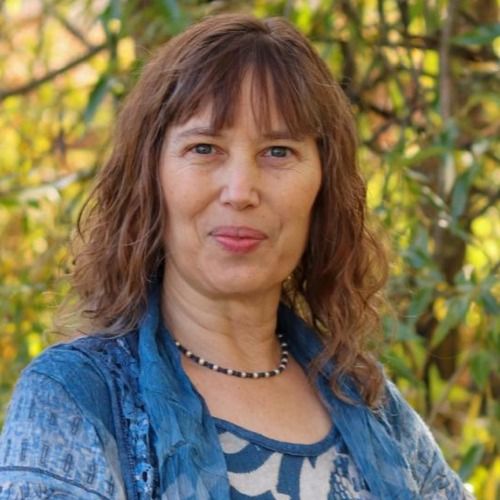
Ruth Wishengrad designs personalized experiences that help others feel seen, loved, and celebrated. She is the creator of Happy Heart Songs, a heart-centered project that blends music, emotion, and neuroscience to create new ways of talking to ourselves. After noticing how deeply songs and lyrics shaped her own thoughts and feelings, she began exploring how repetition and melody could turn encouraging words into something people actually connect with and remember. With over 30 years of experience teaching, training, and coaching, Ruth turns encouragement into music that supports emotional well-being.
@myhappyheartsongs on Instagram
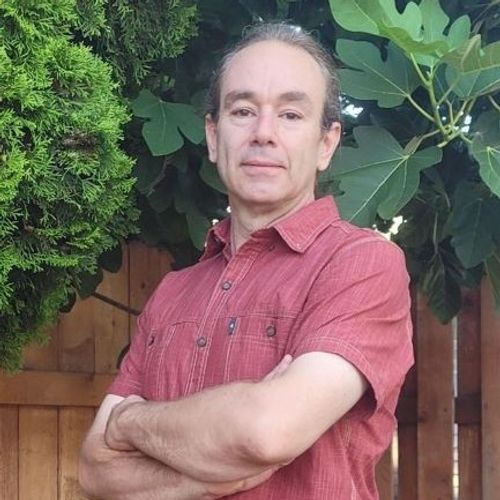
Bringing Education Home is an educational podcast brought to you by Kristina and Herb Heagh-Avritt.
If you enjoy the show, we'd love for you to leave a rating or review on your favorite podcast app!
Please let your friends know they can listen for free on Apple Podcasts, Spotify or their preferred podcast app or online at Bringing Education Home.
Sponsored by Vibrant Family Education - creating Happy, Healthy and Successful kids
Follow us on these socials:
Facebook Group - The Family Learning Circle
Facebook Business Page: Vibrant Family Education
Support Bringing Education Home
Copyright 2026 Kristina & Herb Heagh-Avritt
This podcast is hosted by Captivate, try it yourself for free.
Transcript
I now have the pleasure of introducing Ruth Wishengrad.
Ruth designs personalized experiences that help others feel seen, loved and celebrated.
She is the creator of Happy Heart Songs, a heart centered project that blends music, emotion and neuroscience to create new ways of talking to ourselves.
After noticing how deeply songs and lyrics shaped her own spots and feelings, she began exploring how repetition and melody could turn encouraging words into something people actually connect with and remember.
With over 30 years of experience, teaching, training and coaching, Ruth turns encouragement into music that supports emotional well being.
Beautiful topic.
Ruth, welcome to our show.
Thank you so much for being here today.
Ruth Wishengrad:Thank you for having me.
I'm really excited to be here and.
Kristina:We are so glad that you are back.
We are actually welcoming a friend, someone that we have worked with and, and, and played with and had fun with several times before Ruth came on and did a previous podcast.
We've done a webinar together for parents.
We've done all sorts of things throughout the last couple of years and I am so excited about where Ruth is now with her music and passion and everything.
So tell us, Ruth, why this passion about music and heart songs and how it connects to where you are now?
Ruth Wishengrad:Well, great question.
So I would say that it.
Everything kind of evolved.
Things kind of, you know, which they do.
Right.
Many years ago I had started by this, this interest and love of music.
And when I had the opportunity to, to take a singer songwriter class, I was both really excited and really nervous at the same time.
I, my hand shook when I was pressing the submit button on the, the, the online form and it was a free class.
And I'm so glad I did.
I, I'm so glad I went through that because what it did was it helped me, it helped open up this, what I'm doing now actually started probably 14 years ago.
And that was starting with that singer songwriter class that helped me break free of my fear of singing in public.
That's a big one.
And then showed me that, you know, how to get my music.
Like when I wanted to get my music out into the world, I again, those negative voices came through and so I.
Little positive voices and positive affirmations showed up and they became songs.
And so all of that and, and then over the years I was, and even just recently I just kind of went, huh.
I knew that if I, if I got songs, I always get songs stuck in my head.
Do you guys get songs stuck in your head?
Kristina:Oh, yeah.
Okay.
Ruth Wishengrad:So my initial thought was if I could get songs stuck in my head of other people's lyrics, what If I got my own lyrics stuck in my head, that could help me and then it would ripple out and help everyone else around me.
And that's when the first iteration was born.
And then recently I was like, well, what if I know some people who are going through some really challenging things or just need some extra support?
What if I created songs directly for them with their words and their thoughts and their feelings of what they needed?
Start them where they are and get them to where they want to go.
Kristina:Absolutely love that.
Because, you know, I think almost everybody gets songs stuck in their head.
Whether it's that annoying song that we won't mention right now because some parent will go, oh, no, not that.
Or your love songs.
Right.
I mean, I abs.
We have a love song, our together song.
And I love when that one gets stuck in my head because it reminds me of why I love him and why we got together and things like that.
So when that is in your head and then when you can go that step further, like you said, and give them either back their messages that are important to them or give them a message that helps them move forward.
What a beautiful combination.
Ruth Wishengrad:Yeah, I have all sorts of stories.
Just let me know when you want to hear stories.
Kristina:Well, how did you.
Okay, so how did you kind of discover, though?
Because, I mean, singer, songwriter.
Yeah, we.
We make songs for other people, but that other.
That turn of putting it back into maybe their own words that they need to hear for themselves.
Ruth Wishengrad:Okay, well, so this all stems on the.
Again.
And the work that I did over the last 14 years or 12 years was really about the aha.
Moment I had was the neuroscience connection, that there was scientific proof.
I don't even.
I don't know if I like the word proof, but there was, there's science behind it.
That when I, When I went to re engineer, why was this working for me?
Why was my repeating something as simple as I can do it, I can do it, I can do it.
Why was that actually motivating me and helping me?
And when I learned like, the understanding about that, that when you mix emotion with the lyrics and movement, you're anchoring the message deeper into the body.
And the body, the body remembers it before you do sometimes.
Herb:Right.
Ruth Wishengrad:And so that's why in the middle of the night, you're asleep.
That's why in the middle of the night, the, the song, the lyrics can show up for you to like, say, hey, don't forget me.
And I used to get other people's lyrics stuck in my head so much that I Couldn't sleep.
I would wake up in the middle of the night.
So I learned.
It took me years in order to learn this, because when you're groggy and you're not knowing what's going on, I learned to write it down in the middle of the night.
And then nine times out of 10, when I woke up and I. I googled the lyrics or I, I. I looked at the lyrics and I saw the whole song.
It was something I needed to hear.
That was the, The.
The aha for me, going, well, if these are things other people are telling me I need to hear, what if I do things that I know I want to hear?
And then when I was talking with other people about what was going on in their life, and I'm like, well, gosh, wouldn't it be nice to have your own song to, like, to help you, support you through what you're going through right now and not even necessarily, like, repeating what you're already going through because you know what you're going through, and you don't need to hear about the not so good stuff.
You want to get to where you want to have the happy memories, and you want to get to the excitement and where you want to end up.
Because we always hear think from the end, right?
So why not sing from the end?
Herb:I used to follow and work with the coach that his main question was, give me a song.
And he's like, he would be working with someone, and he's like, okay, now.
Now that we're here, okay, give me a song that you can think of right now.
And they would give him a song, and then he would say, oh, that song.
That.
That's.
There's these lyrics, and these lyrics apply to where you are right here in your life.
And so this song shows that this message is like, okay, now you.
What's going on with you?
And, okay, name a song.
And he pulls out of the lyrics something that's relating to what that that particular person or client was going through.
And it might not be one that was stuck in their head and running, but the idea of thinking up a song and the one they picked happened to be.
Happened to be related to what they.
What they needed to be hearing.
Kristina:Yeah.
Herb:Yeah.
Ruth Wishengrad:No mistake.
Herb:Yeah.
There are no mistakes.
There are no coincidences.
Like, the world is weird, and if you believe it's in your benefit and the world that the universe is working for you, then all of these beautiful, amazing synchronicities start showing up for you.
Ruth Wishengrad:100%, I agree.
Herb:And so, yeah, I'm sorry, didn't mean to.
But that.
You just reminded me of that when you said that.
Ruth Wishengrad:Yeah, yeah.
I mean, and that, and that actually is.
Is more data to show that this isn't just happening to.
In.
In one or two instances.
This is.
This is a phenomenon, if you want to call it that.
Herb:Yeah, but.
But where you're different is you're actually creating songs.
Not just what am I listening to, what message you're helping create songs that then create a result.
Kristina:Right.
Ruth Wishengrad:So I, There are many other.
When I start.
When I started thinking about this, I. I started researching, of course, and I started researching that there are lots of other custom songs companies that, that make custom songs for people.
And, and I'm like, well, do they do what I.
What.
What.
What I had already done with the, the songs that I had produced and, and created?
And, and they're not.
They're taking like a long story and, and, and they might not even have a chorus that repeats.
It could just be like, what was.
What's Puff the Magic Dragon?
Which is just a whole long song that's just a story that goes all the way through.
It doesn't repeat necessarily.
And so I thought, well, wow, why not have something that repeats and that makes you feel good and that just elevates you and is there it is your companion.
Because it's more than a song, it's a companion.
Kristina:Tell us about those benefits of that repetition.
Right.
Why do we want to have either a chorus or lines that repeat?
What did you find out about that?
And how does that kind of help the people when they're listening to their song?
Ruth Wishengrad:Well, like you said before, things get sticky and the brain actually likes that.
And you've heard of the reticular activating.
Herb:System, the blue Honda rule in the business world, right?
Ruth Wishengrad:Exactly.
So what.
So actually supporting that and creating that repetition, that's going to work behind the scenes.
So I'm sure I told you this story a long time ago and this story actually is relevant to this right now.
Even though her song wasn't necessarily a Happy Heart song.
This is my friend who was 90 years old.
Right.
And do you mind if I share the story again?
Kristina:Please do.
Please do.
I love this.
Yes.
Ruth Wishengrad:This is a great story.
Right.
So this is.
Herb:I haven't heard it yet, so I'm actually looking forward to it.
So.
Okay, tell it to me, not to her.
She already knows it.
Tell me.
I'm talking to you.
You're talking to me?
You're talking to me.
Kristina:Okay.
Ruth Wishengrad:Talking to you.
Kristina:Okay.
Ruth Wishengrad:So this I'LL just say her name.
Her name is Ginny.
She was 90 years old and she and I connected and she absolutely loved the music that I was creating for kids and kids at heart.
And she, she actually gave out over a hundred DVDs to, to people in assisted livings and nursing homes and that kind of stuff because she really felt those, those messages were really important for, to be, to, to, to be going, going on behind the scenes to help you through your day.
And I once said to her, I'm like, would you like to give me a testimonial?
Like, would you?
You, you bought over 100 DVDs.
This also tells how long ago that was.
You know, why not?
You know, do you have something to say?
She goes, I don't have anything specific to say.
And I said, okay, well, let me invite you for the next two months to listen to the three songs that were on the DVD every day for two months and then check back in with me and let's see what happens.
Two months and two days later, I get a text from this 90 year old Ginny who says, have I got a story for you.
Please meet me at the rehab center.
I fell and fractured my hip.
Kristina:Oh no.
Ruth Wishengrad:So I go to the rehab center and she says, take out your phone, Ruth, and like record it right now.
So I recorded her story and she basically told me she had woken up in the middle of the night and she got up to go to the bathroom.
She came back and looked at the clock and saw it was 202 and then thought she was by the bed, but she wasn't and she fell and she could hear her hip crack and the excruciating pain that she was in.
It's 2, 202 in the morning.
She's like, I just saw the kids today.
And oh well, my mistake because her phone was six and a half feet away and it felt like 10 miles away.
And she was ready to give up.
She was just saying my mistake.
And then she heard my voice in her head.
And to the rhythm of the music, to the beat of my voice, she was able to move herself an inch.
And inch by inch by inch, it took her exactly two hours.
And she made it to her phone, repeating the song over and over and over again.
Now she would, she would repeat it and she would, she would move an inch and stop and pant like she was having a baby and she had 11 children so that her body knew how to do that, right?
So, and then, and she said it was like a flow of energy.
It was Just moving her across the floor.
And she had, without a shadow of a doubt, she knew she was making it to the phone.
And she did.
Four months later, not only was she walking again, she was driving her car again.
Herb:Yeah.
90.
I'm not sure that's a good idea.
I don't like that part of the story.
Ruth Wishengrad:No, she was perfectly fine.
No one would have known.
You wouldn't even have looked at her and thought she was 90.
Kristina:Remember, Grandpa was 92 before he gave up his driver's license.
My grandpa.
But wow.
I mean, just thinking the song playing over and over and being able to inch through the pain through the dark of the night, through the.
To the phone.
Ruth Wishengrad:But the interesting thing is, is she did not have pain while she was doing this.
Ah, pain had gone away because she was so focused on the song.
And I'm sure you're wondering what the lyrics were to the song.
It was all about confidence.
And at 90, she developed a new relationship within her own confidence, with the confidence within herself.
How she talked to herself and how she allowed her kids and other people to talk with her.
And at 90, she changed that whole relationship after this incident.
But she said her head got clear as she was just focusing on the words and on the movement and on and getting to where she needed to go.
She was clearer than.
Clearer than a bell.
In fact, when she got to her phone, she did not even call 911.
I was like, what?
Why wouldn't you do that?
Kristina:Who did she call?
Ruth Wishengrad:She concocted this whole plan.
She.
Her neighbor that lived below her.
And.
And the screen door was open, mind you, so that she.
Her kids.
Well, anyway, I'm getting ahead of myself.
She called her neighbor downstairs and said, the kids are going to come over and they're going to take.
Get the ladder, go back to sleep.
The kids are going to get the ladder.
They're going to come up the back, and they're going to come in through the screen door that is open.
And.
And they'll come and get me that way.
Well, apparently they didn't have keys, which.
Okay.
And,.
Kristina:And.
Ruth Wishengrad:And she didn't want them the.
The fire department to come break down her door.
Down two deadbolts.
It would have cost her a thousand bucks.
Kristina:Right.
Oh, my gosh.
Ruth Wishengrad:So this is the clarity that ended up like the fog lifted and she knew exactly what she was doing.
And what was very interesting, she said to me as soon as everybody was around her.
So at 402, you know, she'd gotten to her phone by the time everything happened.
And the firefighters and everything got there, and her kids, whatever, it was like five o'.
Clock.
But by the time they got there, she.
You know, she's still in this whole bubble of this music, and she was still not in pain.
But when people got there, she let go and the pain came back.
And, I mean, her kids actually said, how come you're like, oh, now that someone's here to take care of you, now you're in pain.
But it was interesting because she wasn't focused the same way she had been.
Kristina:Correct.
Yeah.
And you can follow the brain science along that, Right.
When you're either focused on something or the adrenaline, there's several different things that play into all of that.
But.
Ruth Wishengrad:Yeah, right, right, right.
Herb:Yeah.
The emergency, the disassociation.
So it sound.
It sounds like she disassociated.
And then people touching you, bringing you back into the moment.
That.
Kristina:Yeah, boom.
Ruth Wishengrad:And.
Herb:Yeah, that.
That sudden rush hurts.
Ruth Wishengrad:Exactly.
And so the power of this is, like, incredible.
Do you want to hear a story now with a Happy Heart song?
Kristina:Well, yeah, let's do it, because that's where you are now and that's what you're doing for people.
Herb:Right.
Ruth Wishengrad:So I created a song for a woman who was absolutely so afraid to give birth her first time.
And she was just so scared and afraid and petrified was, I think, one of the words she used.
And I created a song for her, and when I shared it with her before, when I finished it, I shared it with her.
Tears of joy, like, oh, my God, this is going to help so much.
And then two weeks after the birth, I got a text.
The song got me through the birth.
I legit almost died, not even being sarcastic.
Kristina:Oh, no.
Wow.
Ruth Wishengrad:It took a while because she was going through a lot for me to actually hear the story, but.
And I was just so thrilled that that was helping her.
Right.
And the story turns out that she was in labor for 12 hours, and she sang the song the entire 12 hours.
Every time she went into a labor labor, she'd pull with this part of the song or this part of the song or this part of the song, and it would help her get through the contraction.
Well, then she had complications and she passed out.
And when she woke up, she was still singing the song.
Kristina:Still singing the song.
Herb:Yeah.
Ruth Wishengrad:And she believed.
She describes this as.
It was kind of like this psychedelic state that she was in.
The music was kind of grounding her and enveloping her and just holding her in this amazing space.
And she says, it's really hard to Describe.
But I think that was what she was trying to explain, that the music just held her.
She said without the song, she doesn't know that she would have gotten through it the same way.
Herb:Yeah, so you brought it up first, but I've been through several psychedelic ceremonies.
I actually a psychedelic integration and preparation coach.
And yes, in those situations, the music can pull you out of some really dark, interesting things that are happening and they can lift you and elevate you into tremendous states of.
Of awareness at the same time.
So totally, totally understand how the singing and the focusing on that can take you into an altered state.
Kristina:Yeah.
Herb:Jordan Peterson talks about the music and the awe and the music in the stadium and the way the whole stadium sings and how that becomes a spiritual experience and raises everybody up in the communal awe of raising that kind of music and, and still in the depth and in the quiet and in those, those traumatic times, those songs can.
Can lift you and save my life a few times.
I for sure.
Kristina: ause right now It's August of:What the World cup games.
That was.
Herb:Yeah.
Kristina:And they kept showing, you know, YouTube videos and tick tock videos and everything of the whole stadium singing either the country song or the United States song or whatever was going on.
And the whole stadium would erupt in these songs that people knew and it would bring them together in that space.
Herb:And so many people at the cup were like, I can't believe there was 80, 000 people here.
And we were singing and having fun and there weren't any fights because every time there's a FIFA match in Europe, like the teams fight and they get angry.
And the music and the camaraderie here in what we were sharing together brought.
Brought the World cup to an amazing, amazing conclusion and brought so many people closer together through the shared music.
Ruth Wishengrad:The connection is amazing.
It's amazing and it's interesting.
I kind of smiled when you were talking Herb, because you used a couple of lyrics that I have in other people's songs.
You said, I'm in awe.
And then you said, and in the quiet there's still.
I mean, and that's really what all of this is.
And the songs kind of create themselves.
I have two ways that people can create a song.
They can create a song.
Kind of more of a DIY where there's a questionnaire online and they go through and they fill it out as how they want, how they envision the song, the stories, the different things, and they fill it all out themselves or I have many people who actually say to me, I don't know what to say.
I don't know how to say it.
So I have a support call, a support session, and it's a 45 minute, either in person or on Zoom.
And it.
You all.
You fill out the questionnaire first, as much as you can, and then together I help pull out the other.
The nuggets.
We.
We go, we go.
What's that called?
Panning.
Panning for me.
Kristina:And that's one of the reasons why whenever I do, like, summits or podcasts or anything, I love it when it's interview style.
Right.
Because I know what I want to say, but I don't want to sit there and just present or give all the words.
It's more fun when someone.
Somebody's able to pull out this thread and go a little bit deeper and pull out this other thread and go a little bit deeper.
Things like that.
Ruth Wishengrad:Yeah, yeah.
Kristina:So it.
So this is absolutely amazing.
And we can see so many benefits.
You've even shared some stories and things about how it helps certain people.
But if we have an audience member, a parent, it's like, well, what if I wanted to create one of these for my child?
What could it maybe do for them?
Or what kind of legacy could it leave in the future?
What are some different ways that you can see that parents can strategically use these if they, you know, wanted that kind of angle?
But of course, also just the enjoyment of having them is amazing.
Ruth Wishengrad:Okay.
Yeah.
Well, so I've done a couple songs for.
Parents have asked me to do songs for.
For.
For their kids.
One woman in particular asked me to create a song for her adult child who was going through a lot of anxiety and fear and turns out, found out later that she's autistic.
And this was something that grounded her and not only grounded her, but created a common language between the mother and the daughter.
It added something like their own private language.
And it was a song about her.
I found out later that she went with.
You know, they were at a family event and the daughter actually went up to her aunt and said, you know, I had a song written about me just for me.
It's all about me.
And just smiled and beamed.
I mean, I'm getting chills.
You can't.
You can't make that up because it's.
It.
It shows that.
That.
What's the word?
That.
That care, that love, that they were.
Kristina:Seen and heard in a way that was just them.
Ruth Wishengrad:Right?
And.
And I like to say, to be Seen, celebrated.
No.
Herb:Seen, heard and understood.
Ruth Wishengrad:Seen, supported and celebrated.
Kristina:There we go.
Herb:Seen, supported and celebrated.
Ruth Wishengrad:Supported and celebrated.
And I think that's like, who, who.
Who sees you?
Right?
And then to be able to sing a song to yourself or to have someone else sing it to you or whatever, that I think is the, the biggest gift.
And so my friend has told me that, that there, there's one line, and you can either have your child's name in it or not.
And, and she had a lot of nicknames for her child, so it was of.
Kind.
Kind of sweet that way, but it was.
You do you, Riley, Gigi, Bobo.
You do you, right?
So it's like.
And whenever the, the Riley was feeling a little off, it would be like, you know, that would be the perk to kind of, hey, I see you.
I got you.
It's okay.
We're going to get through this.
And it shifts the energy.
You can't, you can't sing that and, and, and not have a smile on your face.
Herb:So kind of curious is this, like, when you, when you write a song for people, is it like lots of affirmations?
Is it after?
Or can you give us like, an example?
Because it's like as I'm sitting here, it's like, well, what would my story be and.
And how.
So it's like I don't have a concept of, of my story in song so much.
So.
Can you, can you give us an example?
Ruth Wishengrad:Sure.
Yeah.
I. I would have to.
Would you want to hear an example?
Is that what I'm hearing too?
Or do you want to just meet?
Kristina:Either.
Herb:Or, either.
Kristina:Or Explain it.
Herb:Or you could explain it and then if you're not afraid of singing in public, you could sing something for it.
Ruth Wishengrad:Well, I would rather have you hear.
Hear it, but that's.
Kristina:No.
Ruth Wishengrad:So basically it's.
There are affirmations in it.
So I guess the song that's coming to me right now is a woman who's going through traumatic brain injury and she wanted something to help, like, lift her to that place.
Like, I'm done with all of this and I'm just.
Herb:I'm.
Ruth Wishengrad:I'm in my happy place and that's where I am.
So, for example, her song starts off saying, I close my eyes and I am there.
Toes in the sand, Salty sea air, I drink it in.
Feeling in that place.
Feeling the warm sun smile on my face.
Right?
So I've.
I've now paint.
We've painted a picture of where she wants to be and where she wants to go and and then there's a line that says, when I'm feeling funky and out of sync, you remember you're stronger than you think.
And then breathe it in, breathe it out, breathe it out.
For her, it was just breathe it out.
Like, get rid of all of the other stuff.
Just breathe it out.
And that was.
That was something that she needed to hear.
Kristina:I love that because one of the things that we've found through different coaching programs and things, matter of fact, one that Herb is in right now, they write a future story, Right.
And it's kind of replaces affirmations, but it puts you in that future that you want to be, that you're building towards.
And I'm hearing that your song can be kind of like that as well, taking you to that future place where you're building towards where you're going.
Ruth Wishengrad:Exactly.
And I'm just thinking of another one that would be helpful more for kids.
I did one for a teenager.
Give me one second.
Kristina:And, you know, like Ruth has said, she's done some research in brain science and neuroscience and things like that.
Herb has done it as well.
Those future stories have a reason.
There's a reason why you put them in certain phrases and certain, like, cadence and things like that, because of the brain connecting to it and things like that.
Ruth Wishengrad:Right.
And so this child.
The parents wanted something for the child to feel like you, that he does know what to do.
Like, he does know what to do.
And so I'm just going to read a couple of this.
The.
The beginning was I could do hard things.
I got the skills.
I got the know how.
I know what to do right now.
And then I breathe, breathe, breathe.
Yes, I breathe, breathe, breathe.
So I.
And.
And.
And then there's a.
Then I created something where there was a.
This was him singing to himself, Right.
So he got that mantra for himself.
And then it says, we know it's been hard.
Yes, we really do.
You've done it before, and we've seen it, too.
Yes.
You've got the skills, you've got the know how, you know what to do right now.
Kristina:Kind of like the parents talking to him and reaffirming.
Yeah.
Ruth Wishengrad:And then it goes back and forth.
And then there's a cute little part in it that.
Kristina:Where.
Ruth Wishengrad:This is.
Where it.
It's.
It gets really customized.
They're little.
Little jokes that are inside jokes between the family.
Kristina:Right.
Ruth Wishengrad:And I won't read those.
But then it's like, break it down.
Break it down piece by piece.
Like shrimp, avo, sushi, Tasty and sweet.
We see you're on a roll.
Oh, yes, it's true.
You got this, you got this.
You do, you do, you do.
Kristina:That's cool, right?
Ruth Wishengrad:So it's this, it's this way that you can feel seen.
Kristina:Okay, so then what kind of genres of music?
Right, do we have slow and steady?
Do we have happy upbeat?
Can you do like basically any of them?
What do you want?
Ruth Wishengrad:You can pick.
Kristina:You can pick.
Okay.
Ruth Wishengrad:And that's why this is so rich.
Herb:And Celtic battle music.
Ruth Wishengrad:Okay.
Kristina:Maybe not that far.
Ruth Wishengrad:However, the reason that that makes it so special is because it's what resonates for you.
So that first song I was telling you about, she wanted reggae.
And to me I was thinking, reggae, how is that soothing and soft?
And I mean to me reggae is like.
But it was more, it was, it.
It was like this island music that just took her away.
And it was calm and peaceful and.
Right.
Kristina:I love my Hawaiian music.
Herb:Like a guava jelly.
Ruth Wishengrad:Yeah, yeah.
And then the, this other one for the, for the kid, it had, it even had a little wrap in there because that was what a 13 year old wanted.
His parents didn't want that so much, but they said, you know, something soothing for him.
And then I'm like, well, for him to hear it with this little soothing, yet a little rap, like it anchored it for him.
Kristina:Yeah.
Ruth Wishengrad:I've done songs for people who are going through cancer treatments.
One person wanted something very soft and one person wanted disco.
So, you know, you do what people want.
Herb:So there were times in my life where it got really dark and real dark.
And I found songs that spoke to me in a certain way and I put them on repeat.
And later it's like I listened to them and it didn't make sense.
But in the time of where I was, the words were there for me.
Yeah.
One of one that I say saved my life was Aloha Kekua by I don't remember the name of Nako Bear.
Weird little artist.
I don't think that many people have heard of him.
But this song, it spoke to me.
And it's like we are particles made up of energy living in this life.
It's like you have no idea what you are.
We are miracles.
Walking around here and hearing that again and again, it's like, God, yeah, this is a miracle.
And I don't have to be in this dark space.
And so I'm a miracle made up of particles living in this amazing place.
And it's like, what?
And it's like, yeah, that's so Lyrics in it.
Yeah.
I am a miracle made up of particles.
Yeah, I'll send it to you.
Amazing.
Ruth Wishengrad:So I've done a. I've recently done a song for a man who is recovering from a spinal cord injury.
He is a recovering quadriplegic is what the way I describe it.
And he told me recently that he gets very melancholy.
Right.
He's missing his life before and other things.
This song.
And I.
And it was not something I would have expected the genre that he would have exp.
Would have requested.
It was.
Have you heard of the chill genre, where it's just this, you know, with chill.
Herb:And like, my favorite station on.
On Pandora is chill down tempo.
Ruth Wishengrad:Okay.
Yeah.
Herb:Chill music.
Yeah.
Just.
Kristina:Ah.
Ruth Wishengrad:So it was.
And he says what it does is it gives him space to remember.
Remember his mom, remember other things.
And it gives him the space to be melancholy, to cry, and to release what's caught.
And it just.
And it's just.
That's what he needs.
We all need something different.
And that's why, I mean, there's lots of music out there.
I appreciate that.
And we all grabbed.
I mean, one of my songs that helped get me through some pretty tough times.
And when I was deciding to move across country from Massachusetts to California was Breakaway by Kelly Clarkson.
That just, like, helped.
It was my.
It was.
Became a mantra of.
Of sorts for me.
So I think I'm hoping that's answering your question about children and parents and stuff.
So it's.
And then I had a grandmother asked to create a song for two kids in one song, her two grandchild.
Herb:Oh, wow.
Ruth Wishengrad:And they wanted just a.
She wanted a.
A party dance song because.
Party dance song because she.
She has dance time over FaceTime because they didn't.
They don't live nearby.
But so.
So it was a way to connect and.
And connect with her grandkids.
So there's, you know, whether it's someone going through a challenging time.
I have also done.
I've.
I've done a couple of songs for people who are about to transition.
Kristina:Yeah.
Wow.
Absolutely gorgeous.
Oh, my gosh.
Ruth, this has been amazing.
Is there anything that we haven't gotten to today that you really wanted to say or make sure you got out there?
You have any little notes over there on the sides?
Ruth Wishengrad:Like, I was just like, you saw my eyes go down, right?
Kristina:Oh, no.
Most of our guests are like that.
I was like, I really want to make sure I hit this point.
This point.
This point on the.
On the show.
Right.
Ruth Wishengrad:I think it's the whole neuroscience piece and the neuroplasticity it.
Just to know that this is.
It's different than.
Yeah, it's different than a typical song because it anchors in and it's going to.
It's going to do things and it might not do it right away and, and however, like this story with Ginny, when you need it the most, it'll be there for you there.
Kristina:Yeah.
Ruth Wishengrad:It's also, it's.
It's.
It becomes your companion.
All of the songs that I've created, they show up for me at different times.
I will hear different.
Different choruses and different other songs.
I did a song for someone who wanted a psalm to be part of it and to.
To create it around this psalm to help her going through surgery and, and cancer and, and.
And so there's very spiritual God and, And with the word God in it in some of the songs and whatnot.
Whatever feels right to you.
I can't.
I can't do something just for me because then it's my song.
These are your songs.
Kristina:Beautiful.
How do.
How do they get a hold of you?
Give us some information.
Of course, everything will be down in the show notes too, but.
Yeah, tell them that and then we'll have final words.
Ruth Wishengrad:Okay.
Happy Heartsongs.com.
Happy Heart Songs with an S.com and that's the best way to get in touch with me.
There's.
And.
And also to.
To explore.
Listen to some of the samples.
There are samples on the homepage.
There are also a whole lot more samples on the listen page.
There are FAQs.
There's the science, there's how does it work?
There's like the site is.
Got a lot of information on it and then.
Then they're testimonials from other people so you can really hear what other people have.
Have felt about these songs.
So, so great.
Kristina:Thank you so much for being here today.
Yeah.
Herb:Yep.
Thank you for being here today.
There are, you know, so many people who just talk about the problems and, and live with it and don't do anything about it.
And you are out here helping people and you know, that's not easy.
This.
This is a tough road to walk a lot of times.
And it puts you out there and people make fun of you and.
And there's all sorts of stuff and you're out there doing it anyway.
You're fighting through the resistance to get your message out, to get your songs out because you know it's helping people.
So you went out and you found the information.
You fought your dragon, you brought home the gold.
And you're not keeping it for yourself.
You're shooting, sharing it now.
And that's the hero's journey.
So that makes you a hero.
You went out, you did the work, and now you're sharing it out there with the world, making the world a better place.
Not just talking about it.
You're doing it.
So thank you for being here today.
Thank you for.
For joining my hero book and.
And for.
For being part of the solution.
Ruth Wishengrad:Thank you so much.
Kristina:Audience, you know, it is time.
Unfortunately, we have to go.
But we love bringing guests like this to you, people who can make an impact in the family, in the home, in those people that you love.
Please help us by liking, sharing, reviewing, and spreading this around.
The more that bringing education home is out there, the more families that get help, the more children that get help.
And hopefully that ripple effect like Ruth wanted to share with the songs gets out into the world and makes our world a happier, healthier place.
Herb:Yeah.
Kristina:Until next time, work with.
Herb:Work with Ruth and get yourself a family song or a song for your children, a song for everybody.
And see what difference that can make in your life.
Ruth Wishengrad:And a song for yourself.
Sometimes.
Sometimes the parent needs a song for themselves, too.
Kristina:Exactly.
Awesome.
All right, everybody.
Thank you, Ruth.
Thank you, audience.
And we will be back next week.
Remember, we're dropping two shows a week now, so you can find one on Tuesday and on Friday.
So find the next show on the next day.
Until later.
Bye for now.
Ruth Wishengrad:Thank you.