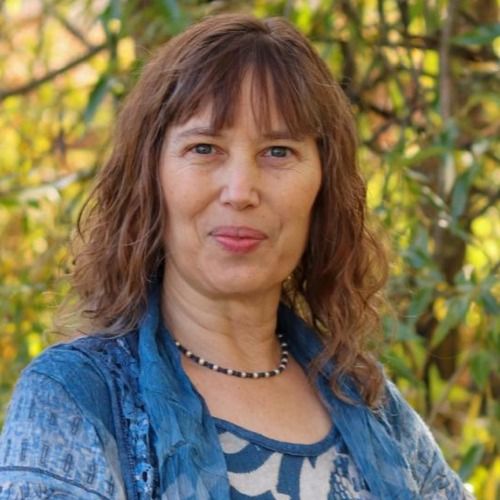
Episode 94
S2EP94-Elena Czarnowski-Raising Future Ready Kids: 10 Minutes a Week to Financial Genius!
Elena Czarnowski joins us today to chat about her mission to help families raise future-ready kids. With over two decades in tech and a passion for education, she's created Kid Laboratories, packed with practical tools for parents to teach crucial skills that schools often overlook. We're diving into the importance of financial literacy, AI awareness, and character development—because let's face it, the future is a wild ride, and our kids need to be strapped in with the right skills! Elena's approach is all about meaningful conversations that can happen in just 10 minutes a week, making it super doable for busy families. So, if you're a parent wondering how to prep your kiddos for a rapidly changing world, this episode is your golden ticket!
Guest Bio - Elena Czarnowski is an educator on a mission to help families raise future-ready kids. With a background in economics, math education, and over two decades in the technology sector, she founded Kid Laboratories to give parents practical tools to teach the skills schools often overlook: financial literacy, AI literacy, character development, and goal setting.
As a mother of three, Elena’s work was inspired by a simple realization: many families want to prepare their children for a rapidly changing world but don’t always know where to start. She created engaging programs, workbooks, camps, and courses designed for busy families who want meaningful conversations in just 10 minutes a week.
Elena is also the author of Future Proof Kids: 10 Minutes a Week, a modern parenting guide focused on helping the next generation build confidence, critical thinking, resilience, and real-world readiness. Her message is clear: the future belongs to kids who understand money, technology, and themselves.
A gift from our guest: Discount Code: 10OFF for courses, books, and workbooks purchased through my website.
Bringing Education Home is an educational podcast brought to you by Kristina and Herb Heagh-Avritt.
If you enjoy the show, we'd love for you to leave a rating or review on your favorite podcast app!
Please let your friends know they can listen for free on Apple Podcasts, Spotify or their preferred podcast app or online at Bringing Education Home.
Sponsored by Vibrant Family Education - creating Happy, Healthy and Successful kids
Follow us on these socials:
Facebook Group - The Family Learning Circle
Facebook Business Page: Vibrant Family Education
Support Bringing Education Home
Copyright 2026 Kristina & Herb Heagh-Avritt
This podcast is hosted by Captivate, try it yourself for free.
Transcript
I now have the pleasure of introducing an Elena Czarnowski. Elena is an educator on a mission to help families raise future ready kids.
With a background in economics, math, education, and over two decades in the technology sector, she founded Kid Laboratories to give parents practical tools to teach the skills schools often overlook. Financial literacy, AI literacy, character development, and goal setting. As a mother of three, Elena's work was inspired by a single realization.
Many families want to prepare their children for a rapidly changing world, but don't always know where to start. She created engaging programs, workbooks, camps and courses designed for busy families who want meaningful conversations in just 10 minutes a week.
Elena is also the founder of future proof kids 10 minutes a week, a modern parenting guide focused on helping the next generation build confidence, critical thinking, resilience, and real world readiness. Her message is clear. The future belongs to the kids who understand money, technology, and themselves. Welcome Elena.
It is a pleasure to have you here today. Thank you so much for joining us.
Elena Czarnowski:Thanks so much for having me.
Kristina:When we did our pre show chat, we just like clicked immediately. It was like, yeah, well, what about this and what about this and what about this and this gap and this gap?
And how do we really get these parents, like, involved? Because they want to be. But like you said, sometimes they don't know where to start. Right? So we have those tools, we have this inspiration.
If we have those strategies to help them get involved, it really, really helps. So I am excited to talk to you about how do we do this Right. But first of all, your passion, you talked about it in your bio some.
But was there a pivotal point that said, you know what I need to change how I'm parenting, what I'm doing, how I get engaged. Can you share about that a little bit?
Elena Czarnowski:Yes, absolutely. So I had this misconception that because I had this robust background and tech and science that I was just gonna, I always say, crush motherhood.
You know, I thought I was a smart mom and I was just going to get it all done and then flash into the real world. I was one day at a target and I had my three sons and they were all kind of close in age.
I think it was maybe five or six, my oldest, and then three and two or something of that matter. And I was in the checkout line and I was very exhausted, you know, no sleep, just like living in those early years.
And they started to kind of hound me for like the cheap little, you know, trinkets and, you know, junk food. And I just was trying to check out, was in the self checkout line. And I just said, get whatever you want, you know, get whatever you want.
I'm just trying to check out. I'm exhausted. I'm tired, and I just let it all go.
And they grabbed, you know, you know, the dollar store treats or whatever they were, and the plastic and all these things that were just not my value system, like, over consumption, but bad food. And I walked out, and I remember feeling so defeated in the parking lot. Like, what am I doing? This is. This is not in alignment with any of my values.
And I just completely caved because I was exhausted. So it was that, like, you know, parking lot moment that I said, I need to go home when I'm not exhausted and tired.
And I just need to write down what is our value system on money? I need to write down what's our value system on? Like, you know, health food and how we want to eat and take care of our bodies and what's our value?
Even with me, I'd already kind of started tinkering with them because I just love tech and had my background in computer science and such. I'd already kind of been talking about these concepts. But, like, what are real palatable ways we can do it?
So I can always go back to no, remember, this is our value. I just wanted some structure. And that was the pivotal moment in the trenches where I just said, I need to write it down. It's so simple. Write it down.
And then I could have these proactive conversations with my kids, like I say, in 10 minutes a week, because I have the structure.
Kristina:Absolutely love that. Because that's one of the things we do often with our parents who come and work with us.
The same is like, let's write down our family values and the educational goals, and let's work off of that. I mean, I hope.
One thing I always found out was that once those things were written down and on the refrigerator or whatever, it creates less conflict because your child is doing something and you walk over, it's like, hey, this is what it says. Is that living up to that? How can we. How can we move to that next step? So that is so important. I love that you're leading with that.
Herb:And we didn't really do that, so there was a whole lot of times where we had to basically keep re explaining the same things over and over. And if you were tired and you didn't explain it the same way, then there was little nitpicking things. It's like, oh, this, oh, this will.
How come you let it sometimes? But so, yeah, Writing it down, having it written down, that's not something we got to.
But that's just a really great advice right off the bat is like if you have it written down, you can say this is why, because this is how our family operates. So well done there.
Elena Czarnowski:It's a tool to re redirect them and. And even your own helper redirection. Because we get distracted and we get. We're human beings as parents, so we get tired.
So one of the things just to dovetail off that I created this super helpful is a family crest. And I have this. It's at the end of my book. I have these family fun activity suggestions.
And we created a family crest which has our name on the top, Zarnowski. And organically, I had no pre thought on this when they were young because our last name was kind of, you know, 10 letters and so big.
I taught them a song, how to try to remember to spell it, you know. But I also told them just. It just came out one day like Zardowski. Like the official meaning is never give up.
That was just something that came out one day and it was so great because kids want to give up. We all want to give up. We all have those moments when we want to throw in the towel. And I would say, oh, don't forget your name means never give up.
So it just can't do it. Just not allowed. Yours are now ski. And so we put that all together in a family crest.
And I made it, you know, a cute little computer program with our name. And then there's four quadrants which has all the things that we love, like the outdoors.
And they like a lot of baseball and sports and fishing, ocean and faith. And then at the bottom we have a mission statement, you know, our mission and a motto. And so our motto is never give up in our mission statement.
And it's so fantastic because we have some similar things that I created when I was in the classroom. The rules of the class, right? These are the rules of our home essentially. And I can just. It's physically up in my house. I can redirect.
No, remember, this is our motto. This is our mission state. These are our values. So it helps them, but it also helps me to redirect it into something physical.
So that's a fun little tool outside of a day by day instruction for a specific subject.
Kristina:And I love that. And you know, we encourage like family meetings and family get togethers all the time as well.
And if that's laying there or you're building it together, at those family meetings, then it just means more to everybody, and everybody can really buy into it. Yeah, absolutely.
Herb:That should be able to handle by the generational family, which we've moved away from, especially in the last 50 years, because it used to be the grandparents would hold that down, and they were the main people. And then they had the. The little sayings, like crocheted or stitched into little things around their house. And so you would see these.
These cliche statements, and they were. They held this. This vast information that. That takes a long time to grow.
And so, like, now, it's like, at 18, kids are running out, they're going to college, they're getting married, and then they're having kids with no real sense of that. That knowledge or that wisdom. And so how do we give them that?
And so your books and your programs start to give that generational wisdom to people who have lost that generational touch.
Elena Czarnowski:Oh, absolutely. Such a good point. The legacy wisdom is priceless.
And I do, like, your imagery is perfect, because my husband, he is from Colorado, but his parents were from Michigan. We did go back for one visit. And the crochet, you know, she had it crocheted. His aunt, his great aunt. And it was the best saying.
Families are mostly sweet. Families are like fudge. Mostly sweet, but also a little nuts. It allowed them to be like, yeah, we're all working hard, but we.
We're going to have our zany, ridiculous moments, too.
And that just makes me want to put something like that also up in my home, because you're right, it is the legacy wisdom, because the years and the generational knowledge passed down.
Herb:And back then, the needlepoint in the crochet showed how, you know, you had to put effort into that. Now you can, like, go down to it to gift shops at the. At a beach resort and find, like, little tin sayings and just nail them up to your door.
But back then, like, they put effort into that, and. And so some of those houses are, like, walking into, like, walking into museums of how families used to be and communicate and.
And how we've gotten away from that. And so part of what we do is we try and start bringing that back.
Elena Czarnowski:Mm. I'm with you. I'll join your team. That sounds great.
Kristina:Exactly. So how do we get parents started on this?
10 Minutes, 10 minutes a day, 10 minutes a week, whatever it's going to take, help give us a little bit of strategy that our parents can just, like, dive into right now, because obviously it's not happening enough. And we would really Love it to happen.
Elena Czarnowski:Sure. So I'll tell you what I did and I'll make some suggestions or what.
What I've had, families I've been working with and students I've been working with did. So you pick a day, right? It's like anything. All you have to do is schedule it. So you pick a day.
So what I did when I had my aha moment about money and finance. And so the first course I wrote was a goal getter course. But the second course I wrote, that one is about goal attainment and character development.
But the second course I wrote after my aha moment, and the target was about financial literacy. So money wise. And my son, my first son was young. He was six years old. He was in first grade, or was it kindergarten?
I can't remember one of those two. And I picked a day. And he was very busy already with sports and piano and all the fun stuff. So I said, Mondays he had no sports.
I would pick them up from school and they would play. And I don't like to get right into education because they need their organic, you know, play. Let the brain rest. And it was literally 10 minutes.
And people, this is what I think is often miscrewed. Ten minutes can be very powerful if it's directed right. You know, we're going to start off with a robust 30 minutes.
But he didn't have the appetite, so I just sat down with him in my, you know, little office with the bunny and the, you know, dart guns, and we just sat down for 10 minutes. And actually now I've turned it into a book, but I just had like, a little piece of paper.
And the very first lessons was like something so simple, needs versus wants. And I just sat down with him and I just said, hey, Mateo, we're going to just have these money conversations.
He was actually kind of excited because this is the other thing I've learned after teaching this course over the last four years is that financial literacy is a coveted stepping stone.
And they already organically know they're learning through the environment, you know, learning through friendships, learning through the world that money has value. Right. But now I'm going to have this explicit conversation with them. So he's kind of excited and curious. My goodness, so curious.
But also the other thing that happened that I didn't anticipate was that now it's not just getting into the weeds. And we do, as they get older, the interest rates and compound interest and wealth management, I do get into that later.
But if you start early, after six years old, when the child can comprehend logic, what this says, despite the material, material is important. Is our family values being astute in money management. We value understanding money and so much so.
And they could probably say something silly later like, my mom cared about this so much. So when they're 14, 15, she used to sit me down when I was 6 years old. These little conversations about money. And it really.
And you know, so I just sat down and said, let's just have this little conversation. Do you know what a need is? And they're understanding, but they so explicit, you know, definition. Need is anything that you need to survive.
And so simple. Water, shelter, food, and what's. And what?
Well, everything else, you know, all the things you love, the yummy food, the treats and the specialty clothes or whatever else they enjoy, right? The Nerf guns. And it was. It's so simple and it seems so, like nothing. It's. It's so obvious.
And I write about this in my book that parents sometimes take on this. It's just, it's just not that important Persona where it seems like nothing, right?
Like if you're on a diet going for a 10 minute walk a day seems like nothing. How am I ever gonna lose weight? But it adds up. It adds up in this most magical way. So cut to, as my friend always says.
So I had this 10 minute conversation. I don't really think much of it, you know, I don't know where this is gonna land. It's just something like, I'm just gonna try this.
And so we had this 10 minute conversations about knees and wants. And then we had, I had like a little picture puzzle. And he'd be like, they point out, oh, the water is the need. You know, this is the one.
And so we did a little activity. Very high level, simple. Cut to. We were in a Starbucks, you know, a week or so later. And I'm, you know, browsing.
We're waiting for it to order something and there's like, you know, an overpriced coffee mug. And I have 100 coffee mugs. I don't need a coffee mug. And I'm just looking at it because I'm bored.
And he tugs on my shirt and he goes, mommy, is that a needle or a want? I just giggled and I said, oh my gosh, this is sticking. That's when I got the second Aha. Like, this is sticking. This is working.
So I'm like, you're right, this is totally a want. And I just put it down. We went about our day and it was just so Rewarding, like, oh my gosh, this is working.
So I kept going, you know, I kept doing all these little lessons and not every week. He was like, let's sit down. You know, it was sometimes like, okay with seven minutes, it's, you know, but it just added up.
And I just have to ask one more antidote because I did the whole course within, ended up taking about a year. I wrote it as I was going, like, what else would I want to know? Okay, this is bank cards, you know, because they don't know any of the vocabulary.
Income, interest, they don't know anything. And so it's just super high level. So you can spend a 10 minute conversation just talking about what is income? How does mommy get income?
How does daddy get income? How would you, you know, just, just really, really fun and high level. Like I said, it's just like grows exponentially over time.
So then we're like, you know, five years down the road and I have my younger son. Maybe it's three years down the road, I have my younger son. I just decide, okay, Levi, it's your time to start your Monday wise.
Because I make it real special. Like, oh, you're old enough and you get to learn. So Mommy's gonna do what she did with Mateo for 10 minutes a week. We're gonna sit on Mondays.
And he's like, he's really excited because he was. Wants to do everything older brother has done. And so, so he's getting excited.
But again, we're in a store, right, with a lot of consumerism and lots of toys. And, And Levi goes, my second son goes, mommy, when I grow up, I want to be rich.
And I just kind of look and smile because in the course I have this great lesson called being wealthy versus being Richie. And I really defined like being wealthy as someone who, you know, waits, invests and grows and smart, has this like financial acumen.
And we talk about that in the course. And then Richie is people that still earn income but are like spending it and they're. You're seeing it through their.
How they spend their money instead of waiting, investing. And so, so my older son had already done that course or that lesson. And so he goes, levi. And this is such another great just antidote.
You don't want to be rich when you won't grow up. You want to be wealthy. And it was like, oh my gosh, he is, he has just taken this on, right?
He understands the distinctual difference between the two and then is instructing his younger brother about what, what is more, you Know, valued for our family and it was so rewarding.
So I was like, I got, I gotta have this course and have it be more robust for older, you know, what would I Write for my 11 to 14 year old son or my older son? And that's when I got into, you know, investing compound interest, wealth management. And I did.
That's when I started teaching that online over the summers. And it was a hit, it sold out every year. And I was like, I gotta give this to parents because it's so easy.
It's not more, you know, it's not ridiculous. You don't have to have a degree in financial management if I just write the lessons out. And in the book Future Proof Kids, I put integrated QR codes.
So I teach you, I write how to teach your child and then you can watch the QR code. And that's fun. It's animated, it's me, but it has some animation, five to seven minutes with your child. And then these are the workbooks.
And the workbooks have like follow up little lessons. So I think it's just so perfect because it's exactly what I created for myself.
I always say, like the cereal, I'm kid tested, mother approved because we just did it with ourselves.
And I've just seen so much good roi, you know, the return on the investment of them just being a little bit more, you know, astute and have this value center over money which was completely absent. Like I said in my target days when I was just like, get whatever you want, Mom's tired.
Kristina:Yeah,.
Herb:That still happens.
And there's so many kids who get out of high school and even through the college years, they still don't know how to balance their money and, or cook. And so it's like uber this and get doordash.
And so the amount of fun disparity is like intense because they just don't have any concept of these concepts. So how do we start reaching parents who have been through the system and don't have. This is like, well, how do I teach my kids this?
I don't know this.
Elena Czarnowski:So yes, great question. Okay, so if you have, if you have younger kids, like I highly suggest that you start having these conversations. This is a great tool.
If they have older children, that is like, has been absent or hasn't been addressed, hasn't been overly communicated. Great. So this is where I believe something I call say, my book. The value of a different messenger.
So after they reach the teen years, your voice becomes less valuable. So having a third party, someone like me or Somebody else find a different resource who can have these conversations.
So like I said, I teach a more robust course called Money Wise online. It's a virtual course where I instruct your child, right? So a third party that can say, hey, this is what's valuable over time in the future.
And I'm going to lay it all out, we're going to do the history of money. I teach the money wise concepts. Just 30,000 foot view, right?
We're not just going to go into wealth management and you know, make everybody a millionaire. We're saying what's the history of money? This is really fascinating. Where did the word money actually come from? It's interesting.
It comes from the word monet, which is a French word, which comes from the Latin word moneta, which means to warn or advise. So it's, it's just actually becomes this magical little story like oh, we all, money is something that we need to warn about and advise on.
So you take, take that perspective and then you just having these fun story conversations. When I teach in the many Wise course, the first lesson after the history is Mickey Mouse was broke.
And most every young person even in their 20s has some association with Disneyland, right? They know who Walt Disney is.
They know who Mickey Mouse is with their fans when they're young, if they're fans of the films or even they know that now if they're older, in their 15 to 20 year old, they know that they, that business is a large business, right? It's economically valuable. They understand that inherently.
So then if I'm saying Mickey Mouse was broke, they're very curious like what do you mean Mickey Mouse was broke? And then I tell them the story, how they see started with Snow White and you know, ran out of money, was going to go, he went bankrupt.
Then he had to borrow money. And then it becomes just this, what could they do? How are they having this parallel?
So it's a third party as they grow older substantiating what you might be saying. And I do this myself. My good example, my book is my son plays golf and one of his homework assignments is every day he has hit 25 golf balls.
We have the net set up in the backyard and I go out there and I'm like, bend your knees. And he says to me I'm doing it. I don't really want to hear it. So then, so he just tells, says I'm doing it. He doesn't necessarily bend his knees.
Cut two. We're at the golf course, guess what? He goes up and hits some balls his coach, third party, different messenger, says, bend your knees.
Knees are bent in a split second. So having this second messenger, that's only saying exactly what you would say from a different perspective, having that right counsel is exactly.
Extremely effective.
Kristina:So, yeah, that's good for our kids and for us as parents. Right. Listen to their perspectives. Listen to things that might be helpful to you. Right.
If you're not sure if you're doing the money things, if you're not sure if you're doing enough with, like, cooking and things like that, ask other parents. What do you do? How do you introduce it? You know, really kind of reach out.
Because we're trying to get all of our parents to understand that, yeah, we, we quote, unquote, are supposed to know everything, but we know we don't. And there's a lot for all of us to learn and share with each other, right?
Elena Czarnowski:Oh, absolutely. And yeah, use other resources. And I always, I say model.
You know, every single lesson now today in Information Age is available to you probably for free online. Right. And so if you want to model learning, you know, lifelong learning, just search it with your child and learn together.
There is nothing wrong with not being the subject matter expert. What will be wrong? Not being inquisitive. I really think that's important. Modeling lifelong learning. So I always be curious. I'm curious with my child.
For instance, the other day, one of my sons plays also rugby. And there's a lot of, you know, it's a physical sport. So he was complaining about a headache and a fever.
So I got a little bit nervous about concussion. I'm not, I'm not a doctor. I didn't have any experience with concussions. I don't know much about. About concussions.
So we got online as I got a little nervous because I knew headaches were assigned a concussion, but he was. Everything else seemed normal.
A doctor had once told me, if one thing's, you know, you have to have a fever, but also lack of appetite or also change in behavior, it's two things that really made something consequential. Some doctor in my history has told me that. So I remember that. So now I'm. I have a headache he had had. And then the second thing he had was a fever.
And I said, I don't really know if a fever is a symptom of a concussion. Let's learn together. So we got online and we Googled it. Turns out it's not. So it's modeling that learning. I, you know, I want him.
And this is very important. And I write about this in my book too.
And this is so important, I gotta bring it up about the self learning, being a person that teach themselves is going to be required in the future. I have been in the classroom so many times and things can and change.
But what is happening today in at home, if you're doing home school or in the classroom, in a private and public school, I'm in all the schools with my programs is your child is learning from a teacher. Right. And they're also learning from a machine. They're learning from some dynamic system that they're learning themselves.
So they're going to need to have that ability to search and research things on their own. So modeling that your model is the best way for them to be like, oh, that's what you do when you don't know something, you Google. They're giggling.
I'm sorry, my mom's here. Do you hear that in the background? Grandma's playing. Okay, good.
So they're going to need to have that tool, like if I don't under, I don't know, something, I'm going to go out and try to find a resource and teach myself.
And so doing that and doing it with your children, doing it alongside your children, and then even, you know, being like, huh, that's, that's interesting. Okay, that makes sense.
That type of language, where it's not resistance language is also, I believe, very important because it sets the tenor for their consumption of new material or effort. And all those things, we talk about.
Kristina:That as a love of learning. Making sure you're instilling that love of learning and that curiosity is like, oh, what could be different? Or oh, I wonder what this means.
Curiosity. Right. So when you are working with families, how do we get the parents involved though? Because that's the other thing, right?
Because a lot of parents will step back like, oh, well, I, like you said, I don't know about money, I don't know about technology, I don't know about construction, how to tinker and make these things. But it's so important when the parents are right there beside. What have you seen about the parents who come alongside their child as they learn?
Elena Czarnowski:What have I seen about them coming alongside as they learn.
Kristina:Conversations?
Elena Czarnowski:To motivate, to motivate the child.
Herb:To motivate the parent, probably to motivate the parent. How do we get right. The parents involved? Because the, the kids, if the parents are, are engaged, the children will be.
So again, you know, we're, we're a couple of generations now of both parents Working, how do we bring the education home? How do we get the parents to be involved and to actually do these things that, that we're talking about, right?
Elena Czarnowski:So no, first and foremost, you make it palatable. And that's why the reason I named the book Future proof kids, 10 minutes a week. Everybody, I believe, has 10 minutes. So you need to make sure.
I'm not saying you need to teach your kid about, you know, investing or arbitrage or any significant tax code. No, you need 10 minutes of a little bit.
You can have a little bit instructions to the workbooks I have, or find some sort of curriculum online and have that one on one conversation. So I believe every parent can have, I've heard about this on NPR special time with their child.
And this special time is where the actual child directs the communication, directs, you know, the action and activity and the parent goes along and that creates this really unique lifelong bond that's incredibly valuable. So one is the first thing I would tell all parents is it just takes 10 minutes. You don't have to sacrifice all of your time, all of your day.
Know that 10 minutes can be extremely significant and powerful. And number two is if you are able to do this.
So here's the issue with modern education and everybody's doing, I truly believe, the best that they can. The school systems, the state, you know, the Fed, everybody's trying to solve this really big issue of education, okay?
research was done in like the:You just can never have, I mean, you can never have that one on one dynamic response. You could just can't do it.
So if you have the time, if you have any interest, just know that this is the best, best, you know, researched way that students will learn and grow and be successful. And they cannot even in private schools. I was in a private school, there's only seven students in one of my classes. And that's amazing.
Seven to one is an incredible ratio. But you cannot get. It's one to one. Two to one is also pretty powerful.
But this is the only way that children are going to learn because they can have that like one question, very specific, unique response, dynamic. And here's the other thing. This is so productive that it can be done in Like a quarter of the time.
I mean you can literally get through a full school day in a couple of hours, right? And here's the other thing. If you know, and this is not to be fear mongery, but so much AI is going into education because of this concept.
What they are doing is so much tech is going into the classroom because they are, you know, defining it as dynamic systems.
And this is a good thing in some respects because your child, you know, can be learning from a machine and it's dynamically responding and getting them, they're doing a math problem, they get this right, then they can have a harder math problem, get it to the next level and then, and if they get it wrong, then they can go back and make sure they train their brain on that understanding. So that is great. However, it, it is also missing something pretty profound, which I completely value is a human connection, right?
And then, you know, being in the classroom, 80% of the kids are kind of up and down. They also, they need a handheld, they need a human connection and they need motivation to keep participating.
So if you think about it that way as well, if you allow your child to be in the classroom. And I love public schools, I'm an advocate for public schools and private schools. I think every school there's a trade off.
But the best case scenario for your child is for you to be teaching your child. There's so many resources.
It's never been better for homeschoolers to do this because you're going to give them that one on one that they're not going to get anywhere else. House, you're going to have the resources available, you're going to give them that dynamic.
Then they have an extra six hours in their day to be doing whatever like big projects or sports or like you said, one great unschooling book I read is having a dynamic conversation with their elderly neighbor, right? Or a relationship working in service or learning.
This is what I love about what you were saying earlier, like the, the wisdom from elders that they can give, but they also give this something that I don't give because I have too much energy. They just give this very tranquil way of doing things. I love to watch my mom work with my son. She's in her late 70s. She just goes slow, right?
She's just pauses, she waits. There's no rush. And they're learning, they're adopting all this subconsciously, right? Just by her demeanor and it's so valuable.
So there's, you know, it's up to each parent. It really is their own decision. But just know it's not harder than, you know, you. It's way easier than you think it is.
It's a gift to your child because they just can't get anywhere else. And the other thing is just that doesn't take all that time that you really think it's, you know, it's going to take.
Herb:Yeah. We again, bring that back to the love of learning. So when you put a kid in the classroom, they're forced into a curriculum.
They're forced to do what everybody else is doing. But then when you bring them home, it's like if you want them to learn, you start bringing in things that they want to learn about.
So if you want to teach them reading and they're really into trains, you bring home books on trains. So. And then once they get their teeth in that, then after a while it's like they're, they, okay, no, our half an hour's done. Go away. And it's like.
And they keep bringing you more.
Elena Czarnowski:Oh, no, they keep.
Herb:Because they want to. Because they're loving learning so much that they're trying to bring it to you. And you don't necessarily get that in the public education.
Kristina:You can't.
Elena Czarnowski:There's just, there's no way to do it. And I, and I. That's no fault to them. It's just literally no way to do it. Right. Can you imagine being a teacher and being so.
For a case in point, my third son is a neurologically divergent.
Kristina:Right.
Elena Czarnowski:Is an intellectual disability. It's so very challenged. We've been working very, so much with him on counting. This is just anecdote to your point. And he was just like 1:17.
He was just really has. No, he loves dinosaurs. Right? And then I pick up a dinosaur and I say, how many teeth does this dinosaur have?
He counts to 50 because he's so curious about how many teeth the dinosaur has. He wants to know. And they just can't do that. And they can't be that dynamic. They can't be that uniquely direct, directed.
They're just going to pass him up when he's not counting. Okay, let's count to 10. One, two. And he's going to say 17 and get it out of order. And then they're just going to go on to the next lesson.
But because I can say, I know he loves dinosaurs. Let's just count the dinosaur teeth. We're counting to 50, so you just can't. It's. No, it's not their fault.
It's Just not even possible to do that with 30 children. It's just not possible.
Kristina:We talk often about a grand, a great fit environment. Right.
Herb:And we also talk about not bringing the public education system back into your house. You're not trying to be there pushing the reading and the writing and the arithmetic for six or seven hours to a group of 30 kids.
It's like you get that time in like half an hour burst here, an hour burst. If you have multiple kids, it's like you get this one going on this, you get this one going on this. And they're different things.
You don't force them into the same likes. And then what happens then again is like, you spend the half an hour with each child and then they go out and they start pulling their own stuff in.
And how. How important is boredom to homeschooling?
It's like, that's amazingly awesome because it's like they get to sit in that and then use their imagination to pull more in. So where as at school, if you're bored, then you just have to sit in the back and told not to fidget and not do anything and just sit there.
So in a homeschool, boredom is actually a fuel where in the school system, it's a damper on your wanting to learn more. So all of the stuff that you were saying, it's just so right on.
Every kid is its own individual and to give them the best education experience, like the parents know them best.
Elena Czarnowski:Absolutely. Yeah. And have that time and effort.
And can we just talk about how magically joyful it is to just see that aha moment with your child and rewarding and just see them take off and, you know, so another anecdote, my son was, you know, missing some numbers and counting and. And we have this IEP meeting and he there, he failed. He failed every single goal. Right.
And I said, okay, so let's talk about the counting specifically, because I work with him at home, right. And I know that he counts 11, 12, and he skips 13 and then goes 14, 15. So where. Let's pinpoint it because I want to get into the minutia.
Let's pinpoint it because I actually know where the missing link is.
So my point is, when you have an intimacy with their knowledge, you can help bridge that gap rather than it just looking like it's, you know, not able to count yet.
Kristina:Yes, exactly. And that's why we so encourage, you know, parents.
If you can't take your child out of school, then you're working with the school, you're in there giving them insights that will help them understand your child. Right.
And it's not that you go in and demand, oh, you have to teach them this way because this is the only way they learn that doesn't work in the public school. And you could go in and inform and help them shift things and move things a little bit more towards what's beneficial for your child.
You know, that, that collaboration, that cooperation.
And if it just can't happen, then yeah, let's find the private school, let's find the home school, let's find the pod, the whatever it is that helps your child learn and grow so they don't have that loss of learning, that loss of love of learning.
Elena Czarnowski:Right.
Kristina:And I love exactly what you're saying around your different programs and things because you're building that love of learning in the home, outside of the school. And it can happen every single day in just short little bursts. So thank you so much for all of the inspiration.
Is there anything that we haven't talked about that you had on your list, like oh yeah, I really want to make sure I bring this up today?
Elena Czarnowski:No, I guess you know, just to the complete what what I teach started as, I think I just high level talked about it was the goal getter course, which is character development and goal setting. And it's such a dynamic course for young people 11 to 14 because it helps them, it gives them tools.
And this is something that was absent in my youth very as a young girl, you know, just so self conscious and didn't really have the tools to overcome when I feeling that way, feeling like less valuable.
And so what this course I wrote for young girls originally, but now it's for both young girls and young boys is all about the foundation of what is, what is a good person and helping to find who you want to be as you're growing up. So we do this high level introduction of the six core virtues. This is temperance, transcendence, wisdom, you know, justice, etc.
And then we all of those are supported by 24 character strengths that each child has inherently. And then we help them define what their inherent character strengths are. It takes them then into a kind of self reflection and self vision.
I give them some thriving abilities and at the very end we create this goal manifesto which is where the student is writing out, you know, how they want to perform. And this is something very unique to my background.
So I worked 15 years in tech and one of the things when I was working at IBM was this every week we had a cadence Call. And this is where I had to speak to my managers and managers, managers about the sales I was going to bring in.
I was a business development executive. And when I went into the classroom, so this is just, I thought how the world worked.
Every week you set your goal, you told the people that cared about the goal. And so when you follow up in a week, did you attain that goal? And then everybody would make sure that you got there.
So when I went into the classroom as a teacher, I just was dumbfounded that none of the students had a goal right there wasn't like, how I want to perform, what I wanted to learn. And they had no aspiration for even, you know, do I want wisdom? It was just kind of this, I'm here and if I do, great, that's, you know, wonderful.
And if I don't, and this is, which was hard to witness, then it's not only that I didn't, I didn't do well, but I, oh, I just don't like math or, oh, I just am not, you know, a science kid doctor. And, and so I thought that was fascinating. Also scary because I'm like, oh no, you just, you didn't even set yourself up for success.
You didn't tell me. I'm the person who cares about your goal, how you want to perform, you.
So you have no support and now you're just making this, you know, blanket statement that you don't like math or you're not a math person because you just didn't even set yourself up. So that's what this course is. Helps the child outline, like, who they want to be.
Give some, you know, the structure of like, wisdom, integrity, gives them like a little buffet of things they could choose from and just try it on. You know, I want to be this courageous person. I want to be this person that tries or doesn't give up. So it's a great dynamic course for young people.
And I think it's wonderful for all of us too as parents to just listen to them. Like you said earlier, they will go into the weeds on things that they care about. So let them write it down.
And this is the, the stats on goal setting. So over 85% of 11 to 14 year old students have a goal. They have something deep in their heart. They may not be expressly so that's great, right?
But more than 75% fail at a goal that's inside of them. So that looks there's an upside there because here's where the upside lands. Less than 3% of any young person that has a goal.
Write any of it down so they have something inside that they really aspire to be. I always say kids will surprise you. Right? But they aren't giving themselves any like, you know, structure of how to attain this school.
And that's what this course was designed to do. Because if we take that away and.
Herb:I still don't do that, so.
Elena Czarnowski:Oh, I know.
Herb:I still want what it's like, wow, what am I going to be when I grow up?
Elena Czarnowski:I love that. But I love that because that's what we're. I mean, every 10 years, my, my uncle was amazing. He kind of reinvented himself.
And I think that's absolutely part of the human experience. Right? You're gonna do this for 10 years or do this and that's okay.
But it's really fun if you write it down to like, go for it and have some structure.
Kristina:Awesome. Beautiful. Elena, how can parents get a hold of you? We're gonna say it out loud, of course. It's all down the show notes as well as well.
But what's the best way for them to get a hold of you if they need to pick your little brain a little bit or they want to grab something that you've been working on?
Elena Czarnowski:Please, please, please. So my website is www.kidlaboratories.com laboratories is plural. Kid Laboratories you can see all the work I've been doing on my Instagram.
I just started Tick Tock so you can find stuff there. If you want to see, you know, coursework I've developed or other students that have taken my courses and see their feedback.
I have a number of testimonials parents on there as well. That's about it. The, the book and the Workbook series is going to be launching at the end of this month. Future proof kit kids, 10 minutes a week.
If you just Google me, you'll. There's been a bunch. I was in the USA Today about the AI workshop I created as well as the the book series.
I am literally on a mission to make sure that parents have these resources because it's so simple. And I have been teaching these courses and you know, they can get up in price over the summer for the last four years and they sold out every year.
And I, my mom was the one who came to me and she's like, I don't know if I, you know, single mom. I have been able to afford these courses and I, I'll write a book. I'll write a book.
It'll be 25.99 and then give parents the tools, they could do it themselves. Because I believe parents should be teaching this stuff to their kids. Because you're the, you know, you're the first line of defense.
You're the teacher. I just, there's no better because you're with your child the most. Right.
You know, I used to teach Sunday school and you know, you with that child one hour, one, one day a week. And the values of that is so high level. But so it's the parents, it's like the day to day. These are our values. These are our values.
And that's why I put so much time and energy to create the videos to make it so seamless, so parents could do it without being nervous or scared or anxious or uncertain. Right. You read the book, you watch the video, you do the workbook, and then, you know, reap the benefits. I love it, love it, love it.
Kristina:Thank you so very, very much.
Herb:Yes. And I would like to thank you for being here today. So many people find out these problems and then they just do it themselves.
You are putting yourselves out there. You are actually working to make the world a better place. And so many people don't do that and so many people should.
But it's a really tough place to walk and you're doing it. You went out and you fought the dragon and then you're sharing the gold with the village and that is the hero's journey.
So thank you for being a hero and thank you for actually doing stuff to make the world a better place for, for our parents and for our kids.
Elena Czarnowski:Wow. That means the world to me. You have no idea. Thanks.
Kristina:Yeah. And we're blessed, you know, because we get to have people like you on here that care so much.
And that's why we want to make sure that we're sharing this show.
If you are a parent, if you've heard this, Bringing Education Home has brought you some value by listening to these experts, by digging in and maybe even tapping into some of their programs. Please go share with another family.
There are families out there who just need a little bit of support, a little bit of inspiration and then they will take off. Like their kids will take off and our communities will be so much better. So please love, like and share bringing education Home.
Herb:And in the comments, do the at and the person you want to share this with because that also creates engagement with the show. It gets it out to more people and then also send them a share.
So let's get it out there, make this a little more visible to more people because more people need to hear these messages, like from Elena, and see these heroes that are on our podcast, making the world a Better Place.
Kristina: of July. It is currently June:Bye for now.
Herb:For now.
Elena Czarnowski:Thanks again.