Episode 92
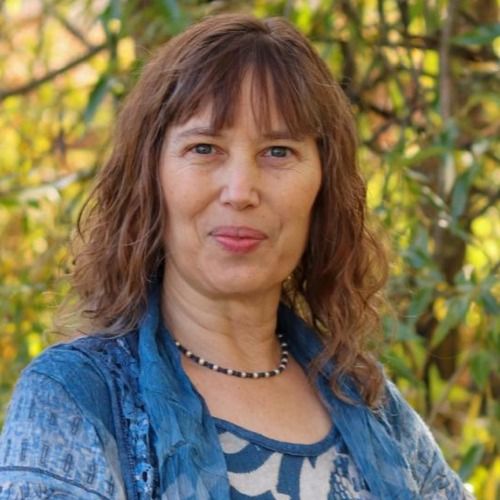
S2EP92-Stephanie Lewis-Art Meets Science: Stephanie Lewis's Playful Approach to Neurodiversity!
Stephanie Lewis joins us for a chat that feels like a warm hug from an old friend! With a background as a school psychologist and a transformational coach, she’s here to sprinkle some wisdom about her unique NeuroDraw system—think of it as brain rewiring for neurodivergent minds, but with a splash of creativity! In our lively discussion, Stephanie dives deep into her personal journey, revealing how she transformed her own struggles with depression and health issues into a passion for helping others. We talk about how her childhood experiences shaped her desire to support families, especially those with kids who might feel like they’re stuck in a loop of anxiety or frustration. It's not all serious business though; we sprinkle in some laughs and light-hearted moments, making this episode not just informative but downright enjoyable! As we explore the nuts and bolts of NeuroDraw, Stephanie explains how this method combines visual motor training and neuroscience, empowering kids and adults alike to express their emotions and thoughts through art. We discuss the importance of externalizing feelings—because let’s face it, sometimes those feelings are just too big to keep bottled up! Stephanie shares some practical tips for parents, like using simple drawing techniques to help children articulate their emotions without the pressure of words. We even get into some playful exercises that families can try together, turning emotional expression into a fun family activity! And let me tell you, by the end of this episode, you’ll be ready to grab a pencil and start doodling your way to happiness! We wrap up with Stephanie sharing her mission of creating a supportive community for neurodivergent individuals and their families. With her upcoming book on the horizon and a treasure trove of resources available, she’s committed to making a difference in the lives of those who feel misunderstood. This episode is not just about learning; it’s a celebration of resilience, creativity, and the joy of finding your voice. So grab your headphones and get ready for a delightful journey into the world of NeuroDraw and beyond!
Bringing Education Home is an educational podcast brought to you by Kristina and Herb Heagh-Avritt.
If you enjoy the show, we'd love for you to leave a rating or review on your favorite podcast app!
Please let your friends know they can listen for free on Apple Podcasts, Spotify or their preferred podcast app or online at Bringing Education Home.
Sponsored by Vibrant Family Education - creating Happy, Healthy and Successful kids
Follow us on these socials:
Facebook Group - The Family Learning Circle
Facebook Business Page: Vibrant Family Education
Support Bringing Education Home
Copyright 2026 Kristina & Herb Heagh-Avritt
This podcast is hosted by Captivate, try it yourself for free.
Transcript
I now have the pleasure of introducing Stephanie Lewis.
Stephanie is a school psychologist, educator, transformational coach, and creator of the NeuroDraw system, a structured brain rewiring system designed for neurodivergent minds.
With two master's degree in special education and rehabilitation counseling and doctoral training in school psychology, she brings decades of experience as a teacher, therapist and clinician. Her work combines neuroscience, visual motor training, and nonverbal patterning to help people change habits, improve focus and build confidence.
Specializing in autistic dhd. Aw. Dh. Dhd.
Stephanie Lewis:She teaches that's actually right clients how.
Herb:To externalize thinking, interrupt automatic patterns, and create new behavioral loops that support lasting change in performance, health and daily functioning. Welcome, Stephanie. It is a pleasure to have you here today. Thank you so much for joining us.
Stephanie Lewis:Thank you for inviting me. A pleasure to be here.
Kristina:It's been such a journey and such a pleasure getting to know you. Just background. Stephanie and I have been hanging out in what's called the podcom.
And it's a place where podcast guests and podcast hosts get together each week and share ideas about stories, stories and things like that and get connected on podcasts. So I've been able to watch Stephanie develop and grow and get ready for her to join us here. And I am super excited because we have an autistic son.
We worked with people with autism before. We know that this is such an important thing for parents to help their children when they kind of get stuck in those loops and things. So.
Stephanie Lewis:Yeah.
Kristina:On your past, why is this a passion for you? What made you want to share this message with people and families?
Stephanie Lewis:Okay, well, first of all, thank you again. The truth is, it's because I was a very, very depressed child.
I'm now 64, but my childhood and most of my life was very difficult and I didn't know why. Now I'm married. I've been married for 41 years. We'll be together for 44. We have a daughter who's 32. He's retired. So it's not like I've had.
I. I haven't had anything. You know, I don't want to say anything like that, but I. It was a very, very difficult life for me.
ad a near death experience in:And I think those things changing, I won't say, pardon me, I won't say that the change was instantaneous. But less than a year Later, I had a different outlook on life after that happened.
I've been in remission since:That is how you say it, OD or ADHD, which to me sounds better, is autism and ADHD. But it's not like a 50, 50 thing. It's. It's different for everybody. And so I found out at age 61, like I said.
And I mean, when you, when you, when, when you were reading my credentials, I thought, wow, that sounds really good. That must be smart. I do all that. And it's true, you know, I don't know how I did all that.
I don't actually, somebody, somebody like on Facebook, on a post I left in a group, made a comment that I must have been very privileged because I've achieved all this stuff and I wanted. And I have a business page, so I actually have to be careful with what I say.
And so the first thing I wrote, wow, you know, and then I didn't hit send. And well, anyway, so anyway, I don't know why I go off on tangents. Excuse me. That's all that was. Thank you.
So when I found out, for the first month, I was very depressed because I real. I realized that that was it. This was never going to change. And that was the first month.
And then I realized that, well, this was actually my entire career, all my education, everything I've done professionally in my life was this in every single way, including putting myself through. It's. I'm ABD on the doctorate, putting myself through that program, working as a research statistician. I mean, so I can read studies.
I mean, I, I could do this. Right. So I also studied energy medicine and energy healing since I was 13, because, like I said, I was a depressed child and I needed help.
And that then came into play here, too. I realized that I needed a better way to manifest things because I needed to manifest all this stuff for myself. And that's where this came from.
So it started off as a manifestation tool, the law of attraction, which I believe is just basic physics. Just. It's. There's nothing strange about it as far as I'm concerned. But they do talk about it all through the Bible. Yeah. So that's where it came from.
And what, and what I want to share with People is what I got. I. I mean, I got being happy for the first time. And, and it's sad because like I said, I've been married for 41 years and this is my human.
Truly, he's my, he's my person. But I was never happy. I was, I was. You know, and it's not just that I don't really have RSD anymore.
And RSD for me was debilitating rejection, sensitive dysphoria. Okay. Yeah. Yeah. It was debilitating for me. And it caused me to make some. And do some very, very rash, bad things to myself.
And so I don't really have that anymore. Do. Do I not get. Do I get affected? Yes. Do I probably get affected more than other people? Maybe. Yeah. Yes. Is it anything that I can't control? No.
I mean, and I can get through it quickly. And that's such a gift. It's. We.
We have an 80% suicide rate as a sub attempted suicide rate and a 60% higher completed suicide rate as compared to the general population. I don't know if that's just in this country or not, but it's really. It's bad. This is bad.
Kristina:Big number.
Stephanie Lewis:That's huge. These are big. And these, these, this is, this is like real. This is, you know, this is real. So to.
To be able to give anybody any kind of relief from that is just a miracle as far as I'm concerned. And, and I bring up the NDE because the ND had a lot to do with it. Yeah, tell us about that. Oh, okay. Well. Well, okay.
I don't want to get into all the. I mean, there was a whole lot of drama involved, but I'll just say that I refused to go to the emergency room because I have chronic pain.
And in Georgia, I lived in Georgia and in Atlanta and they had labeled me as a drug seeker. And in Georgia they tend to label chronic pain people as drug seekers.
Kristina:Oh, okay.
Stephanie Lewis:Yeah. It's just the way it is. So I. I have an ileostomy. I have a bag and no pollen. Okay. I don't know. Oh, good.
Kristina:Yeah. No, you're fine.
Stephanie Lewis:Okay, good. Here. And so some of the Crohn's. And so I wound up with a six hour virus and it basically killed me. Oh, ouch.
Because I refused to go to the ER and I wound up. This went on all day long. I mean, I wouldn't go. I was screaming and crying. My whole body was covered, just filled with trolley horses.
You know, from being. So I found out why Jesus turned his. Went Insane at the end and said f. You know, that was it.
I mean, being that dehydrated, there's nothing else that drives you out of your mind. So I couldn't even make a rational decision.
And then my husband, like he's looking at this and finally like eight hours later or nine hours later, he says, I called an ambulance. I said, I'm not going. And he said, yes, you're going. And so I hauled into the ambulance, I get to the ER and I was in organ failure.
Kristina:Oh, ouch.
Stephanie Lewis:Okay. Yeah. So they did give me pain medicine.
Kristina:At that point though. I would hope so.
Stephanie Lewis:Yeah. Thanks. So they start IVs and all, all these, all these different antibiotics. And that was part of the problem is I have very bad drug interact.
Drug reaction reactions. Yeah. And. And I don't do well with antibiotics, period. And I was trying to tell them that.
I mean, I don't know if there was anything they could do, but that was part of what happened, I think. But the main thing is that they forgot about me in the room. This is. You can't make this stuff up sometimes. Yes.
I was brought to the ER in full organ failure. Kidney going in organ failure. Put in one of those huge multi purpose rooms with all the stuff in it. My. I spot. I sent my husband home. There's more.
There's a lot more, but it's a lot of drama. But I sent my husband home because he hadn't slept and they forgot I was there. And I. Okay, so. Okay, so I will tell you right now.
No, I didn't see God. It was because God didn't want me to see him. People have gotten really angry with me because I didn't see God.
And it's like, okay, you have one, you see him. Okay. So I felt. I just, I was walking in dark and getting darker. Okay. Anyway, I felt like I was in a giant tube and it was pitch black and I. That was.
I couldn't see anything, but it was pitch black. But what I felt was vibration. I mean, it wasn't like a horrible. I don't know, it was like vibration. And then I felt like a pull here.
Yeah, actually it was here. It was that way and like that. And I realized what happened and I started to scream and cry and beg to be let back. And I.
And it was because I didn't want to leave our child. Yeah. Because I had. I was. Had not been the world's greatest mother. And that was why. And I wanted. I wanted to be able to be a good mother.
So I Got my wish.
Kristina:And when you came back, how did that lead into what you do now to help families and children with some of these emotions and the thoughts and things that are happening?
Stephanie Lewis:Well, the biggest recovery I had to make was learning how to trust myself and how to respect myself, because those two things are the foundation of confidence. And I believe that we have such an epidemic of a lack of confidence and a lack of an ability to be internally mode, not motivated, but intern.
Yeah, well, internally motivated, but also just internally validating to ourselves. You know, children, if. Okay, so for example, and I don't even think that most families do this, but if a child.
If a child is always told that it's more important that their parent approve of whatever they did, and that child is going to have a lot of difficulty being self validating. Right. Well, look around. Look at what the Internet is. Look at what's on TV outside.
Kristina:Validation.
Stephanie Lewis:Right? It's all about that. And it's all fake, number one.
Number two, if we think this is bad, it's not going to take too much longer and we don't know what AI is going to do. And it's frightening. You know, we're never going to know what reality is. And there's. You people don't understand.
There is already a lot of AI out there. I mean, not on net, like not on network TV as far as I know.
But it's all over the Internet, YouTube, children's programming, there's all kinds of stuff like that. And. Well, so we've got to do something to make sure that our children don't get caught up in this. Otherwise, what happens to them?
Kristina:So what's, what's your message? How are you helping parents and other families combat this? Right? What, what are you doing to help.
Stephanie Lewis:Them with this giving skills? That's what my program does. I'm also, I also come on podcasts like this, which I very much enjoy.
ve a book coming out December:Yeah, perfect.
Kristina:Can you give an example of one of those skills? Let's give our family something that they can do right now.
If they have a child who's like stuck in those ruminating thoughts or stuck in that place where they can't maybe express themselves, but something that the parent could have them do to maybe help get them past that.
Stephanie Lewis:Okay, so this is not a neurodraw thing. This, this Is something that I did when I worked as a therapist for the Troubled Children's foundation in the 80s. And that was a foster care.
I don't know.
Kristina:Yeah.
Stephanie Lewis:Okay, good. Yeah, I was. I was a therapist for them. And so this is for a child, like under. Under 10, if they're normal size. So what you do.
So if they're tantrum in some way, acting out, or just really. Because kids can't verbalize thoughts like that. So I'm sure, I mean, we all know, you know, kids can't verbalize it. So it comes out as behavior.
Right. So to have them jump up and down and have them jump up and down.
Time them for 10 seconds and give them a pencil and a piece of paper and tell them to draw in a circle. How big. How big it is. And then say, let's jump and jump with them. Jump up and down together again. Time it for.
Time it again for a minute and go do it again. How big is it now? And they can draw it inside the same circle. They can draw it next to it. They can make concentric circles.
You can do epsilons with it. You can do all kinds of fun things with it. And so you just keep doing it until you. Until you can see that it's gotten out. Got it.
Kristina:Yeah, that makes sense. Because as they're jumping, they're releasing some of that, you know, anxiety or anger or whatever.
Stephanie Lewis:Yeah.
Kristina:Connecting it to the circles. The drawing like you're talking about helps them express, you know, either how big it was or how small it's gotten. And.
Yeah, it helps to share without the verbal necessarily, with their.
Stephanie Lewis:Right, right. Language is so tricky. I think language is tricky for a lot of people.
Kristina:Yeah. Especially for our autistic kiddos. For our kiddos communicate well in the first place.
Stephanie Lewis:Right. I was one of them.
Herb:Yeah. One of our families, probably more. But when it's time to start working with her child, if.
If he's not calm, they have him go run around the house and sometimes a couple of times until he gets that energy out and can sit more calmly and focus. So it's not a punishment, it's a way to get that out so that they can focus on the stuff that they need to do instead of how they're feeling inside.
Stephanie Lewis:It's also a good adaptive skill because it's teaching them and it's teaching anybody that fitness, Physical fitness and physical movement is the answer or is a very. Or is a good answer for this stuff. Sitting and scrolling is an answer, but it's not the best answer.
Kristina:Right, exactly.
Stephanie Lewis:Yeah, yeah. And it's off. Off of a screen. Off of, off the screen. So anyway, I learned to do this when I work for them.
Kristina:Okay.
Stephanie Lewis:Yeah, yeah.
Kristina:So tell us more about neurodraw. What kinds of things is it trying to help explain, express or tell us how it's helped to. Helping to calm the nervous system.
What does neurodraw help families do?
Stephanie Lewis:So NeuroDraw is a four part brain rewiring system. It's a form of therapy and it works to.
It accentuates the strengths that neurodivergent people have, such as pattern recognition and our associative memory and then bypasses what is the hardest part of therapy for us, and that is language and emotional labeling or processing. Neither are necessary for this to work. It's got four different parts. The first part is. Oh, oh God, I'm sorry. When I do that. Never mind. Here.
I didn't think to have this. Okay, so this is an example. And so you can see it's just, it's just lines, just basic lines and circles. And that's all it is.
And so what MRI studies have shown is that when you draw, whenever you use your hand, the impulse mostly bypasses here, which is where language is, which is exactly what we need so that we can get to.
Back here to the subconscious, which is where we need to do the rewiring or at least where the memories are that we need to access to get out onto the paper. And so these can take anywhere from 10 minutes to sometimes a couple hours. I don't ever do ones that long, you know, and I don't ever ask people to.
Usually you can do these once you learn how to do it. It's in 20 or 30 minutes.
Kristina:So that's audio.
Sorry, just like for our audio only audience, she's showing a picture of some of the circles and lines and things that she's painted and drawn through this process. Go ahead.
Stephanie Lewis:Okay, so that's one part. The next part is neuro linguistic programming. And I love neuro linguistic program with this because language is not our biggest, our forte.
So we still want to stimulate that part of the brain. And that's what NLP does. And so that stimulates the brain in the, in, in the same way, but in slightly different parts.
And that's, that's very simplistic and, and if a neuropsychologist is on there and say that's not it. Okay, well, you would be right. But I'm, I'm just making it pretty gentle. Okay, so then the next part is behavioral.
I am a huge index card person because I was also a high school special ed teacher and we love flashcards. And so I solidified the memory using just basic behaviorism, just basic repetition. Oh, sorry.
And then the last part is learning how to briefly meditate or briefly focus. And when I say brief, we're talking about two minutes.
Kristina:Okay.
Stephanie Lewis:So that you start learning. Yeah, I know. I. I started. You know what?
I started meditating when I was 13, and I. I think I just learned how to give myself dopamine hits for it because I enjoy it, but I know, I know it's hard.
Kristina:Yeah. For some people, meditation is, like, almost impossible, and then other people can learn and can.
Stephanie Lewis:Yeah.
Kristina:And things like that. So it's just something to keep practicing and keep trying in different ways until it works for you.
Stephanie Lewis:Yes. Yes, definitely. And I have a meditation program that I wrote. If anybody would like access to it, I can share that with your viewers also.
Herb:Yeah. My. My mom does scribbling is what she calls it, so she has books of where she just draws circles and lines and. And so she.
She does that quite regularly. And I had developed a meditation practice, but then I had a snowboarding accident, and I hurt my head worse because I hurt my head.
And meditation got a lot different for me after that. So a lot of the things that I had really started to figure out and get a hold of kind of stopped working for me. And so that was.
That was really difficult for me because these things that really helped people just kind of kept me stable. They didn't seem to improve me. So I. I really understand what you're. What you're talking about.
So if you haven't been exposed to these, then starting it is. Is really, really quite helpful.
And it's like, when I can make myself do it, it is still one of the most beneficial things that I do is the meditating is some of the cognitive resting and some of the positive affirmations. They're not even necessarily positive affirmations. It's a. It's a future story where I write about what I want my life to be like.
Stephanie Lewis:Yeah.
Herb:And then as I meditate, I focus on that and I see where I'm resisting that. And I look at the resistance of why. What's happening there, why this is how I want my life to be. Why is it not that way? And then try and.
And figure out the steps to make that in the middle. But of all of those, it's like the meditation, if I could get consistent with it, has has always been a beneficial thing.
But that being consistent with anything, for everything. Right.
Stephanie Lewis:That's it. For anything. That's how you build a habit. It's just this consistency.
Kristina:Right.
Stephanie Lewis:That's the hardest part for everybody, though. It's not starting, it's ending, getting to the middle.
Herb:Right. And. Well, I got pictures of my brain that. That show why it's more difficult for me. I got, like, a big wing in my left prefrontal cortex, and.
And I hurt both of my parietal lobes. So it's like. Yeah, there is actual structural things that I'm. That I'm working on now, and it is slowly getting better.
If you'd seen me three years ago, four years ago, man, I was a wreck. So I am doing tremendously, tremendously better. But it's been a slow, slow process.
Stephanie Lewis:So I bet you're really very grateful that you're okay and that you're still progressing.
Herb:Sometimes. Yeah, that's part of the problem is my interior cingulate is overactive, and that's where worry and doubt.
Stephanie Lewis:Yeah, I know.
Herb:So when I can calm that part down, which is not as often.
Stephanie Lewis:Yeah.
Herb:So, yeah, I've got. I've got interesting issues that make that a little more difficult and a little more challenging. So when I do get it right, I am very appreciative.
But a lot of times it's hard for me to find that. And then the consistency is a little more difficult because of. Of those factors. But I'm.
So I'm creating lots of things to try and external help to make that a little easier so that I don't have to rely on my internal workings as much. Yeah, as much.
Kristina:I wanted to jump back to the drawing part a little bit and talk about that a little bit more. Because you do circles, you do lines, different things. Herb was talking about his mom doing scribbling.
I know sometimes she does, like, a whole bunch of numbers over and over, and sometimes she does different words.
Stephanie Lewis:Over. This is a little different. Yeah, okay. I'm sorry. Sorry. So talk about it.
Kristina:Yeah, that's what I was hoping you'd explain.
Stephanie Lewis:Yeah, Sorry about that. I didn't do a good job with that at all. So what you're doing is you're drawing out. So you start with an intent, Right. And you're drawing it out.
You're drawing out the intent. And that's what these lines are. These lines? Well, not. You can't this. See, this one's kind of different.
But what winds up happening is you get a neuron chain okay. So it's almost. It's really pretty cool to see. And this one actually is just something different. It's just the one I grab. So that's the first level.
Then. Then there's archetyping or the coloring, which is based on Jungian architecting, by the way. This is a form of neuro art.
So I did not create this whole thing myself. I did not. Nor did I do that in three years, for that matter. That would have been crazy. So this is my take on it.
And so the brain recognizes the colors and what. Yeah. And then the shapes. The circle there. There's more than one shape. Circles or something that. Like your wedding band.
The brain recognizes circles as completion or peace. And then these are my favorite ones, the thicker lines. These are.
I call them angel lines, but they could also be community support or divine guidance. And this is bringing in the big troops.
And then this main circle here, which really looks bad, this main circle here is kind of bringing it all together so that, you know, this is finished and there's a resolution to it. And I think this was my weekly schedule, actually. And that's why it looks like that with all the circles. Yeah, Yeah. I do that.
I do that at the beginning of the week, and then at the beginning of the month, I draw out my monthly goals, and that's when in the groove. My course. That's what we do together as well.
Kristina:Beautiful.
Stephanie Lewis:I love that.
Kristina:Because. Yeah. If we can teach these habits when kids are younger. Right. First of all, get us adults on track.
But then why there's some of this with our children as they're growing and understand.
Stephanie Lewis:Most definitely.
Kristina:Then they have to lean back on.
Stephanie Lewis:Yeah, Right. And so what happens when you teach children this is. They learn that they can put their feelings on a piece of paper. They don't have to carry it.
Here it is. It's done. You made it look the way you wanted to, and it's done. And this then becomes the neurons. This then becomes a habit in the brain.
Kristina:So instead of stuffing the feelings or stuffing the emotions, let them out. Let them be processed.
Stephanie Lewis:Right. Yeah, Right. Then that's why this works as therapy. Because there's. It's. It's using a technique to External. You know,.
Kristina:It.
Stephanie Lewis:Yeah, yeah, yeah. Beautiful. That wasn't actually.
Herb:That's kind of rough for me. I. I don't feel artistic when people ask me to do stuff like that.
Stephanie Lewis:I can't. I'm horrible. I can barely. I can't draw a circle or a straight line with a ruler. Forget it.
Herb:But you were saying that that represents stuff. So for me, when I try and do that, it's like I. I just kind of go blank, and it doesn't make sense to me.
Stephanie Lewis:Yeah, but that's.
Herb:Again, that's kind of me.
Kristina:Kind of the process.
Herb:Like, some people I work with, it's like they. They trying to go into somatics, and it's like, okay, well, where is that in your body? And it's like, what do you mean?
And it's like, well, what color is it? It's like, how big is it? And it's like those. Those kind of questions are. They don't make sense to me because I'm. I'm almost always in my head.
Stephanie Lewis:Yeah.
Herb:But I always am feeling all of my body at once. So, like, right now, I can tell you how my feet are tingling. I can tell you where my toes are. I can tell you what's happening in my legs.
But to put an emotion there or to give it a color, those things don't make sense to me. So I'm always in my head, but I'm always incredibly aware of my body. So sometimes.
So for those of us that will have trouble with that or don't necessarily understand that, how do you start that process? Because I've tried to start it before, but as it doesn't make sense, it's hard for me to settle into it.
Stephanie Lewis:Herb, I'm not sure what your question is.
Herb:Okay, so for those of us who are unartistic and don't understand that, how do we get started doing that?
Stephanie Lewis:Oh, a piece of paper and a black pen.
Kristina:Just whatever happens to get on the page.
Stephanie Lewis:Yeah, yeah. Just a piece of paper and a black pen. Let your. Well, I can't demonstrate it right now, but just let your hand. Just try them on the.
On the paper, or let it just rest there. Just let it move a little bit. I mean, start where you are. If.
If what you have is holding a pen on a piece of paper and feeling okay with that, then that's what you have. You know, if that's. If you wanted to try something like this. I mean, I'm wondering if part of it is just your own discom. I don't say just.
But I wonder if part of it isn't. Just. Isn't drone. Discomfort, and if that, too. So it's almost like, you know, you. So you kind of stiffen up.
You know, if that's the case, then maybe you just need to allow yourself to be comfortable. I mean, it sounds like you've been through some real trauma. It does. And I. Yeah.
And so I would imagine that there's a lot of things that you feel uncertain about. And I'm not trying to be your therapist at all. I. But I, I.
Herb:So as a kid, I did used to draw circles.
Stephanie Lewis:Yeah.
Herb:I would overlap them. So later in life, I learned that it was basically the flower of life. So I would just.
Stephanie Lewis:Yeah.
Herb:Circles. And then I would. Or like, color, then. So I would like. Yeah, color. But the. But yeah, I would.
I would draw the flower of life over the whole page so it becomes. It's not the flower of life after you get, I think, past four rings. But. But I would just, you know, try and make it real simple.
It was great when I finally found a compass because then I could, like, do the whole page. Yeah, but, but yeah. Then somewhere along the way that. That got knocked out of my head again, I guess would be a good way to put it.
But yeah, so I could draw circles.
Stephanie Lewis:But yeah, you know what? There's a. I have a whole practice where that's all you do is draw circles. Because it's soothing.
Kristina:Soothing. Yeah.
Stephanie Lewis:It's a circle.
Kristina:So, yeah. Yeah. Let's encourage our kids, you know, when they. When they are kind of angsty or when they are kind of like that.
It's like, can you just put a pencil or pen to a paper and see what happens? And let's. Let's just explore that a little bit.
And I was thinking also maybe music, because sometimes different music can help people, like, you know, engage or interact or anything. Do you ever use music when you're doing your drawing therapy?
Stephanie Lewis:No. And the reason. The reason is I need my attention to be on what I'm doing. Got it. And so for me, I get.
So I get very involved with whatever I'm listening to very quickly, and there's no way. Yeah, yeah. I mean, I can't listen to music when I'm going to sleep. Nothing. I start singing. Oh, yes. Ridiculous.
Herb:That is awesome.
Kristina:Well, Stephanie, this has been a very interesting conversation. I love where we've gone and, you know, encourage parents to help with their children express in different ways. Is there anything that we were.
That you wanted to talk about that we didn't talk about today? So far?
Stephanie Lewis:I don't think so. Okay.
Kristina:Can you show how people can get a hold of you? Because I bet this is going to be interesting to a few people. Where can they.
Stephanie Lewis:Can I put it in the chat?
Kristina:Just say it out loud and then I'm going to have it in the show. Notes down below, but we just like to say it out loud.
Stephanie Lewis:Oh, that's fine. For right now. Let me just give my email. I think that is Stephanie S T E P H A N I E at success with tlb.com okay.
Herb:Stephanie@successwithtlb.com yes.
Kristina:Beautiful. Thank you so much. So if you are curious about the process about Neuro draw, about how it can help you and your family, reach out to Stephanie.
She's ready and willing to help you and your family move forward a little bit. So, Stephanie, thank you so very much for being here today and sharing with us. Has been a wonderful discussion.
Herb:Yes, thank you for being here.
I. I might have been a little rough there at the end because it's like some of these things that, like, drawing doesn't make sense to me, but I see other people do it. I see how powerful it is for them. And sometimes it's like, wow, I've got to figure this out and how to do it.
Kristina:I wish I could do it more.
Herb:Or do it more myself. So thank you for being here and explaining that and sharing it with us and for sharing with our audience. You are actually out in.
In doing this and making it available to other people where so many people find stuff and then they just hold it to themselves and you're putting yourself out there and so that kind of makes you a hero because you are actually out there making the world a better place. So thank you for being on our show today.
Stephanie Lewis:Thank you so much for inviting me.
Kristina:Okay, audience, you know what time it is. It's time to like and subscribe and take care of business and make sure you're sharing with other people.
If you have gotten a golden nugget from one of these shows, share it. Don't just hold it right. Help other people know where to go and help their family raise happy, healthy and successful.
Herb:And share it by leaving a comment, by leaving a comment that actually increases our activity and the people can come in and see it that way as well. So all of that helps us reach more people. And that's what we're here to do, is to help get out there so more people can find these.
These beautiful nuggets and these beautiful people and these beautiful heroes that are out there actually doing stuff. So thank you again.
Kristina:All right, until next time. Bye for now.
Stephanie Lewis:Bye.