Episode 63
S2EP63-Nan Saysana-Curiosity Over Criticism: Nan's Guide to Healthy Eating Habits
Nan shares her story of battling food cravings and yo-yo dieting for over three decades, illustrating how her struggles led her to discover a profound truth: the real problem isn’t the food itself, but the emotions tied to it. This leads us to the realization that many of us use food as a crutch during stressful times. We dive into the fascinating analogy of a glass—when it’s empty, you can hear the music; when it’s full, the noise is gone. This perfectly encapsulates how we often fill ourselves with food to avoid feeling our emotions. The conversation continues to unpack the idea that falling off the wagon is a normal part of the journey. Instead of punishing ourselves for it, we can embrace these moments as opportunities for growth and learning. Whether it’s a bad day or a moment of weakness, Nan encourages a curious approach rather than a judgmental one, inviting us to explore what triggered those behaviors and how we can cultivate healthier habits moving forward.
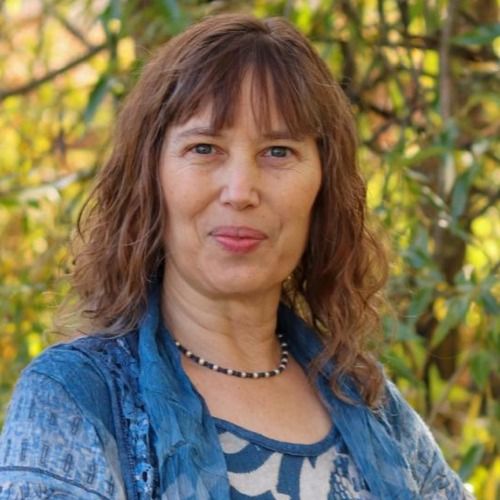
Guest bio: Nan (short for Nadège Saysana, pronounced Nahn Say-zah-nah) used to be an English teacher in Paris, but now she helps women who lift stop binge-eating and feel proud of their bodies. She knows what it’s like to feel out of control around food, to stress-eat or snack mindlessly. Nan has been there. And now she’s in control.
She’s a certified Life and Weight Loss Coach (The Life Coach School and Corinne Crabtree’s No BS Weight Loss University) who helps women enjoy their favorite foods, like chocolate, with zero fear of having too much.
At 50, Nan became a bodybuilder, lost three dress sizes, and now feels strong, healthy, and confident. She wants to stay fit for life, just like her 106-year-old grandmother!
For over six years, she’s helped women stop overeating, beat cravings and binges, and reach their goals through a simple, kind, mindset-based approach. Her clients lift, eat what works for them, and feel proud of their progress, without deprivation, shame, or obsession.
Nan lives in Paris with her husband, two bilingual kids, and her sweet cat Eva. When she’s not coaching, she loves walking around Paris, lifting weights, reading, and watching The Big Bang Theory. She believes change can be simple, fun, and life-changing when you focus on mindset and small healthy habits.
A gift from our guest: I've stopped night-time binge-eating for good and I know you can too. Free guide How to stop eating everything after dinner: https://nadege-saysana-coaching.kit.com/nobinge
@Nan.Saysana.Coaching on Instagram
Bringing Education Home is an educational podcast brought to you by Kristina and Herb Heagh-Avritt.
If you enjoy the show, we'd love for you to leave a rating or review on your favorite podcast app!
Please let your friends know they can listen for free on Apple Podcasts, Spotify or their preferred podcast app or online at Bringing Education Home.
Sponsored by Vibrant Family Education - creating Happy, Healthy and Successful kids
Follow us on these socials:
Facebook Group - The Family Learning Circle
Facebook Business Page: Vibrant Family Education
Support Bringing Education Home
Copyright 2026 Kristina & Herb Heagh-Avritt
This podcast is hosted by Captivate, try it yourself for free.
Transcript
I now have the pleasure of introducing Nan Saysana. Nan used to be an English teacher in Paris, but now she helps women who lift weights, stop binge eating and feel proud of their bodies.
She knows what it's like to feel out of control around food, to stress, eat or snack mindlessly. Nan has been there. She's now in control. She has a.
She's a certified life and weight loss coach from the Life Coach School and Corrine Crabtree's no BS Weight Loss University. They help women enjoy their favorite foods like chocolate with zero fear of having too much. At 50, Nan became a bodybuilder.
She lost three dress sizes and now feels strong, healthy and confident. She wants to stay fit for life, just like her 106-year-old grandmother.
For over six years, she's helped women stop overeating, beat cravings and binges and reach their goal through simple, kind, mindset based approach. Her clients lift, eat what works for them and feel proud of their progress without deprivation, shame or obsession.
Nan lives in Paris with her husband, two bilingual kids, and her sweet cat, Eva. When she's not coaching, she loves walking around Paris, lifting weights, reading, and watching the Big Bang Theory.
She believes change can be simple, fun and life changing when you focus on mindset and small, healthy habits. Welcome, Nan. It is a pleasure to have you here. Thank you for being on our show today.
Nan Saysana:Well, it's a pleasure to be here. Thank you so much for your invitation.
Kristina:Thank you again. Yeah.
So, Nan, well, this is one of the things that, you know, as we go through our series in bringing education home, and we really think about how we can help families, you know, if the parents, the mom and the dad are healthy and with their food habits and things like that, and then that trickles down to the kids.
ally recording in December of:I thought it'd be a great idea to have you here and join us and give, you know, our parents some ideas about how they can take care of these things for them and then let that trickle down to their kids. So thank you again for being here today.
Nan Saysana:Thank you so much. Yeah, thank you for having me. Yep.
Kristina:So in your bio, you had, you know, you gave some points as to when, you know, it was a time for a shift and a pivot into this, but was there something that really sticks out. I was like, you know what? This was it.
This was the main thing that really made me want to help families, help people with their food and their freedom.
Herb:Yeah. Because in their 50s, it's not usual like, hey, you know what? I'm gonna go start bodybuilding.
So what got you into this world and the bodybuilding and the health? Because that this is not a normal trajectory. So what got you started?
Nan Saysana:Oh, that's such a good question. Yeah. And it's interesting that you say that, because I had no idea that. Yes, indeed, people don't do that when they turn 50. That's interesting.
Thank you for putting it up. So I guess that it came from the issue I had for 30 years. For 30 years, since I was 16 and I started my first diet.
I started this yo, yo dieting back and forth, you know, restricting my food and then binging on food and again and again and again. And I couldn't get out of it for 30 years. But at the same time, I really wanted to take care of my body.
I really wanted to be strong and to be healthy. And I, when I did a little bit of bodybuilding, it was called body pump. When I tried it, when my. Before, just before my son was born.
So it was 22, 23 years ago. And I really liked it, but I never saw any progress on my body because I was being still binge eating. So it was just this frustration.
I really want this. I really want to be stronger, to look stronger too.
And yet, because I still have this behavior that I have no idea why I have this, and I have no idea what to do with this, I can't get there. So I kept looking because I'm very stubborn, I'm very tenacious, I'm relentless. And so I wanted to find a solution.
And so I was so glad that I got there. But. So I guess that's mentality that I'm going to find a way. And. And then I also believe when, when you were asking, what was.
What was the turning point? I think that. So I was always, well, I don't know about you, but when I was a teenager, I had this checklist. This is what I want to do during my life.
I want to live in Paris. Check. I want to have a husband with glasses. Check. I want to have a cat. Check. And I want to have two kids, boy and girl, obviously. And we had a son.
But then it took us eight years to have our daughter. But when we finally had our daughter, I thought, okay, all the boxes are checked. So now I'M happy.
And yet I was still having this behavior of eating much more than I wanted to, much more than I needed to, obviously. And so this is when I understood, okay, something else is going on. I need to find out really what.
What it is that doesn't make me happy, and that keeps me eating way too much. And so that was really the moment of, no, I need to keep looking. And it's got to be deeper than just surface level with food. So does that make sense?
Kristina:Absolutely, it makes sense. And yeah, I mean, we do.
We have those, you know, dreams and goals when we're young, all those check boxes, and then we still figure out that there's just something still not quite right. Right. And that goes into the. The deeper work inside of us. What was that? That force, that pull, that push, that whatever that does let us.
Yo, yo, yo, Our diet or get. Start eating clean and then falling off.
I mean, we both have been looking at our health for several years, and we'll do really, really well for a while, and then we'll fall off the wagon and then go really, really bad for a while again. So, yeah, I completely understand that.
And busy moms, busy dads, especially if they're not looking at that kind of stuff, they're doing it in front of their kids. And then their kids see this habit of yo, yo, back and forth. Oh, wait, mom and dad are restricting their food now? They're not restricting their food.
You know, all of those kinds of things. Yes.
Herb:And one of the things that I. That I heard out of that as well is, oh, I should stop doing backstory because, man, I had it. What did you just say?
Kristina:The yo, yo, the parents, the kids watching their food, relationships.
Herb:Oh, man, I lost our diet.
Kristina:I don't know.
Herb:I do that. I got brain damage. It comes and goes. It'll pop out in a minute. It's really weird. Sometimes it doesn't happen all that very often.
Nan Saysana:And that's okay. That's okay. I think we all do that.
Herb:Oh, yeah. Okay. So it's not just about the food. The food's not the problem is what you were talking about.
So you said that I had this problem of eating and binging, and then at the end you said, you know what? I figured out that eating wasn't the problem. There was something else underneath of it. And you had to go in and fix that problem first. And so that.
That, you know, you kind of threw that out there, just like, threw that away. But that is one of the biggest keys in what you do. So could you expand on that a little bit.
Nan Saysana:Totally, totally. Yes. I was using food as a crutch. Like, when I was feeling bad, I was. I was going to turn.
I was turning towards something that was so easily available in our society, which is food. It's always there. It's okay to eat. That's very, you know, very common. You're supposed to eat. So it was. It was okay.
And I was using food to numb what I was feeling. I didn't know that I was doing that. Now I do. But it was really when I was feeling bad, when I was feeling stressed. You mentioned busy moms, busy dad.
That was me, of course. And so I was feeling stressed. I was feeling overwhelmed. Too many things to do, too little time.
And so I was under a lot of pressure that I could have, you know, changed the way I was dealing with things, but I didn't know that at the time. And so when I was feeling terrible, overwhelm, stress, I would turn to food to numb the way I was feeling.
And I love the analogy I heard one day, which is, it's as if our torso is a bit like a glass. When the glass is empty and you put your ring around the rim of the glass, it makes a music, some kind of music.
But when the glass is full and you can put your finger on the rim, it doesn't sound the same at all. And that's what I was doing with food.
When I was stuffing myself with food, I didn't feel the pain, the overwhelm, the stress, the pressure, whatever it was, or the anger or the frustration, whatever it was, as much as when I was not, you know, stuffing my face with. With cake or baguette or whatever. And so I understand now that that's what I was doing. I was doing it with food.
But other people distract themselves from what they're feeling, and they don't want to feel with screens, with what else? With Netflix, with.
With shopping, with gossiping, things that after the fact, we feel not very proud of ourselves for doing, but we don't know that it's the pattern. And so some people turn to. To drink, things like that.
And I know that it's because I didn't want to feel uncomfortable that I was turning to what we call comfort food for this very reason. And the thing is, the problem was that indeed it comforts yourself for a minute when you feel full, you don't feel the emotion as much.
But then, of course, the effect wears off. And not only that, you go back to feeling terrible the way you were before. But you feel even worse because you're bloated.
And also, you've probably guilty, ashamed, thinking, why did I do that again? That was not the right. And I'm going to put on weight. And so it's just perpetuating the cycle and making you feel even worse than before.
Herb:That's what makes it addiction is because you start to feel bad. So you feed your body this stuff that gives you whatever. Whatever relief you're feeling. And then you're like, okay, I got that relief.
And then the next time you want that relief, your body's like, oh, I'm going to make you feel worse until you give me that relief again. So it's like. It becomes like, oh, I'm thinking this way. Now I'm going to go eat. No, cool. Now I'm not thinking this way. Ooh.
Now it's like my brain's thinking this. So it's like. It's this. It's feeds itself. And that can be whether it's drugs, whether it's alcohol, whether it's screens.
You know, I. I went through a recovery. An addiction recovery training. So I'm actually trained to help people with that. And one of the.
The big things is that people think that the drugs are the problem or that the addiction is the problem or that the food is the problem.
Nan Saysana:Exactly.
Kristina:And.
Herb:And we. That's one of our. One of our best things is like, no, this is an opportunity for you to actually f. So you have this. And so now.
Now you get to do the inner work, and. And that's where it's resolved. And so I love that. These are our invitations. So addictions are invitations to. To make your life more whole.
Nan Saysana:Exactly, Exactly. Oh, I so agree with that. Yes. Because the problem is that we train our brain. Each time we do this pattern. We train our brain.
Oh, this is what we do when we are not feeling good and we build the habit. The good news is that if our brain can learn this habit, it can learn another one that serves us much better.
And I love what you're saying, that this is an opportunity. And it did. When I was still binge eating, I heard somebody say, well, this is a gift. And I was just like, what? A gift?
Herb:No, it does not feel that way.
Nan Saysana:But now I understand. I would never have gone through all the coaching or the. The breakthrough I had if I hadn't had this issue to start with. So I totally understand. Yes.
And I totally agree with what you're saying. It is an opportunity.
Kristina:Yeah.
Herb:The people who truly overcome their addictions and get inside and do the work. Leave some of the most. Live some of the most blessed lives of gratitude and forward motion.
Just because they've been down there, they know what that is like. And, and so now the, the joy that they feel in life, they never would have got there had they not dropped into it. So it's not a death sentence.
It's not a. It's not a. This is how it has to be forever. It is possible to change whether it's eating, whether it screens, anything you want. All right, now let's.
Let's go into, into your process a little bit.
Nan Saysana:Okay.
Kristina:Can you give our audience a tip right now is what's one little thing that they can focus on to help kind of start making this change? Because we know that you talked about it.
Herb:We got a mom. We got moms that are. Got all their kids at home. They're busy. You know, they are working on feeding their kids. Right.
If they're working with us, they're working all in all of those things. What is, what is this? How do we help them? How do we get started? And they're still having issues.
Nan Saysana:Yes, absolutely. Yes. So the first thing I would say is to. Is to be curious. To start being curious. I like to use the analogy of the detective.
Try to be the detective, because so often we are the judge. You know, you mentioned the death sentence, and so often that's how we treat ourselves. Just, oh, I've done that. So it means I'm bad. So I need.
I need to punish myself. And, and we beat ourselves up.
We have this negative self talk that's not helping at all because again, we'll turn to comfort food and in we go with this cycle again. So really being curious, like a detective who doesn't decide this is good or bad, they just want to know what's going on.
And very often it's difficult to do it during the moment when we're eating, when we're overeating. It's very hard to stop then. So it doesn't.
Well, I want people to hear that it doesn't really matter if in the moment you can't stop because after the fact, it's a very important place to start with, too.
It's just like athletes, they train, they shoot a video of them training, sprinting or whatever, so that then they can go back in slow motion, you know, checking everything and looking at where their feet were and what they were doing with their arms and so on. We want to do the same with, okay, I overate. I know that's not what I wanted. So what was happening?
And to go back minute by minute as if, and just check, okay, what was I thinking? What was I experiencing? What. What was happening in my life today that could have triggered me to behave this way? And so that could be the first step.
So, you know, having a look at what happened, but very important, with curiosity.
And they can simply take a piece of paper, take a notebook, or record on their phone with a Dictaphone app, if they're more comfortable with that, and just set the timer for five minutes and just express themselves and say whatever they. They think they thought happened just to get it out of their head. And what I've realized is that even we.
If we're not sure, well, I don't know, maybe that was it, or maybe that was that. Trust your instinct. It's probably that if it's the first thing that comes to mind, chances are it's more most likely to be that.
So that could be a very, very interesting first step. It's like switching on the light. You didn't know before what was going on.
You were in the dark, you switch on the light, and then when you see everything you've written or everything you've recorded, it's much easier to decide what to do. It's like in a room full of furniture, when you don't see anything, you're going to trip.
But when you switch the light on, then you can rearrange the furniture the way you want to.
And it's exactly the same, just this little moment of awareness where you put on a piece of paper or anywhere what happened, what you thought happened.
Herb:I love that you just Described the last 3 years of my life. It's like, wow. And again, you threw something out there. Just this little thing that just I've been dwelling on.
It's like, become the detective, not the judge. I've heard that in so many different ways, but that, that. That is going to hold on for a while. And so.
And so, yeah, I've been doing my own recording for three years, every day, live on Facebook. And there are times when I was in the middle of it and describing what I was feeling, and I was able to start again.
Like you said, noticing is like, oh, I felt this way. And then for three days I felt this way. Oh, I felt this way. And then for five days I felt that way because I kept talking to this thing.
And so I was able to start pick patterns and start putting in interrupts.
Kristina:So it doesn't mean you have to record on Facebook, but do it and write things down or do your private voice recording or something.
Nan Saysana:You can even throw it away afterwards if you want.
Kristina:Exactly.
Herb:But just hearing yourself, it's like, oh, yeah, I had a good day, like, a week ago. And then it's like, oh, I had a great day, and now I'm having a bad day. And, like, I have 10 bad days after a good day.
And it's like, what's going on there? And then it's like, I had a good day, and it's like, okay, well, now I'm gonna have 10 bad days. Let's see if I can make it eight bad days.
And then I got it through, like, a good day and then a bad day, and now it's like, sometimes just hours at a shot. So it's like, I've worked and it's taken three years. This is not something you go, oh, I've got it. I've done it once. I'm good. This is.
This is a practice.
Nan Saysana:Totally. It's like brushing your teeth. You don't do it once, and then you're done. It's just that, nope, let's do it again, and let's see what's going on.
I love that.
Herb:Lifting weights. You don't do it just once, and suddenly.
Nan Saysana:Yeah, you're ripped. No.
Kristina:And I love this awareness piece. Right.
Because as we're thinking as moms and dads and thinking about how we're doing all of this, sometimes even as we're maybe like, kind of beating ourselves up and talking about our, you know, getting on to ourselves about it, if we sit down, do that journaling or something, and then the kids are curious, mom, what are you writing down or what are you talking about? You can gently explain when you're in a. In a good sense, space. Oh, this is what I'm doing to help myself not eat those bad things when it's not time.
Time to do it, or how to control some of these things that I am doing. Maybe I'm yelling too much.
Maybe I'm, you know, whatever it happens, to be around the family and the kids so that, you know, this practice is something that can bring light and hopefully some joy eventually. Right? Because I know how to handle it. I know. Yes.
Nan Saysana:Yeah, absolutely. I so agree. Yes.
Kristina:So after they bring the awareness, I mean, you know, that's awesome and amazing, and then sometimes we still, like, way fall off the wagon. Right. What's kind of maybe something that they can do to help either not feel so bad when they fall off the wagon?
Or get back on a little bit easier without beating themselves up too much. What kind of do you help your clients do?
Nan Saysana:Oh, yes, yes. And first of all, I need to. I would love for everyone to hear that it's normal to follow the wagon, if we want to call it this way.
I don't know anyone who learned how to do something just like that. Just if we remember when we learned how to write or we learned when, when our kids learned how to walk, it didn't happen by magic.
And all of a sudden from crawling, they were sprinting. No. There were so many steps. And here's an analogy I just love because it's so good. It's just that we meant to fall. We meant to fall.
And when kids learn to stand up, they stand up for a little bit wobbly and then they fall and then they stand up again and then they fall again. And actually this going up and down, that's what makes their legs stronger.
So that then they can stand up, so that then they can walk and they can run and so on. And also for us grown ups, that's what we call squats. So it's perfectly normal for us to experience those falls.
But then there's an opportunity there. It's just as you were saying earlier on, it's just, I love that quote by Nelson Mandela. I never lose. I either win or learn.
And so that's an opportunity. Why did I fall off the wagon? What was going on for me?
What do I need to learn that I thought was okay, but actually know something's missing and that's an opportunity to, to learn something. And also we were talking about trying not to beat ourselves up.
And one of the best tools that I've learned is to be compassionate with ourselves, which means to be kind. So instead of beating ourselves up, maybe asking ourselves, okay, why does it make sense that I went back to the cookie jar or that I had chocolate?
What? What is it? Why does it make sense?
Why was it the best thing I could do, even if it's not really what I wanted, but why was it the best thing I could have done in this moment? And it's really being this compassion with. Of course, of course I did that because I thought that was the best.
And, and that can help, you know, release the shame, the guilt, the self judgment, the self criticism and move on instead of dwelling on it. And really.
Yeah, being furious with ourselves, which keeps us stuck really, like in quicksand, we just get stuck and more and more stuck and there's no way out relapse.
Herb:Is part of recovery, which is one of the things that, again, my. My recovery place talked about so many places. Like, if you. If you fall off, you have to go all the way back and start at the beginning at one.
And it's that. That's not what happens. It's like, no, you get curious about what. Why you fell. It's like, okay, wow, I'm gonna have. You know what?
I'm gonna have this piece of cake. And it's like, okay, what's going on with me? And you still eat it, you enjoy it, you have fun, but then you. But it's a trigger. It's like, why?
What was the trigger? And then there's a piece that you can go in and work on because there's something inside that hurts that hasn't been addressed yet. And it's.
The cake is not the problem. It's like there's something else going. We had one person that, like, relapsed several times, and.
And this, like, the third time, he's like, okay, I'm going to be hanging out with my friends. I know I'm going to relapse. This is kind of how it's gone. And the coach is like, okay, pay attention. Go, go, relapse.
Do what you're going to do, but pay attention. Going in, what's happening? What are your friends doing? And he actually went. And in the middle of it, he's like, you know what? I don't want this.
I don't need this. I've. I've grown past that and having that permission, but also the permission not to. So it. It took several relapse to get back to that place.
And again, the first one, the judges came out. But when the curiosity comes out, when the detective comes out, he can find a different root cause instead of it being you. Your.
Nan Saysana:This is so good. This is so good. And I love what you're saying. Giving ourselves permission. Giving ourselves permission to have what we want, that's so key.
Because very often we're in this. There are good foods, there are bad foods, but then it gives so much importance to the supposedly bad food that it's the forbidden fruit.
And what we resist persists. So if we're thinking, oh, this is. This is special, it tastes so good, but I can't have it.
We make it even more special in our eyes, and we can only want it even more. But giving us such permission to have as much as we want to so long as we feel good, this completely shifts the thing and the keeping.
So long as I feel good because then instead of focusing on the food, we're going to focus on our bodies. And this is when we can actually slow down. I love what you were saying. Enjoying it and really paying attention to our five senses.
When I eat this slice of cake and when I slow down, what does it feel like? What does it taste like? What does it smell like? And all those.
And really appreciating can make us slow down and really enjoy this experience or it can make us realize that actually I don't really like this.
I thought I did, but maybe it was because I actually thought the experience with my friends and I associated that and I thought it was the same thing. But in reality, the food can go and I can still have fun with my friends without harming my body. Or I love that.
Herb:I really like the way that tastes, but I feel better than that tastes. And so it's like, so if I eat that, I'm not going to feel good. So it's, yes, that tastes great, but it's going to make me feel bad.
And so yeah, it, it takes a while to get to that level of clarity. Sometimes. Sometimes it's. Sometimes for some things it's pretty easy, but sometimes it's unconscious and you don't realize it.
So how do you start helping people realize their unconscious habits that, that are affecting this, Their beliefs, their, their thoughts?
Nan Saysana:Yes.
So the exercise that I was mentioning earlier on, which is just doing a thought download brain job of whatever is happening in your head, that's the first step, the step that makes us slow down a little bit and see what was going on. And then the next step would be to use what's written here.
If you're watching on you on YouTube, it's what, what Brooke Castillo, who was my, my teacher, calls the model. And basically there are cir. Things that we don't control outside, you know, in the world, like for instance, the weather.
And, and based on that, there's what we think about it. So when it's raining, somebody could think, oh, I hate it when it rains.
But maybe somebody would think, oh, I love it when it rains because it makes my vegetables grow or whatever. And so different thoughts are going to make us feel differently indifferently.
So if I think I hate the rain, I'm going to feel bad, but if I tell myself, oh, this is a good thing for my vegetables, then I'm going to feel good and the way we feel is going to impact what we do. So maybe if I'm feeling grumpy, I'm going to act out on my grumpiness towards my kids. And I'm not.
I'm probably going to say things that I'm going to regret later, but if I'm feeling please, I'm going to perhaps want to play with them or things like that.
And that's going to create a very different result, a better relationship in one, on the one hand, a not so good relationship, at least for the moment. On the other hand.
So this is what I help my clients do, is just seeing how it's not what's happening out there in the world that is going to impact their life, it's what they make it mean for themselves, for their life, for their environment. That's going to be super important.
And so what I ask them to do is, is with this little paragraph that they wrote for five minutes to check, what are the facts, what are the circumstances that everybody on earth would agree, regardless of their backgrounds, their culture, etcetera, that the sun is shining or it's raining. I think that most people would be. Would agree on that. And then I have them underline what they thought about it.
The little sentences that may seem so innocent, like when we talk about food, oh, this is. This looks so good. Or no, this is not going. This is going to make me feel bad.
Those sentences are the thoughts that are going to make them feel a certain way that are going to have an impact on what they do next. And so it's going to have an impact on their life, basically, which could be their body, you know, the weight, their size, things like that.
Yeah, yeah.
Kristina:And it's so, so important. I mean, I remember a time in my classroom when I was teaching full time, right? And I would have a bad day.
You know, the lesson plans didn't go right, the kids were acting up, all that kind of stuff. And the only thing I wanted to do when I got home from school was to go find the ice cream or the chocolate. It's like, you know, I.
And I know that now about myself, right?
And so then trying to, like you were saying, rethink those thoughts or do it in a different way or, you know, there's just some days, like, yep, I know I'm going to do it and I'm not going to beat myself up because it's just going to be the way it is. But it's interesting how my brain still limits.
So instead of going for three scoops, I would only do like one scoop, you know, and I would still enjoy it and try to soothe myself a little bit, but I wouldn't go as far or as bad. And then, you know, that reframing. Oh, I knew I was going to do it.
So I'm not going to beat myself up, and I'm just going to kind of watch what I'm doing the next couple of days. I don't keep going, you know, But I love that.
Nan Saysana:I love that you promised yourself that you were not going to beat yourself up, because that's, that's so important. We know that we're spinning in negative self talk and that's keeping us stuck.
But this promise, I'm not going to beat myself up, it probably gives you relief, and then you can move on so easily. Yeah, that's so good.
Kristina:And, you know, you know, if you are a person, an adult who has that kind of, that mode, you're working through this kind of stuff. Right.
Again, if possible, when your kids are around and they notice those moods, those shifts, expressing it out loud in a way that they start understanding because, you know, whether we want to or not, we're training our kids about a relationship with food from the very beginning or.
Herb:Whatever else you're working or whatever.
Nan Saysana:Yeah.
Herb:And so all those feelings that you have that are holding on to that, that shame, that guilt, that anger, all, all of those feelings, your kids are going to have those too. Okay. And if they see you having those and eating, then your kids are going to follow suit.
Most likely, if they see you doing this and they see you, oh, I have a trigger and working on it and releasing that, they are going to learn that as well. So if you're in your, you know, 30s, 40s, 50s, and you haven't learned this yet, there's a lot of work you have to do.
If you get the seeds planted in your children when they're young and they start to develop even a little bit of these habits, then they will have so much of an easier time to pull this out and, and grow it differently. Differently than trying to plant a seed in their. In their 30s and 40s and 50s. So this is why we're having you here.
It's like not only for the moms and, and the dads. Well, the moms you work mostly with, with women who lift weights.
But how important it is that this information is also modeled and told to the children. Yes, it's embarrassing, but you're doing it. It's a hero's journey. You're working through it. People don't do that. That's. That's a strength.
So share that with your family. Don't, don't. Be embarrassed. You know, maybe keep it age appropriate if it is embarrassing, but still let them know that you're.
That these feelings are there and that you still can improve yourself and improve your health.
Nan Saysana:Yes. And we don't have to be perfect. And yes, being human as we all are, we are all struggle with one thing or another. It's perfectly normal.
And yeah, and I love that, yes, it can be shared so that we can be an example that, yes, we're working on something that's hard or that maybe less hard, less and less hard, but still we work on something and that can be an example. And we can share stories with kids who are also trying to learn something. It's. It can be very. It can be very interesting to see that.
And going back to what you were saying, Christina, about going to the ice cream. Something super fun also that can be done as a family is to create what I call a pleasure plan.
Meaning that, yes, ice cream, chocolate, that's pleasurable and that's not a problem. But maybe we can find different things that gives us the pleasure we need when we feed down so that then we have plenty of. Plenty of options. And.
And that can be super fun, too, to do with a kid, as you say. Okay, when you feel down, what makes you feel a bit better? Maybe it's dancing. Maybe it's, I don't know, walking in nature.
Maybe it's playing with the cat or the dog and. Yeah. And having that list ready as like an emergency, you know, list of just. Okay, when I feel down, here's what I like to do.
But also, maybe somebody else can do it for me, like giving myself a cup of tea or something like that. That can be fun to have this as a family.
Kristina:That is great, because I was actually just going to ask you if you ever train and work with your people on replacement habits, and that's kind of what you were just describing. Something that replaces that other thing that still gives you that same uplifting feeling. I love that. Yeah.
And if those lists can be like, on the refrigerator or something or somewhere where it's just like, eye catching, you know, then the whole family can benefit from that.
Nan Saysana:Yeah.
Herb:Especially if. If you do have, like, oh, I had a bad day, I'm gonna come home and have my ice cream, or I'm gonna come home and have my.
My glass of wine, because today was just rough. Well, if your rough days stack up, then you habitually start coming home and having that wine because it was a bad day.
And then pretty soon your brain's Gonna be like, oh, I want that wine. How was my day a bad day again? You build in a different kind of habit. Oh, I had a bad day. I feel like dancing and getting that energy out.
You're going to be dancing more, getting more healthy, living a more vibrant. Instead of coming in and changing and just going into the food or the drink or. Man, I've just had a bad day. Just shut up.
I'm gonna play my video games and just. Yeah, you know, there's. There's so many different patterns and ways to open up through all of that.
And again, it's an opportunity to go inside and change something inside that's going to open up your life in. In ways you can't even begin to imagine.
Nan Saysana:Oh, yeah, I totally agree. And I like what you. The way you're saying it. I'm having a bad day because people. I used to be exactly like that. I had a bad day. I had a good day.
But actually it's not a good day or a bad day. It's just, it's. It's less than a good day. Because the risk when, when we tell ourselves, oh, I had a bad day, that it's the.
It can start in the morning and then we're deciding that the whole day is going to be ruined. But we don't have to think that maybe it can be, I had a bad minute, but now it's a reset.
I'm deciding that now it's different so that at least we don't ruin the day. Because we experience so many different emotions throughout the day. It's not just one that's going to color our whole day. It's a lot of different.
So we have so many different opportunities again to decide, okay, no, maybe that was a bad moment, but now I'm focusing on now and the next moment instead of focusing, you know, I like to use this analogy of instead of focusing on the rear view mirror and just focusing on what happened before, I can focus on right now what I'm doing driving my car and on the destination where I'm going to. So the future. And that can shift also this in the moment, rather than deciding that it's going to be 24 hours. Yeah, yeah.
Kristina:And yeah, that is just such a huge thing because how many of us do we get up and something goes wrong first thing in the morning? It's like, oh, it's going to be this kind of day.
Nan Saysana:Yes.
Kristina:Like, instead it's like, okay, that didn't go so well. What can I look forward to the rest of the day.
Herb:That's actually something I'm specifically working on right now. So. Okay, I hurt my head. I suffered several traumatic brain injuries. Stuff got really messed up. So even.
Even just being able to do that sometimes is tough. Is tough. So in the moment, being able to identify it. And yeah, sometimes if something goes wrong, it's like, oh, hey, I'm expecting to do this.
It might not even be bad. It's just that option isn't now available. It's like, oh, my schedule got messed up now my day is ruined.
Yeah, I am working specifically on that right now.
Nan Saysana:Okay.
Herb:So, yeah, and I. And I've been for quite a while and it, again, I know this. It's something that I, That I am building on.
So sometimes now I set stuff up in the morning to mess up on purpose and try and work through it. So I love it. Yeah. You gotta face it sometimes.
Nan Saysana:And it's true, true. That's the only way to overcome whatever is going.
Herb:Yeah, but it's the best work in the world because it, it's. It's the best because if you're working on yourself, then your life is going to get better.
Nan Saysana:Yes.
Herb:You can't. You can't give yourself any better of a gift.
Nan Saysana:Oh, I agree. I so agree. Yeah.
Kristina:This has been a great conversation. Is there anything that we haven't gotten to that you were kind of thinking, you know what?
I really want to talk about this aspect of what I do or how I help people.
Herb:Oh, I thought we were going to talk about this today and I wanted.
Nan Saysana:Okay, well, no, that's fine. So I love that we talked about being curious, not furious.
But then the next step would be maybe to celebrate because so often we think that, no, no, no, we need to feel guilty. Because if we don't feel guilty about doing something wrong, then we're going to do it again, which is not true. Actually.
I've just finished reading again BJ Folk's book, Tiny Habit. I don't know if you've heard of it. Right. And in it, he has a whole chapter about celebration. You've done some things and you celebrate.
And I think this is really important. It calls it the emotion that you feel when you celebrate, it equals it. Shine.
And I think it's so important because when we feel proud of ourselves, when we feel accomplished, when we feel triumphant because we've done something finally that was so hard, then what we do is that we create more of what we created. And not only does it feel good, but then this impact that it has for us.
And as we know, it's going to reverberate, you know, to have a ripple effect on the people around us. Because when we feel good. Yes. People feel. Feel it too. So celebrating even the small wins, that's also what I tell my clients.
We don't need to wait for them to have had their last binge ever to celebrate. We can celebrate just the noticing. Oh, I'm in the middle of a peanut butter jar and I'm noticing it even though I keep on eating it. That's awareness.
That's a win. That deserves celebration. All those little tiny things I posed for one second before opening the freezer. That's huge. When.
Before I was not even aware of what was going on. All those little things, they deserve celebrations.
Herb:And celebrate the effort and celebrate the work, then the effort and the work become worthy of celebration. And if you wait till the end to celebrate, then all of the struggle is going to just be struggle.
Nan Saysana:Totally. So hard. So hard.
But if we know, if we know ahead of time, okay, I'm going to have just a little bite of chocolate instead of the whole bar and then I'm going to be so proud of myself. If you know that already, then it's so much easier to just have a one bite instead of the whole bar. And so, yeah, looking forward to.
Which is that little moment when you feel proud of yourself. That's gold. And that doesn't cost anything.
Kristina:No, it doesn't. Yeah, right.
Herb:So if you said, I'm going to meditate for 10 minutes. You meditated for four. It's like, sweet. I got up to four minutes.
It's like, you know, but sometimes it's like you dip in and like, wow, you fell in and you're meditating for 20 minutes. It's like, cool, I got into it somehow. But. But you also have to celebrate the fact that, that you did it.
Even if you didn't get all the way to where you were, you started, you showed up for yourself. Yeah, that's a win. Celebrate.
Nan Saysana:Totally. I love what you said about, yeah, meditating for four minutes as a win instead of 10 as was scheduled.
And that reminds me of Benjamin Hardy's book, the Gap and the Gain. When you focus on what's missing, you know, six minutes. Should I meditate? Is six minutes more. You feel bad. But when you focus on what you do.
Did write as planned. Four minutes. And you, you see the gain and you see what you've learned and you see turning into your new identity. That's huge. So I love that.
I love that way of reframing it.
Herb:And the next day, you only get two minutes. It's like. I got two minutes. Yes. It's like I didn't get the four. I didn't get the 10. But wow, it was a rough morning, and I'm glad I got the two.
Nan Saysana:Exactly. It's better than nothing. Yeah.
Kristina:Yep.
Nan Saysana:Yeah.
Kristina:And we put that on our kids as well. You know, they're driving us nuts. But you can find that one thing that you're proud of them about. Right.
It's like, okay, we didn't get all five socks put away, but we got one sock put away. Yes. We gotta win. You're helping to clean up the house.
Herb:You guys sure are getting a lot of energy out tonight. You'll probably sleep well.
Nan Saysana:Yes. I love that.
Herb:Yeah.
Kristina:And celebrating their food choices as well. Because we're talking about food.
It's like, you know, when they go for the healthier choice or they only do one little piece instead of the five pieces. Right. Help them celebrate. Help them know that that's the good thing.
Nan Saysana:Yeah, right. Absolutely. And let them know. Also let them focus on how it makes them feel. Yes. Inside you, you had this instead of that. Okay.
And what's the effect in your body? So that they can tune in and really. And see that it's.
Kristina:Yes.
Herb:We could go on forever with this. There are so many depths and levels to that. We could go on. We could get into mindsets and stuff. You know, poverty mindset.
If I went to an all you could eat buffet, I ate till I couldn't freaking hardly move because I grew up poor. It's like, if there's food, I'm gonna eat until I can't hardly stop moving or. Because it's like, that's the pot. You go to all you can eat buffet.
You don't have to eat all you can.
Nan Saysana:Exactly.
Herb:And that, you know, so there's so many different ways you can look at this. So many different aspects of your life that can be involved in a simple thing. Because it. Your life is complex, and there's so much coming at it.
And that's where having a coach who can help you identify all of these different directions that this coming. It's not. It's not. It's always one thing. If it is one thing, you are blessed, lucky. And because it's. It's complicated. Life is complicated.
And so having a coach to help you figure that out and to work through some of the things to. To get to a better life for yourself, that. That's what we are doing here. And when you do that, show it to your kids. Vibrant family education is.
This is the education. This is the holistic stuff that our kids need to learn now so that they don't have to learn this crazy, weird stuff when they're older. That's.
That helps when they're old.
Nan Saysana:I agree. I agree.
Kristina:Speaking of that, Nan, would you share your contact information? If something has resonated with the audience, we want them to be able to get a hold of you and say, you know what? I really love this idea.
Can you help me explore it more? So tell us how they can get a hold of you.
Nan Saysana:Right. So they. Thank you so much.
So they can have a look at my website, which is called Milo M I l o bingefix.com where they'll find all the information they need. And I'm very happy to invite them to join me for my free masterclass, which is called why you binge at night and how to stop for good.
And they'll find this information to sign up for this masterclass on milo bingefix.com and I love that.
Kristina:Beautiful. Thank you. And of course, everything will be down in the show notes as well. So you can just go click down at the bottom and get a hold of Nan.
So, Nan, this has been such an awesome discussion. Thank you so much for your energy and your good ideas and your strategies and tips.
Because that's one thing I really appreciate about all of our guests is that they, you know, don't hold back. They give this immediate strategy and tips that families can really put into place.
So, audience, take a nugget out of today's show and take it with you. Put it in your pocket for a little while, but then remember to bring it back out and use it right.
Because we want to keep helping our families grow to be happy, healthy, and successful.
Nan Saysana:Yes.
Herb:And I would like to thank you here for being here today as well. There are so many diet books. There are so many stuff out there.
There's so much on how to build and lift weights and stuff that you jumped into a saturated market, and yet you did it. Why? Because you know that when you're actually working with individuals, it actually helps them more.
So you are in a place that that's tough, and you're out there fighting that dragon and you are bringing that information back and you are helping people once you. Once you got it, and that is the hero's journey. You went out, you learned, you got your gold, and you're bringing it back.
And you're sharing it with your village. So thank you for being on our show today. Thank you for being a hero and, and just thank you for being you.
Nan Saysana:Oh, thank you so much for having me. It was so fun. So nice to talk with you and I really liked our conversation and everything you shared. Thank you. Thank you so much.
Kristina:You are very welcome.
All right, audience, this time do like share and make sure you let people know that bringing education home is here not only for you but for others who have these similar issues or ideas they want to up level and move to the next level. Right. Take everything that you know here and share it around and we will see you next time on our next show.
We're dropping one every single week, so don't forget to come back and check us out. Until next time. Bye for now.
Herb:Bye for now.